
Description
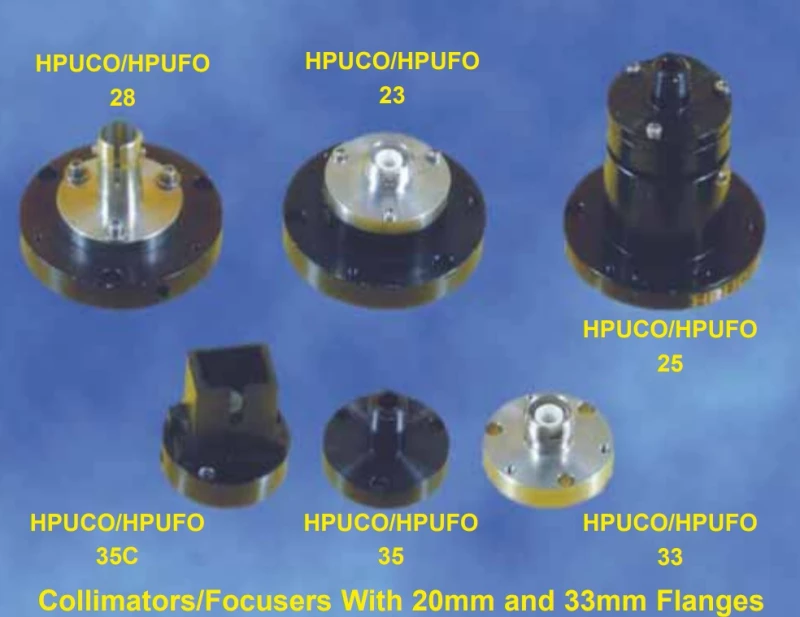
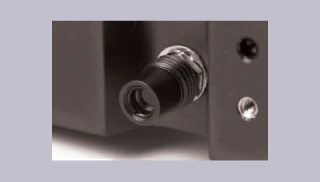
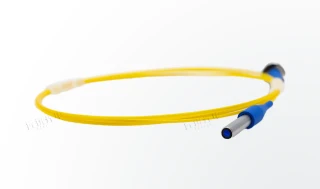
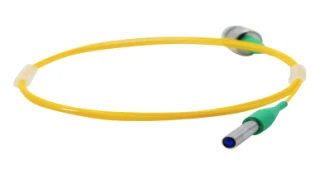
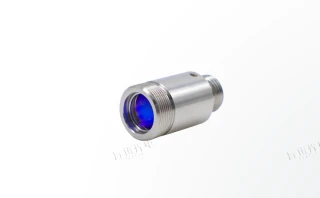
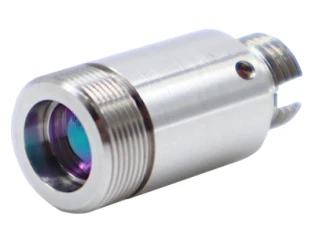
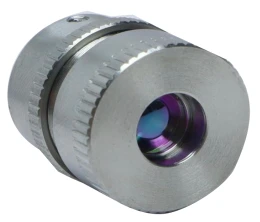
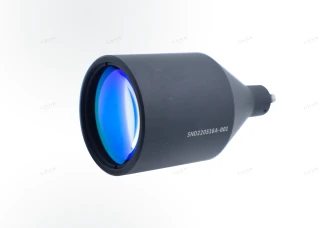
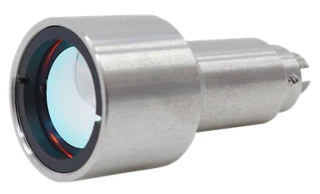
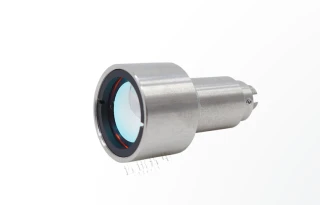
The Receptacle Style Collimators and Focusers are precision-engineered optical components designed for high-performance fiber optic applications across a broad wavelength range of 200 to 2100 nm. These devices are ideal for collimating or focusing light exiting a fiber, enabling users to achieve precise beam diameters or spot sizes tailored to their specific requirements. With their rugged and compact construction, these collimators and focusers are well-suited for demanding environments and high-power handling, making them a reliable choice for both laboratory and industrial settings.
Utilizing advanced diffraction-limited optics, including GRIN, aspheric, achromatic, plano-convex, and biconvex lenses, these collimators and focusers deliver exceptional optical performance. They are available in singlemode, multimode, and polarization-maintaining fiber versions, accommodating a wide range of fiber optic systems. The devices support beam diameters from 0.2 mm up to 22 mm and can achieve spot sizes as small as less than 5 microns, ensuring precise light manipulation for applications such as source-to-fiber coupling, fiber-to-detector coupling, and fiber optic device packaging.
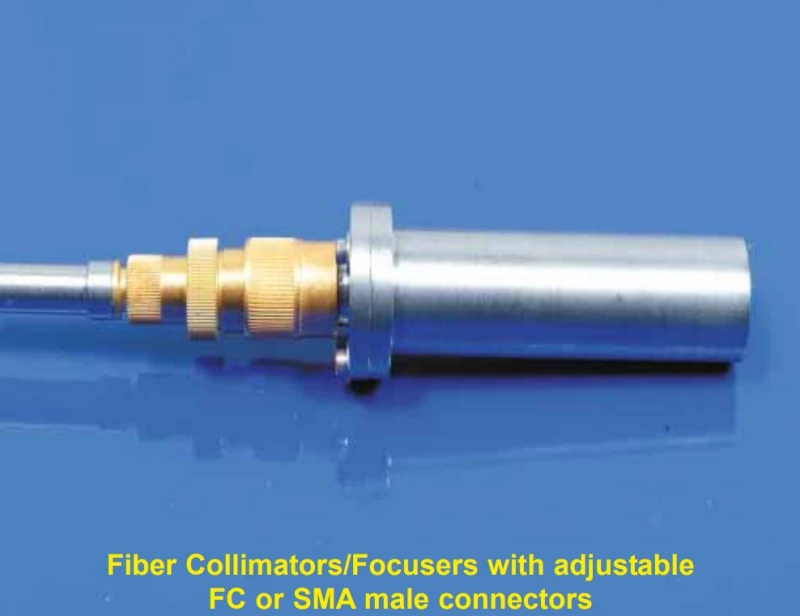
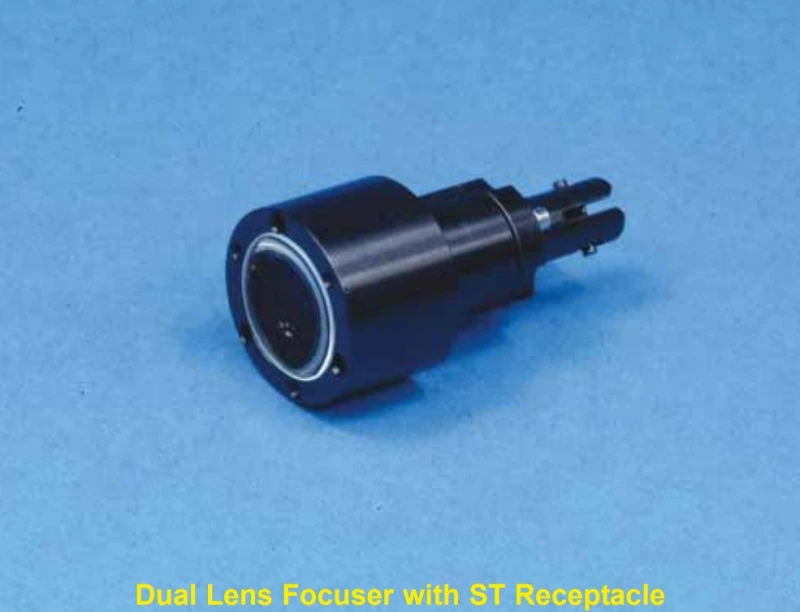
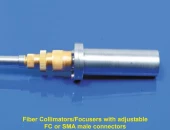
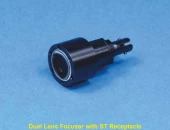
The receptacle style design features adjustable focusers with FC or SMA connectors, as well as dual lens options for enhanced flexibility and alignment. Low insertion loss (≤0.6 dB for 60 mm separation) and minimal wavefront distortion (λ/4 to λ/10) ensure optimal signal integrity and efficiency. These collimators and focusers are engineered to minimize backreflection, making them suitable for integration with sensitive photonic devices like laser diodes, photodiodes, and acousto-optic modulators.
Designed with cost-effectiveness in mind, these components offer a robust solution for fiber optic device packaging, WDMs, splitters, and integrated optics. Their versatility and precision make them a preferred choice for researchers, engineers, and system integrators seeking reliable and high-performance fiber optic collimation and focusing solutions.
Fiber Collimators and Focusers (Receptacle Style)
Specifications
| Center Wavelength: | 500 nm |
|---|---|
| Bandwidth: | 1900 nm |
| Numerical Aperture: | Not Specified |
| Effective Focal Length (EFL): | Not Specified |
| Wavelength Range (model Dependent): | 200 - 2100 nm |
| Beam Diameters (model Dependent): | 0.2 - 22 mm |
| Polarization Extinction Ratios: | 30 dB |
| Spot Size: | As small as <5 microns |
| Wavefront Distortion (model Dependent): | λ/4 to λ/10 |
| Insertion Loss: | ≤0.6 dB for 60 mm separation |
Got questions about specs? Use the inquiry form to ask.
 Download Data Sheet

Features
- High Power Handling: Engineered to manage high optical power levels, making them suitable for demanding fiber optic applications.
- Rugged and Compact Design: Durable construction ensures reliable performance in laboratory and industrial environments while maintaining a small footprint.
- Low Insertion Loss: Optimized for minimal signal loss (≤0.6 dB for 60mm separation), ensuring efficient light transmission.
- Wide Wavelength Range: Supports a broad spectrum from 200 nm to 2100 nm, ideal for UV, visible, and IR applications.
- Versatile Beam Diameters: Accommodates beam diameters from 0.2 mm to 22 mm, suitable for various optical setups.
- Multiple Lens Options: Available with GRIN, aspheric, achromatic, plano-convex, and biconvex lenses to meet diverse optical requirements.
- Fiber Compatibility: Supports singlemode, multimode, and polarization maintaining fiber types for maximum flexibility.
- Diffraction Limited Optics: Delivers superior beam quality with minimal wavefront distortion (λ/4 to λ/10).
- Dual Lens Focuser: Enhanced focusing capability for precise spot size control, with spot sizes as small as <5 microns.
- Adjustable Focusers: Features adjustable focusers with FC or SMA receptacles and male adjustable connectors for easy integration.
- Polarization Extinction Ratios: Offers options of 20, 25, or 30 dB for polarization-sensitive applications.
- Low Backreflection: Designed to minimize backreflection, improving performance in sensitive optical systems.
- Cost-Effective Solution: Provides high performance at a low cost, making it ideal for both research and OEM applications.
- Wide Application Range: Perfect for fiber optic device packaging (WDMs, splitters, integrated optics), source-to-fiber coupling, and fiber-to-detector coupling.
- Easy Integration: Compatible with laser diodes, photodiodes, acousto-optic modulators, and other fiber optic devices.
Applications
- Fiber Optic Device Packaging
Ideal for integrating with WDMs, splitters, and other fiber optic components, ensuring precise light management and minimal insertion loss. - Source to Fiber Coupling
Efficiently couples light from laser diodes, LEDs, or other light sources into singlemode, multimode, or polarization maintaining fibers. - Fiber to Detector Coupling
Optimizes light delivery from fiber to photodetectors, photodiodes, or other sensing elements, maximizing detection efficiency. - Laser Beam Collimation
Produces collimated beams with adjustable diameters for free-space optical setups, laboratory experiments, and system integration. - Optical System Alignment
Facilitates precise alignment of optical components in research, manufacturing, and testing environments. - Acousto-Optic and Electro-Optic Modulator Coupling
Enables efficient coupling of light into and out of modulators for signal processing and communication systems. - Integrated Optics and Photonic Circuits
Supports coupling between fibers and integrated photonic devices, waveguides, and planar lightwave circuits. - Fiber Laser Systems
Used in high-power fiber laser setups for beam shaping, delivery, and focusing applications. - Optical Sensing and Metrology
Essential for fiber-coupled sensors, interferometers, and precision measurement systems. - Biomedical and Life Sciences
Applied in fiber-based endoscopy, spectroscopy, and optical coherence tomography (OCT) for precise light delivery and collection. - Telecommunications and Data Communications
Used in fiber optic networks for signal routing, testing, and device packaging. - Free-Space Optical Communication
Enables efficient transition between fiber and free-space optical paths in communication links. - Laser Material Processing
Focuses or collimates laser beams for cutting, engraving, or micro-machining applications. - Spectroscopy and Analytical Instruments
Couples light into and out of spectrometers, monochromators, and other analytical devices. - Quantum Optics and Research
Used in quantum communication, entanglement experiments, and advanced photonics research for precise light control.
Frequently Asked Questions
What are receptacle style fiber collimators and focusers used for?
What wavelength range do these collimators and focusers support?
What types of lenses are available for these collimators and focusers?
What fiber types are compatible with these collimators and focusers?
How do I calculate the collimated beam diameter and divergence angle?
What are the key performance specifications of these collimators and focusers?
What connector options are available for these fiber collimators and focusers?
Got more questions? Use the inquiry form to ask the supplier directly.
Similar Products

Your inquiry has been received.
Create an account by adding a password
Why create an account?
- Auto-complete inquiry forms
- View and manage all your past messages
- Save products to your favorites
- Close your account anytime — no hassle