
Alignment Lasers for Industrial and Lab Applications
Frequently Asked Questions
What are alignment lasers?
Alignment lasers are lasers that are specifically designed for alignment tasks in a wide range of industrial applications. They provide a highly visible beam that can be used to align machinery, equipment, and components with precision.
What are the applications of alignment lasers?
Alignment lasers are used in a variety of industrial applications, such as in the alignment of production machinery, assembly lines, and manufacturing equipment. They are also used in construction and surveying, as well as in research and development.
What are the different types of alignment lasers?
There are several different types of alignment lasers, including dot lasers, line lasers, and cross-line lasers. Dot lasers emit a single point of light, while line lasers emit a straight line of light. Cross-line lasers emit two intersecting lines of light, making them ideal for applications that require both horizontal and vertical alignment.
What are the key specifications to consider when selecting an alignment laser?
When selecting an alignment laser, some key specifications to consider include the wavelength, output power, beam divergence, and accuracy. Other factors to consider include the size and weight of the laser, the battery life, and the overall cost.
How do alignment lasers work?
Alignment lasers work by emitting a highly visible beam of light that can be used to align machinery, equipment, and components. They typically use a laser diode and optics to create a collimated beam of light that is highly visible and can be easily seen even in bright lighting conditions.
What are some common challenges associated with alignment lasers?
One common challenge is achieving high accuracy, particularly when aligning complex or multi-axis systems. Another challenge is dealing with the effects of vibration or movement, which can cause the laser beam to shift or wander. Additionally, alignment lasers can be affected by temperature changes and other environmental factors, which can cause the beam to drift over time.
Overview of Alignment Lasers
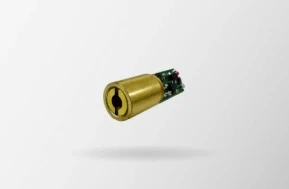
Alignment Lasers are compact laser systems designed to project visible reference beams for positioning, targeting, and machine setup. In industrial and laboratory environments, these light sources provide precise visual guides for aligning components, fixtures, and workpieces without physical contact. Typical wavelengths are in the visible range (e.g., red 635–660 nm, green 520–532 nm) to ensure clear visibility against different surfaces and ambient light levels.
On FindLight, Alignment Lasers are available as self-contained modules with integrated optics, drive electronics, and mechanical housings that simplify integration into production tools, measurement setups, and R&D platforms.
Key Types of Alignment Lasers
Dot & Line Lasers generate either a focused spot or a projected line pattern. Dot Alignment Lasers are used for point targeting, center marking, and tool positioning. Line Alignment Lasers use cylindrical or Powell lenses to create straight, uniform lines for edge alignment, cutting paths, and geometric references on conveyors, cutting tables, and assembly stations.
Industrial Alignment Lasers are engineered for harsh environments with robust housings, extended operating temperature ranges, and resistance to vibration, dust, and coolant spray. These Alignment Lasers often include industrial supply voltages, M12 or similar connectors, and mounting hardware compatible with machine tools, saws, textile lines, and packaging machinery.
Buyer Guidance for Selecting Alignment Lasers
When comparing Alignment Lasers on FindLight, review the following parameters:
- Wavelength and color for visibility on your target surface and ambient lighting conditions.
- Output power to balance visibility with safety; confirm laser class and eye-safety requirements.
- Beam geometry: dot diameter, line length, fan angle, and line uniformity at the working distance.
- Focusing and working distance options (fixed focus vs. adjustable) to match your setup.
- Mechanical form factor: housing diameter, length, mounting threads, and environmental sealing (IP rating).
- Electrical interface: supply voltage, current consumption, and available modulation or TTL control.
Use FindLight to compare specifications across multiple Alignment Lasers, including Dot & Line Lasers and Industrial Alignment Lasers. You can request quotes or technical details directly from suppliers without registration, enabling fast evaluation and procurement for your alignment, positioning, and machine setup tasks.