
Precision Laser Machine Components for Material Processing



Frequently Asked Questions
What are laser machine components and how do they fit into a laser material processing system?
Laser machine components are the modular parts that make up a complete laser processing system, including beam delivery optics, motion stages, galvo scanners, laser heads, safety enclosures, and control electronics. They interface with the laser source and workpiece to define beam quality, positioning accuracy, processing speed, and overall system reliability.
How do beam delivery and focusing components work in laser processing machines?
Beam delivery components (mirrors, beam expanders, fiber delivery heads) transport the laser from the source to the work zone while controlling mode quality and spot size. Focusing optics (scan lenses, F-theta lenses, objective lenses) convert the incoming beam into a desired spot diameter and Rayleigh length on the workpiece, directly affecting energy density, kerf width, and depth of focus.
What are the main types of motion and scanning components used in laser machines, and how do they differ?
Common motion components include linear/rotary stages and gantries for Cartesian motion, and galvanometer scan heads for fast, angular beam deflection. Stages and gantries are suited to large travel ranges with micrometer-level accuracy but lower speeds, while galvo scanners offer kHz-level positioning with small fields of view and are typically paired with F-theta lenses for high-speed marking, engraving, or micromachining.
Which technical parameters are most important when selecting laser machine components for a given application?
Key parameters include laser wavelength compatibility, maximum average and peak power handling, numerical aperture or f-theta focal length, positioning accuracy, repeatability, and maximum scan or travel speed. Environmental ratings (IP rating, operating temperature), mechanical stiffness, and thermal stability are also critical for consistent beam positioning and process quality in production environments.
How should I compare different laser heads, scan heads, or stages to ensure system-level compatibility?
Compare clear aperture and optical coatings with your laser’s wavelength and power, ensure mechanical interfaces match your mounts, and verify that load capacity, travel range, and encoder resolution meet your motion requirements. At the system level, check that controller interfaces (analog, digital, fieldbus, or Ethernet), feedback protocols, and timing/trigger capabilities can be synchronized with your laser source, PLC, and vision or monitoring subsystems.
What factors influence pricing and lead times for laser machine components, and what customization is typically available?
Pricing and lead times are driven by component complexity (e.g., multi-axis precision stages vs. static optics), required tolerances, coating specs, and any non-standard mechanical interfaces. Many suppliers offer customization such as modified clear apertures, special optical coatings, custom travel lengths, vacuum-compatible or cleanroom versions, and tailored control electronics, which usually extend lead times compared with off-the-shelf configurations.
Overview of Laser Machine Components
Laser Machine Components in this category cover the various elements used in industrial and research-grade laser material processing systems. These components interface the laser source with positioning, focusing, and control modules to deliver stable, repeatable interaction with metals, polymers, ceramics, and composites.
Key Types of Laser Machine Components
Galvo Scanners are galvanometer-driven mirror assemblies that steer the laser beam at high speed. They are critical where fast vector marking, engraving, or selective surface treatment is required.
Scanheads integrate galvo scanners, optics, apertures, and sometimes position sensors into a compact module. These Laser Machine Components define working field size, positioning accuracy, and dynamic performance for applications like marking, trimming, and micro-machining.
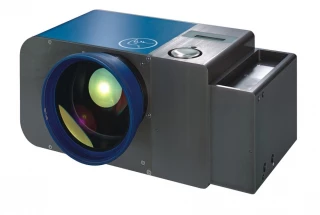
Laser Heads are process heads that may incorporate focusing optics, protective windows, assist gas ports, and sometimes coaxial vision. They adapt the raw laser beam from the source to specific processes such as cutting, welding, or cladding.
F-Theta Lenses are telecentric or near-telecentric scan lenses designed to maintain a flat focal field across the scan area. These Laser Machine Components are chosen based on wavelength, input beam diameter, spot size, and required field size.
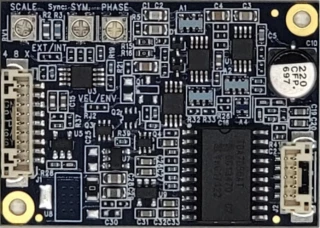
Controllers include scan controllers, motion interfaces, and I/O modules that synchronize galvo position, laser triggering, and external axes. They ensure precise timing between beam modulation and motion.
Beam Delivery assemblies encompass beam expanders, collimators, fiber delivery heads, and relay optics used to transport and condition the beam from the laser source to the workpiece.
Buyer Guidance for Laser Machine Components
When selecting Laser Machine Components, compare key specifications such as wavelength compatibility, clear aperture, maximum scan angle, dynamic accuracy, spot size at focus, and damage threshold. For controllers, evaluate supported communication protocols, interpolation capabilities, latency, and synchronization options with your existing motion platform.
Match F-Theta lenses and beam delivery optics to your laser’s wavelength (e.g., 355 nm, 532 nm, 1064 nm, 10.6 µm) and beam parameters to maintain mode quality and minimize aberrations. For laser heads, confirm cooling method, allowable power density, and available process gas configurations.
On FindLight you can compare multiple Laser Machine Components side by side, examine datasheets, and request quotes directly from suppliers without registration, enabling efficient sourcing for both new system builds and retrofit projects.