
Precision Laser Components for Optical Systems
Frequently Asked Questions
What are laser components and how do they fit into a complete laser system?
Laser components are the discrete optical, optomechanical, and electronic parts that form or support a laser source, such as gain media, resonator optics, pump modules, drivers, beam delivery optics, and safety/interlock hardware. In a complete system, these components together define the wavelength, output power, temporal profile, spatial mode, and beam routing from the active medium to the target or application interface.
What are the main categories of laser optics used in laser assemblies and what functions do they serve?
Core laser optics include mirrors (high reflector and output coupler), lenses (collimating, focusing, beam expander), windows, and beam shaping elements such as aspheres, diffractive optical elements, and cylindrical lenses. High-reflectivity and anti-reflection coatings are applied at specific wavelengths and angles of incidence to control intracavity loss, transmission, and damage threshold, directly impacting efficiency, stability, and maximum usable power.
How do electrical and thermal laser components like drivers and coolers influence laser performance?
Laser diode drivers and Q-switch drivers provide controlled current or voltage waveforms, rise times, and modulation bandwidths, which determine pulse characteristics, noise, and output stability. Thermal components such as TECs, heat sinks, cold plates, and chillers maintain junction or cavity temperature within tight tolerances, stabilizing wavelength and preventing thermal lensing or damage at higher average powers.
Which key specifications should I evaluate when selecting laser mirrors, lenses, and other intracavity optics?
For intracavity optics, important parameters include substrate material, surface figure and roughness, radius of curvature, clear aperture, and coating specs such as center wavelength, bandwidth, reflectance/transmittance, angle of incidence, and laser-induced damage threshold (LIDT). You should match these to your cavity design (resonator geometry, mode size, finesse, and power density) to minimize loss and avoid coating failure at the operating fluence and peak power.
What should I consider when choosing laser diodes, pump modules, or drivers as components for a custom laser build?
For laser diodes and pump modules, evaluate wavelength tolerance, spectral width, output power, slope efficiency, threshold current, beam quality (M² or divergence), package type, and cooling method. For drivers, look at maximum output current and voltage, compliance range, current stability, noise, modulation capability (CW, pulsed, or QCW), protection features (soft start, overcurrent, ESD), and interface options to ensure compatibility with both the diode package and your control architecture.
What are typical lead times and customization options for laser components, and what factors most influence pricing?
Standard catalog components such as common mirrors, lenses, and diode drivers are often available from stock or within 1–3 weeks, while custom coated optics, non-standard substrates, or tailored drivers and diode arrays may require 4–12 weeks depending on process complexity and volumes. Pricing is mainly driven by coating specification and LIDT, material choice, precision tolerances, power class, and any custom mechanical or electrical interfaces, with small prototype quantities usually costing more per unit than volume orders due to setup and test overhead.
Overview of Laser Components
Laser Components in this domain serve as critical elements for managing, directing, and terminating optical power in research and industrial setups. On FindLight you can source laser components optimized for high-power, pulsed, and continuous-wave operation, covering wavelength ranges from the UV to the IR. These components support reliable integration into laser cavities, beam delivery lines, diagnostic stations, and safety terminations.
Ceramic and Glass Laser Components
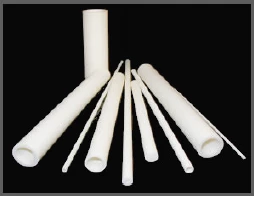
Ceramic and glass components in laser assemblies are used for electrical insulation, mechanical support, and optical isolation. Technical ceramics (such as alumina or zirconia) provide high dielectric strength, thermal stability, and low outgassing, making them suitable for high-vacuum laser enclosures, feedthroughs, spacers, and mounts. Glass components can include precision glass tubes, windows, and insulating bushings for gas and solid-state laser housings.
When evaluating these laser components, consider:
- Thermal properties: maximum operating temperature, thermal conductivity, and shock resistance.
- Electrical insulation: dielectric strength and volume resistivity for high-voltage laser power supplies.
- Mechanical tolerances: OD/ID precision, flatness, concentricity, and surface finish for stable optical alignment.
- Chemical and vacuum compatibility: suitability for UHV systems and resistance to common laser cooling fluids or gases.
Laser Beam Dumps
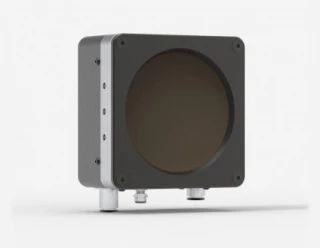
Laser beam dumps are laser components designed to safely absorb and dissipate laser energy, preventing stray reflections and protecting personnel and equipment. They typically use structured absorbing surfaces or black coatings combined with high thermal mass or active cooling to handle continuous or pulsed beams.
Key parameters when comparing laser beam dumps include:
- Power and energy rating: maximum continuous power (W) and pulse energy (J).
- Wavelength range: absorption efficiency across UV, visible, and IR regions.
- Aperture size and acceptance angle: compatibility with beam diameter and alignment tolerances.
- Cooling method: passive convection vs. water-cooled designs.
Buyer Guidance on FindLight
Use FindLight to compare laser components by detailed specifications, datasheets, and manufacturer notes. Filter by material, wavelength range, power handling, form factor, and mounting style. For each listing you can contact suppliers directly and request quotes without registration, streamlining sourcing for prototypes or production runs. This enables engineers and scientists to build reliable laser systems using precisely specified ceramic and glass components and laser beam dumps matched to their operating conditions.