
Motion Control Components for Photonics Labs
Explore Motion Control hardware for precise beam steering, alignment, and sample handling. Compare manual stages, motorized stages, positioners, motors, actuators, and controllers from multiple suppliers.


Frequently Asked Questions
What are linear stages and how do they work?
Linear stages are motion control devices that provide precise and accurate linear motion in one or more axes. They typically consist of a stationary base, a moving platform or carriage, and a linear motion guide. Linear stages are often used in scientific research, manufacturing, and other applications where precision motion control is critical.
What is a rotation stage and how is it used?
A rotation stage is a motion control device that provides precise and accurate rotational motion around one or more axes. They are commonly used in scientific research, manufacturing, and other applications where precise rotational control is needed. Rotation stages can be used for a variety of applications, including optical alignment, microscopy, and laser cutting.
What is an actuator and where is it used?
An actuator is a motion control device that converts energy into motion. They are used to move or control mechanisms or systems, and can be used in a range of applications, including manufacturing, robotics, and automation. Actuators come in a variety of types, including electric, hydraulic, and pneumatic, and can be used to control linear, rotary, or other types of motion.
What is an encoder and why is it important in motion control?
An encoder is a motion control device that provides feedback on the position and/or speed of a moving object. Encoders are essential for accurate and precise motion control, as they provide real-time feedback that allows for precise positioning and control. They can be used in a range of applications, including robotics, automation, and scientific research.
What types of actuators are commonly used in motion control?
There are several types of actuators used in motion control, including piezoelectric, voice coil, stepper, and DC servo motors. Each type has its own advantages and disadvantages, and the choice of actuator depends on the specific application requirements.
What is encoder resolution and why is it important in motion control?
Encoder resolution is the number of pulses generated by an encoder for each revolution or movement of a motor. It determines the accuracy and precision of the motor's motion control. A higher encoder resolution means greater accuracy and precision in motion control, but it also requires a higher level of processing power and can increase the cost of the system.
Motion Control for Optical and Photonics Systems
The Motion Control category on FindLight covers mechanical and electromechanical components used to position optics, samples, and instruments with high precision. These products support alignment, beam steering, focusing, scanning, and sample translation in photonics R&D, metrology, microscopy, and OEM instruments.
Key Motion Control Subcategories
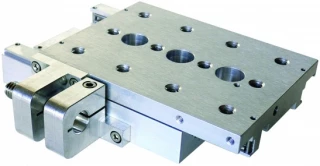
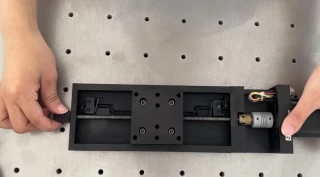
Manual Stages provide hand-actuated linear, rotary, and goniometric motion. Typical applications include initial optical alignment, polarization control, focus adjustment, and fixture positioning where repeatability and stiffness matter more than speed or automation. Many platforms offer micrometer or fine-pitch screw drives, dovetail or crossed-roller bearings, and compact footprints for breadboards and optical tables.
Motorized Stages enable computer-controlled Motion Control for automated scans, closed-loop positioning, and repeatable sequences. Options include linear, rotary, XY, XYZ, and vertical lift stages with stepper or servo drives. Key parameters include travel range, load capacity, straightness/flatness, bi-directional repeatability, resolution, and maximum speed to match scanning microscopy, spectroscopy, or beam delivery needs.
Positioners cover goniometers, tip-tilt mounts, translation and rotation modules, and multi-axis assemblies. These Motion Control elements are used to orient lenses, mirrors, samples, and fibers with defined angular or linear ranges. Selection typically considers center of rotation, stiffness, backlash, and integration with other mechanical components.
Motors and Actuators include stepper motors, DC/servo motors, piezo actuators, and linear actuators used to drive stages or custom mechanisms. Buyers can compare torque, thrust, resolution (step size), response time, and duty cycle to determine suitability for high-speed scanning, fine focusing, or nanometer positioning tasks.
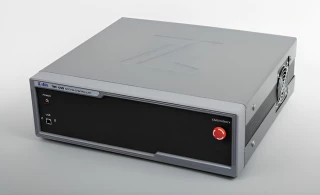
Controllers & Metrology provide electronic Motion Control interfaces and feedback. This includes motor drivers, multi-axis controllers, joystick units, and position feedback devices such as encoders and linear scales. These components enable closed-loop control, trajectory planning, synchronization with detectors, and precise readout of position.
Buyer Guidance on FindLight
When sourcing Motion Control hardware on FindLight, start by defining required degrees of freedom, load, travel, and target positioning accuracy. Compare datasheet specifications such as resolution, repeatability, stiffness, and speed, as well as mounting patterns and compatibility with your existing optics or automation framework. Use the platform to review options from multiple suppliers, request quotes directly, and obtain technical details without registration. This helps ensure your Motion Control selection aligns with both performance and integration requirements in your photonics projects.