
Optical Mounts for Precision Beam Control

Frequently Asked Questions
What are optical mounts used for?
Optical mounts are used to securely hold optical components such as mirrors, lenses, and filters in place within an optical system.
What types of mounts are available?
There are a variety of optical mounts available, including kinematic mounts, flexure mounts, post mounts, and more.
How do I choose the right mount for my application?
The choice of mount will depend on factors such as the size and shape of the optical component, the required precision and stability, and the specific application requirements.
What materials are optical mounts made from?
Optical mounts can be made from a variety of materials including aluminum, stainless steel, and titanium, among others.
Can optical mounts be customized?
Yes, many optical mount manufacturers offer custom design and fabrication services to meet specific customer requirements.
What is the maximum weight that an optical mount can support?
The maximum weight that an optical mount can support will depend on the specific mount and its design specifications. It's important to choose a mount that is rated to support the weight of your optical component.
Overview of Optical Mounts
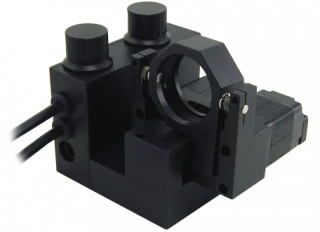
Optical Mounts are mechanical fixtures used to hold and accurately position lenses, mirrors, prisms, wedges, and other components in beam paths and imaging systems. In light transport applications they provide stable angular and translational adjustment, enabling precise alignment of optical axes in laboratory setups, OEM instruments, and production test stages.
On FindLight you can source Optical Mounts designed for repeatable adjustment, low drift, and compatibility with standard posts, rails, and optical tables. Typical mechanisms include fine-pitch screws, differential micrometers, and flexure designs that support sub-arcminute or micron-level positioning.
Key Types of Optical Mounts
Gimbal Mounts provide pure rotational motion about the center of the mounted optic. This minimizes beam walk when steering mirrors or other reflective components. Gimbal Optical Mounts are suited for beam delivery, interferometers, and alignment-sensitive laser paths.
Optical Positioners include translation and multi-axis stages for moving optics linearly or in combination with tilt and rotation. These Optical Mounts support XYZ positioning of lenses, objectives, and fiber couplers in alignment stations and R&D setups.
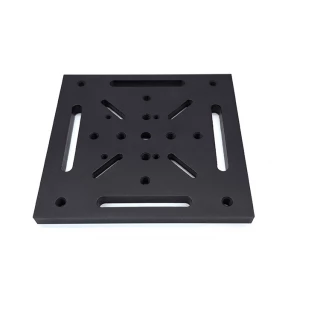
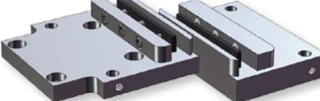
Specialized Optic Mounts are engineered for specific components or constraints, such as cylindrical lenses, prisms, large-diameter optics, or compact integration in OEM systems. They often combine custom clamping geometries with defined adjustment ranges.
Wedge Mounts hold optical wedges or thin prisms and allow controlled angular tuning of deviation and dispersion. These Optical Mounts are used in beam steering, tunable delay lines, and dispersion compensation assemblies.
Buyer Guidance on FindLight
When selecting Optical Mounts, compare clear aperture, optic diameter range, material and finish, angular and linear adjustment range, resolution, load capacity, and compatibility with your post or rail standards. Consider thermal stability and long-term drift for high-power laser or long-duration experiments.
FindLight aggregates Optical Mounts from multiple manufacturers, allowing you to review datasheets, match specifications to your beam geometry, and evaluate mechanical interfaces before purchase. You can contact suppliers directly to request quotes or technical clarifications; no registration is required to submit inquiries or download most documentation.