
Optical Networking Components and Modules
Frequently Asked Questions
What is meant by Optical Networking in the context of fiber optics, and which components typically fall into this category?
Optical networking refers to the transport, routing, and management of data over optical fiber using devices such as transceivers, amplifiers, ROADMs, multiplexers/demultiplexers, OADMs, optical switches, and monitoring modules. These components operate in standardized windows (typically O-, C-, and L-bands) and implement protocols such as Ethernet, SONET/SDH, OTN, or Fibre Channel over DWDM or CWDM channels.
How do WDM-based optical networks work and what is the difference between CWDM and DWDM systems?
Wavelength Division Multiplexing (WDM) combines multiple optical carrier signals at different wavelengths onto a single fiber using MUX/DEMUX devices and corresponding transceivers tuned to those channels. CWDM uses wider channel spacing (typically 20 nm) over 1270–1610 nm, favoring lower cost but shorter reach and fewer channels, while DWDM uses narrow spacing (100 GHz, 50 GHz, or finer) in the C/L bands to support many more channels, longer reach, and higher spectral efficiency at the cost of stricter wavelength stability and tighter optical power budgets.
What roles do optical amplifiers, ROADMs, and optical switches play in an optical network?
Optical amplifiers (e.g., EDFA, Raman) boost signal power along the link to overcome span loss without optical-electrical-optical conversion. ROADMs (Reconfigurable Optical Add-Drop Multiplexers) select, add, or drop specific wavelengths under software control, enabling flexible wavelength routing, while optical switches (MEMS, LCoS, or solid-state) physically reroute optical paths at the fiber or wavelength level for protection switching, test access, or dynamic reconfiguration.
Which key technical specifications should I evaluate when selecting optical networking equipment for a given link budget and data rate?
Critical parameters include supported data rates and modulation formats (e.g., NRZ, PAM4, coherent QPSK/16QAM), receiver sensitivity, transmit output power, and OSNR requirements relative to your link budget (fiber loss, splice/connector loss, and margin). You should also review wavelength range and grid (CWDM/DWDM and channel spacing), dispersion tolerance or required compensation, FEC support, and interoperability with your existing protocol (Ethernet, OTN, Fibre Channel) and management interfaces (SNMP, NETCONF, CLI).
How do I compare different WDM MUX/DEMUX and ROADM products for my application?
Compare the insertion loss per channel, isolation (adjacent and non-adjacent), polarization dependent loss (PDL), and return loss, as these directly affect OSNR and reach. For ROADMs, also evaluate degree and directionality (e.g., 2-degree vs 4-degree), colorless/directionless/contentionless capability, channel count and grid flexibility (fixed vs flex-grid), and control-plane integration via supported management and control interfaces.
What factors influence lead time, pricing, and customization options for optical networking components?
Lead times and pricing are driven by integration level (discrete modules vs line cards vs chassis systems), channel count, data rate, and whether you require specialized wavelengths or custom connectorization and housing. Custom features such as non-standard ITU grids, extended temperature range, hardened enclosures, specific management firmware, or pre-engineered link designs typically increase both cost and delivery time compared to catalog configurations.
Optical Networking Solutions for Light Transport
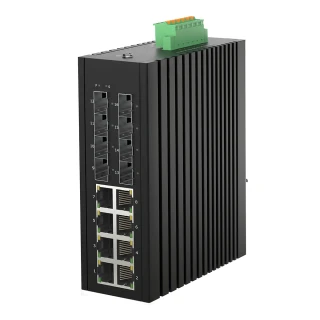
Explore optical networking components on FindLight for building and upgrading light transport links in access, metro, and data-center environments. This category aggregates active devices and passive modules used for multiplexing, routing, switching, and conditioning optical signals across fiber networks.
Key Optical Networking Subcategories
Arrayed Waveguide Gratings (AWG): Passive WDM devices for dense and coarse WDM systems. Critical parameters include channel spacing (e.g., 50/100 GHz), channel count, passband shape, insertion loss, and uniformity.
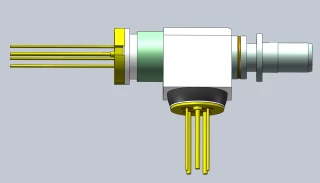
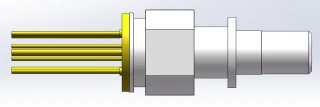
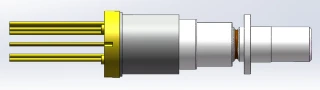
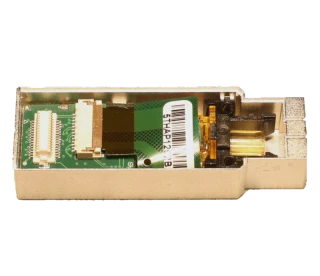
TOSA, ROSA, and BOSA: Transmitter Optical Sub-Assemblies (TOSA), Receiver Optical Sub-Assemblies (ROSA), and Bidirectional Optical Sub-Assemblies (BOSA) integrate lasers, photodiodes, and coupling optics. Evaluate wavelength (850/1310/1490/1550 nm), output power, receiver sensitivity, extinction ratio, bandwidth, and package type.
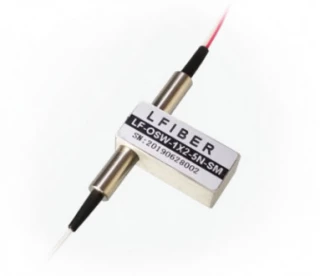
Fiber Optic Switches: Used for signal routing, protection switching, and test automation. Key specs include configuration (1×2, 2×2, M×N), switching time, repeatability, insertion loss, return loss, and driver/command interface.
Gigabit Passive Optical Networks (GPON): OLT/ONT modules and related components for FTTx deployments. Review supported standards (GPON, XG-PON, XGS-PON), line rates, dynamic range, and management interfaces.
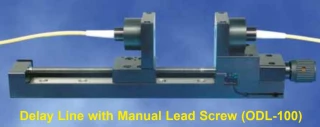
Optical Delay Lines: Provide controlled group delay for synchronization, radar, and test setups. Compare delay range, step resolution, dispersion, and environmental stability.
Transceivers: Pluggable optical networking modules (SFP, SFP+, QSFP, CFP, etc.) for Ethernet, Fibre Channel, and OTN. Examine data rate, reach, fiber type, operating wavelength, protocol compliance, power consumption, and diagnostics (DDM/DOM).
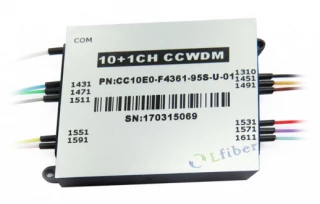
Wavelength-Division Multiplexing (WDM) Modules: Mux/demux and OADM components. Focus on channel plan, isolation, polarization-dependent loss, and power handling.
Optical Networking Accessories: Patch cords, attenuators, connectors, and other supporting hardware required for integration and lab setups.
Buyer Guidance for Optical Networking Components
When sourcing optical networking hardware, align component specifications with link budgets, protocol standards, and environmental requirements. Compare datasheets across vendors for optical power levels, sensitivity, loss figures, reliability data (TELCORDIA/GR), and operating temperature ranges.
On FindLight you can filter optical networking products by type, wavelength, data rate, and package, then contact manufacturers or distributors directly. Request detailed quotations, custom configurations, and lead-time information without registration, streamlining technical evaluation and procurement workflows.