
Spectrometers for Precise Spectral Analysis
Frequently Asked Questions
What is a spectrometer and how does it work?
A spectrometer is an instrument that disperses incoming optical radiation into its constituent wavelengths and measures the intensity as a function of wavelength or frequency. Most devices use a slit, collimating optics, a dispersive element (diffraction grating or prism), imaging optics, and a detector array (CCD, CMOS, or InGaAs) to convert the spatially separated spectrum into an electronic signal. The resulting spectrum is processed to extract parameters such as peak wavelength, bandwidth, and spectral power distribution.
What are the main types of optical spectrometers and how do they differ?
Key types include grating spectrometers, prism spectrometers, and Fourier-transform (FT) spectrometers. Grating spectrometers rely on diffraction gratings and are common from UV to NIR, while prism designs are simpler but have nonlinear dispersion and are less common in high-resolution applications. FT spectrometers, mainly in the mid-IR and NIR, use interferometry (Michelson interferometers) to reconstruct spectra via Fourier transform, offering high spectral resolution and multiplex (Fellgett) and throughput (Jacquinot) advantages.
What is spectral resolution, and how is it specified for spectrometers?
Spectral resolution is the smallest wavelength difference that the instrument can distinguish, often specified as Δλ in nm or as resolving power R = λ/Δλ. It depends on dispersion (grating groove density and focal length), entrance slit width, optical quality, and detector pixel size. Higher resolution generally requires narrower slits and longer focal lengths, which reduces throughput and may demand longer integration times or higher source intensity.
Which key specifications should I focus on when selecting a spectrometer for my application?
Critical parameters include spectral range, spectral resolution, optical throughput (f-number and slit size), dynamic range, stray light, and signal-to-noise ratio. Detector characteristics such as pixel size, quantum efficiency, readout noise, and cooling (uncooled vs TEC-cooled) strongly affect performance, especially for low-light or long-integration measurements. Interface options (USB, Ethernet, OEM board-level) and triggering/synchronization capabilities also matter for integration into automated setups or OEM systems.
How do I compare spectrometers for low-light or high-speed measurements?
For low-light applications, prioritize high quantum efficiency in the relevant band, deep well capacity, low dark current (often with cooled detectors), and low readout noise, along with high optical throughput. For high-speed or real-time applications, look at maximum acquisition rate (Hz), minimum integration time, on-chip or onboard processing, and data interface bandwidth, while accepting that very high frame rates may limit resolution or SNR. Also review specifications for timing jitter, external trigger options, and line-rate stability if synchronizing with pulsed sources or scanning systems.
What factors influence pricing and lead times for spectrometers, and what customization is typical?
Pricing is mainly driven by spectral range (e.g., UV-enhanced or InGaAs detectors cost more), spectral resolution, detector type and cooling, mechanical robustness, and required certifications. Lead times can vary from stock shipment for standard compact modules to several weeks or months for custom configurations involving special gratings, alternative detectors, or fiber-coupled inputs. Common customizations include tailored wavelength ranges, specific slit widths, custom coatings, OEM board-level formats, and application-specific calibration or firmware.
Engineered Spectrometers for Research and OEM Integration
Spectrometers on FindLight cover a broad range of light detection needs, from routine color quality checks to high‑resolution spectral analysis in research and production. These instruments decompose incoming radiation into its spectral components and quantify intensity versus wavelength, enabling precise characterization of sources, materials, and optical systems.
Key Types of Spectrometers Available
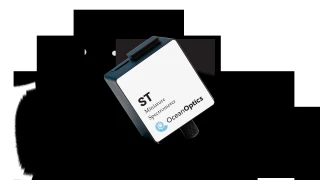
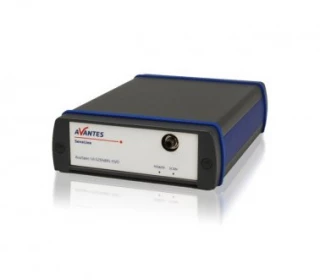
Compact spectrometers are miniature, fiber‑coupled or free‑space units suited for OEM integration, portable diagnostics, and embedded monitoring where footprint and power consumption are constrained.
Absorption spectrometers measure wavelength‑dependent attenuation to derive concentration, thickness, or composition of gases, liquids, and solids using Beer–Lambert relationships.
Colorimeters provide tristimulus or CIE color coordinates for display calibration, LED and luminaire binning, and quality control in manufacturing.
Hyperspectral imagers combine spectrometers with 2D imaging sensors to acquire spatially resolved spectra across many bands for remote sensing, biomedical imaging, and process inspection.
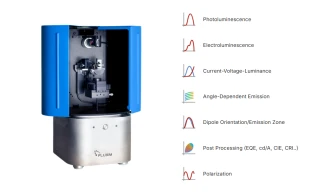
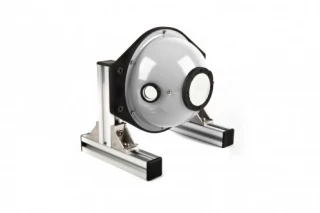
Imaging colorimeter and spectrometer systems deliver both colorimetric and spectral data per pixel, supporting uniformity mapping of displays, projectors, and light fields.
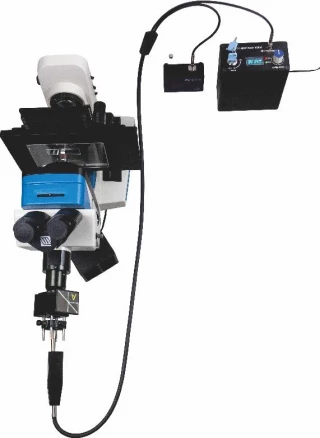
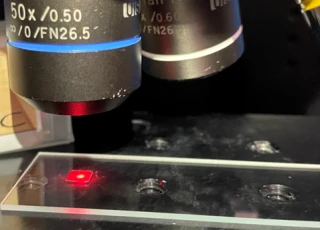
Microspectrophotometers couple spectrometers to microscopes to analyze micro‑scale features such as thin films, microstructures, and biological specimens.
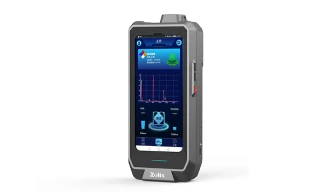
Raman spectrometers exploit inelastic scattering to probe molecular vibrational modes, enabling non‑destructive chemical identification and structural analysis.
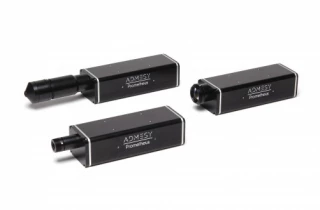
Spectrographs and monochromators provide tunable wavelength selection or full‑spectrum acquisition for detector characterization, source tuning, and optical testing.
Spectroscopy consumables, accessories and kits include cuvettes, probe heads, fiber assemblies, calibration standards, and mounting hardware to complete your spectrometers setup.
Buyer Guidance for Selecting Spectrometers
When comparing spectrometers, evaluate wavelength range, spectral resolution, optical throughput (f‑number and slit size), dynamic range, SNR, detector type (Si, InGaAs, HgCdTe), integration time limits, and interface options (USB, Ethernet, OEM digital I/O). For imaging systems, also review field of view, pixel size, frame rate, and scanning method (pushbroom vs snapshot).
On FindLight you can filter spectrometers by subcategory and key specifications, then contact suppliers directly. Request detailed quotes, customization options, and lead times without registration, streamlining component selection for your next optical or spectroscopy system.