
Optical Metrology Instruments and Tools

Frequently Asked Questions
What is optical metrology and how does it differ from contact measurement methods?
Optical metrology refers to measuring geometry, surface quality, displacement, or optical properties using light instead of physical probes. Unlike contact methods (e.g., CMMs or stylus profilometers), optical systems are non-contact, can measure soft or delicate surfaces without deformation, and often capture full-field data rather than single-point measurements.
What are the main types of optical metrology systems and their typical use cases?
Common types include interferometers (for sub-nanometer surface figure and flatness), white-light or coherence scanning profilometers (for 3D surface topography), triangulation and confocal sensors (for distance and thickness), and optical coordinate measuring machines (for dimensional inspection). Additional categories include ellipsometers for thin-film thickness and refractive index, and scatterometry systems for periodic micro- and nano-structures.
Which key physical principles are used in optical metrology instruments?
Most systems rely on interference (phase and coherence), reflection and scattering, triangulation geometry, confocal imaging, or polarization changes. For example, phase-shifting interferometers derive surface height from phase differences between reference and test beams, while confocal chromatic sensors use wavelength-dependent focus positions to encode distance with micrometer or sub-micrometer resolution.
What specifications are most important when selecting an optical metrology system?
Critical parameters include lateral and vertical resolution, measurement range (height, distance, or thickness), field of view, accuracy and repeatability, and allowable surface reflectivity/roughness. You should also consider measurement speed, environmental sensitivity (vibration, temperature), sample size and access, and compatibility with your wavelength range or coating materials.
How should I compare different optical metrology technologies for my application?
Match the technology to your required tolerance and surface type: interferometers for high-precision optics and smooth surfaces; coherence scanning or white-light profilometers for structured or moderately rough surfaces; triangulation or confocal sensors for inline distance/thickness measurements and higher slopes. Evaluate vendor specifications using standardized norms (e.g., ISO 25178 for surface texture) where available, and review real measurement examples on similar materials or geometries.
What are typical lead times, customization options, and cost drivers for optical metrology equipment?
Standard benchtop instruments and sensors often have lead times from 4–10 weeks, while highly customized systems with special stages, enclosures, or wavelengths can extend to several months. Major pricing drivers include sensor architecture (interferometric vs. triangulation), required accuracy and resolution, automation level (motorized stages, robotics, in-line integration), software capabilities, and any custom optics or fixturing.
Optical Metrology Instruments Overview
Optical Metrology covers non-contact techniques for measuring displacement, surface topography, polarization, strain, and dimensional features using light. On FindLight you can compare optical metrology instruments across multiple vendors for research, manufacturing, and QA applications without registration.
Typical systems in this Optical Metrology category include displacement gages, interferometers, optical frequency combs, optical surface profilers, polarimeters, strain gages, laser micrometers, laser gyroscopes, and related metrology accessories. These tools enable nanometer to millimeter scale measurements with high repeatability and minimal influence on the test object.
Key Optical Metrology Subcategories
- Displacement Gages: Non-contact sensors using triangulation, confocal, or interferometric methods to track position, runout, and vibration.
- Interferometers: Systems based on phase and fringe analysis for flatness, wavefront, and path-length measurements down to sub-nanometer levels.
- Optical Frequency Combs: Precisely spaced spectral lines used as optical rulers for high-accuracy distance and frequency metrology.
- Optical Surface Profilers: Instruments (typically white light or laser scanning) that map surface roughness, waviness, and step heights in 2D/3D.
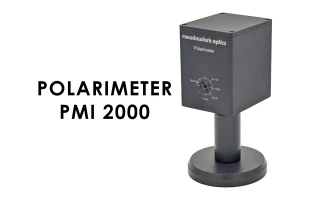
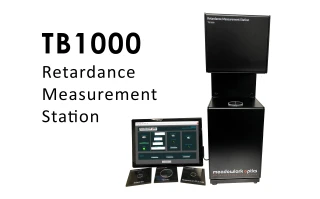
- Polarimeters: Devices that measure polarization state, retardance, and diattenuation for materials characterization and system alignment.
- Strain Gages: Optical Metrology solutions using FBG or other optical principles to monitor strain, load, and structural health.
- Laser Micrometers: Diameter and edge-measurement systems using scanning or fixed laser beams for precision gauging.
- Laser Gyroscopes: Rotation sensors using the Sagnac effect for inertial navigation, platform stabilization, and metrology setups.
- Metrology Accessories: Optics, mounts, stages, probes, and calibration tools that support optical metrology configurations.
Buyer Guidance for Optical Metrology
When selecting optical metrology equipment on FindLight, compare key specifications such as wavelength, measurement range, linearity, resolution, repeatability, sampling rate, and environmental stability. Also review interface options (USB, Ethernet, analog), software compatibility, calibration procedures, and mechanical integration (mounting standards, footprint, beam height).
Use FindLight to browse detailed datasheets, filter optical metrology products by technical parameters, and request quotes directly from manufacturers or distributors. You can contact suppliers for pricing, lead times, and customization without creating an account, enabling fast evaluation and procurement of suitable optical metrology solutions.