
Optical Inspection Tools for Non-Contact Metrology
Frequently Asked Questions
What is optical inspection and how does it differ from other non-contact inspection methods?
Optical inspection uses visible, UV, or IR light combined with imaging optics and sensors to detect surface defects, dimensional deviations, or pattern errors without physical contact. Unlike ultrasonic or X-ray methods that probe subsurface features, optical inspection is primarily sensitive to surface topology, reflectivity, and contrast, making it suited for tasks like PCB inspection, wafer metrology, precision mechanics, and coating evaluation.
What are the main types of optical inspection systems and their typical use cases?
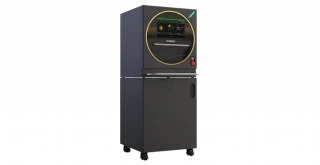
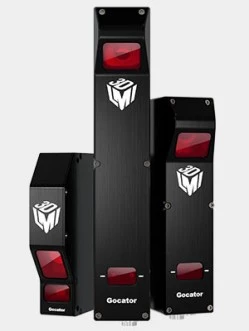
Common types include machine vision systems (2D cameras with telecentric or standard lenses), 3D optical profilers (confocal, white-light interferometers, triangulation scanners), AOI (automated optical inspection) machines, and microscope-based inspection stations. 2D systems are optimized for defect detection and pattern recognition, while 3D profilers measure surface height, roughness, and form; AOI systems integrate lighting, optics, and software for high-throughput inspection of PCBs, semiconductor wafers, and SMT assemblies.
What key optical and imaging principles are important to understand for optical inspection?
Critical concepts include numerical aperture (NA) and resolution, depth of field (DOF), magnification, and telecentricity, which together determine the smallest detectable feature and measurement accuracy. Illumination geometry (brightfield, darkfield, coaxial, ring light, structured light) strongly affects contrast and defect visibility, while sensor parameters such as pixel size, dynamic range, and global vs. rolling shutter define attainable speed and image quality.
Which specifications should I focus on when selecting an optical inspection system?
Important specs include optical resolution (µm per pixel or line pairs/mm), field of view, working distance, and depth of field, as well as measurement accuracy and repeatability (often specified as ±µm or % of reading). On the electronics side, look at sensor type (CCD/CMOS), pixel size, frame rate or scan speed, supported wavelengths, interface (USB3, GigE, Camera Link, CoaXPress), and software/SDK compatibility with your existing automation or analysis environment.
How do I compare different optical inspection solutions for my application?
First match the system’s resolution and accuracy to your smallest critical feature and tolerance stack, then compare throughput based on cycle time, field of view, and automation features such as motorized stages, conveyors, and autofocus. Evaluate illumination flexibility (interchangeable light modules, adjustable angles, polarization), robustness to part variability (surface finish, color, reflectivity), and available measurement/inspection algorithms such as edge detection, pattern matching, 3D reconstruction, and statistical reporting.
What factors influence lead time, pricing, and customization for optical inspection equipment?
Lead times are typically driven by system complexity: standalone cameras and lenses may ship within 1–3 weeks, while fully integrated AOI or 3D metrology systems with custom fixturing, motion stages, and software integration can require 8–16 weeks. Pricing depends mainly on sensor performance, optics quality, motion hardware, and software capabilities; customization options often include bespoke fixtures, tailored illumination, custom inspection recipes, and integration with MES/PLC systems via standard industrial protocols.
Non-Contact Optical Inspection for R&D and Production
The Optical Inspection category on FindLight covers non-contact inspection tools for light detection, metrology, and process monitoring. These systems leverage controlled illumination and precise optical detection to characterize lenses, surfaces, media, and physical parameters such as temperature and position.
Key Optical Inspection Sub-Types
Lens Testing instruments evaluate imaging and laser optics via MTF, wavefront, focal length, and surface quality measurements. They support lens alignment, QA of lens assemblies, and verification of optical performance against design specs.
Optical Interrogators read fiber Bragg gratings and other optical sensors, converting wavelength or intensity shifts into strain, temperature, or pressure data. These Optical Inspection units are common in structural health monitoring and industrial sensing networks.
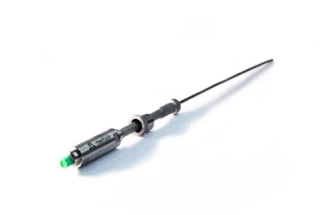
Temperature Probes and Optical Immersion Probes use fiber optics or robust probe tips to measure temperature or spectroscopic signatures in harsh or chemically aggressive environments, enabling non-electrical sensing inside reactors, pipelines, and high-EMI zones.
Photoelectric Sensors provide presence, position, and counting functions using through-beam, retroreflective, or diffuse-reflective geometries. They are widely used for machine safety, part detection, and conveyor-based Optical Inspection tasks.
Sorting and Metrology Systems integrate optics, motion control, and software to classify parts by dimension, defect, or optical signature. These systems support automated inspection, grading, and quality control in production lines.
Reflectometers and Transmissometers quantify reflectance, transmittance, and loss for coatings, optical components, and media. They are essential for coating verification, fiber link characterization, and material optical property measurements.
Inspection Software provides image processing, signal analysis, and data visualization for Optical Inspection hardware. It supports tasks such as defect classification, pass/fail criteria, and report generation.
Buyer Guidance on FindLight
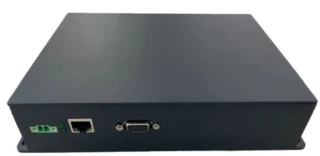
When selecting Optical Inspection equipment, compare wavelength range, spatial and temporal resolution, dynamic range, environmental ratings, and interface options (Ethernet, fieldbus, or software APIs). Ensure compatibility with your existing optics, fibers, and mechanical fixtures. On FindLight you can review detailed specifications, contrast multiple vendors, and request quotes directly from suppliers without registration. Use these tools to build or upgrade your non-contact Optical Inspection workflows for laboratory, field, or in-line applications.