
Diffusers for Precision Light Transport
Frequently Asked Questions
What are diffusers used for?
Diffusers are used to scatter and homogenize light, creating a uniform intensity distribution. They are commonly used in applications such as microscopy, lithography, and spectroscopy.
What materials are diffusers made of?
Diffusers can be made of a variety of materials, including glass, plastic, and fused silica. The choice of material depends on factors such as the desired degree of scatter, the amount of light transmitted, and the uniformity of the intensity distribution.
What factors should I consider when choosing a diffuser?
When choosing a diffuser, consider factors such as the degree of scatter, the amount of light transmitted, and the uniformity of the intensity distribution. Some diffusers may be optimized for specific wavelengths or applications. Consult with an optics expert or manufacturer to ensure that you choose the right diffuser for your application.
What is the difference between ground glass diffusers and holographic diffusers?
Ground glass diffusers are made by physically grinding the surface of a glass plate, while holographic diffusers use holographic technology to create a diffraction grating pattern on the surface of the diffuser. Holographic diffusers typically offer higher performance and better uniformity than ground glass diffusers, but may be more expensive.
What is the difference between transmission and reflection diffusers?
Transmission diffusers transmit light through the diffuser material, while reflection diffusers reflect light off the surface of the diffuser. Transmission diffusers are typically used for applications that require high transmission and low scatter, while reflection diffusers are used for applications that require high reflectivity and low scatter.
Overview of Light Transport Diffusers
Diffusers for light transport are passive optical components used to spatially redistribute incident light, improving uniformity and controlling angular output. In this domain, Diffusers are commonly employed in radiometric measurements, illumination systems, calibration setups, and detector conditioning where stable, predictable light fields are required.
Light transport Diffusers are engineered to scatter or spread light without introducing excessive absorption or spectral distortion. Typical use cases include flattening non-uniform beam profiles, matching source emission to detector fields of view, and conditioning light for fiber coupling or integrating spheres.
Microdiffuser and Cosine Corrector Types
Microdiffuser elements use micro-structured surfaces or bulk scattering media to control diffusion angle and intensity distribution. These Diffusers can be specified by scatter angle (FWHM or FOV), surface pattern type, transmission efficiency, and operating wavelength range. They are suitable for beam shaping, display backlighting, and homogenizing laser or LED sources.
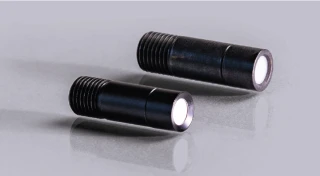
Cosine Correctors are specialized Diffusers designed to provide a cosine angular response, matching the Lambertian behavior required in many irradiance and illuminance measurements. When attached to a detector, a cosine corrector helps ensure that signals are proportional to incident flux from all directions according to a cosine law. Key parameters include spectral range, cosine response error, acceptance angle, and coupling method to photodiodes, spectrometers, or radiometers.
Buyer Guidance for Selecting Diffusers
When sourcing Diffusers on FindLight, review the optical and mechanical specifications in detail:
- Wavelength range: Ensure compatibility with UV, visible, or IR bands relevant to your source and detector.
- Diffusion angle and profile: Compare FWHM, divergence, and uniformity requirements for your application.
- Transmission and scatter efficiency: Balance throughput against required level of homogenization.
- Form factor and materials: Evaluate substrate material, diameter, thickness, and mounting interface.
- Detector coupling: For cosine corrector Diffusers, check connector type and adaptation to your sensor head.
Use FindLight to compare multiple Diffusers side by side, examine datasheets, and verify tolerances that matter to your system design. You can request quotes directly from suppliers without registration, enabling rapid price and lead-time comparison across microdiffuser and cosine corrector options.