
Laser Windows for Precision Optical Systems
Frequently Asked Questions
What materials are commonly used for laser windows?
Laser windows are typically made from materials such as fused silica, sapphire, and BK7 glass. The choice of material depends on factors such as the laser wavelength, power level, and application requirements.
What is the purpose of anti-reflection coatings on laser windows?
Anti-reflection coatings on laser windows are designed to minimize the amount of light reflected back into the laser system, which can cause interference and reduce overall efficiency. These coatings work by reducing the difference in refractive index between the window material and the surrounding air, thereby minimizing the amount of light that is reflected.
What is the maximum power level that laser windows can handle?
The maximum power level that laser windows can handle depends on various factors such as the window material, thickness, and coating. It's important to consult with an optics expert or manufacturer to determine the appropriate window for your specific laser application.
Can laser windows be used in high-temperature applications?
Laser windows can be designed and manufactured to withstand high temperatures, depending on the specific application requirements. Materials such as sapphire and fused silica are often used for high-temperature applications.
How do I maintain and clean laser windows?
Maintaining and cleaning laser windows is important to ensure optimal performance and longevity. Follow the manufacturer's instructions for cleaning and handling the windows, and avoid touching the optical surfaces with bare hands. Use cleanroom gloves and lint-free wipes to clean the windows, and avoid using harsh chemicals or abrasive materials that could scratch or damage the surfaces.
Can laser windows be used for both transmission and reflection?
Yes, laser windows can be designed and coated to achieve both transmission and reflection properties. These dual-purpose windows are often used in applications where precise control of the laser beam is required.
What is the typical thickness of laser windows?
The typical thickness of laser windows can range from a few millimeters to several centimeters, depending on the window material, laser power level, and application requirements.
Can laser windows be used in ultrafast laser applications?
Yes, laser windows can be designed and coated to work in ultrafast laser applications, where pulse durations are typically in the femtosecond range. Materials such as sapphire and fused silica are commonly used for ultrafast laser windows.
What Are Laser Windows?
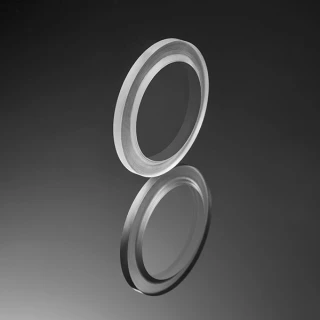
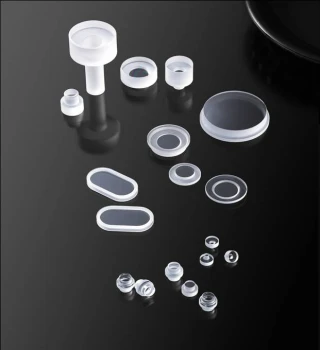
Laser Windows are transmissive optical elements used to protect sensitive components while maintaining beam quality in laser and imaging systems. Positioned in the beam path, they provide an environmental barrier without focusing or significantly altering the wavefront. Typical applications include beam delivery, laser enclosures, vacuum chambers, and protective shields in high-power setups.
On FindLight, Laser Windows are available with anti-reflection (AR) coatings optimized for specific wavelengths or broadband ranges. Substrates include fused silica, BK7, UV-grade fused silica, sapphire, and other materials selected for low absorption, controlled birefringence, and mechanical robustness under thermal and laser-induced stress.
Flat Windows
Flat Windows are parallel-plate laser windows with highly controlled surface flatness and parallelism. They are used when minimal beam deviation and low wavefront distortion are required. Key specifications include diameter or clear aperture, thickness, transmitted wavefront error (TWE), surface quality (e.g., 20-10, 40-20), and parallelism in arcseconds. Coatings are matched to the laser line or spectral band (UV, visible, NIR, IR) and desired transmission or reflection performance.
In high-power laser transport, flat windows must also be evaluated for damage threshold, bulk absorption, and thermal expansion to minimize beam distortion and risk of coating failure.
Wedge Windows
Wedge Windows are laser windows with a small angular wedge between the two surfaces. This geometry deflects back-reflections out of the incident beam path, reducing feedback into the laser cavity and suppressing etalon fringes. Wedge angle, orientation, and material dispersion are critical parameters when integrating into interferometers, high-coherence sources, and sensitive measurement setups.
As with flat windows, wedge windows are specified by substrate, wedge angle, surface quality, TWE, and AR coating design.
Buyer Guidance on FindLight
When selecting laser windows, compare:
- Substrate material and absorption at your laser wavelength
- AR coating bandwidth, central wavelength, and damage threshold
- Surface flatness, quality, and parallelism or wedge angle
- Clear aperture, thickness, and mechanical tolerances for your mount
Use FindLight to filter laser windows by material, coating, wavelength range, and geometry across flat windows and wedge windows. Review datasheets and performance curves, then request quotes or technical clarifications directly from suppliers; no registration is required.