
Additive Manufacturing FDM Printer Solutions
Frequently Asked Questions
What is additive manufacturing and how does it work?
Additive manufacturing (AM), also known as 3D printing, is a process that builds objects layer by layer from digital models, typically using materials such as polymers, metals, or ceramics. Unlike subtractive methods, AM deposits material only where needed, enabling complex geometries and internal structures that are difficult or impossible to achieve with traditional manufacturing.
What are the key technical principles and terminology in additive manufacturing?
Key principles include layer-by-layer fabrication, material feedstock (powder, filament, resin), and energy sources (laser, electron beam, UV light) for material consolidation. Important terminology includes build volume, resolution, support structures, and post-processing, all of which impact the final part's properties and performance.
What are the main sub-types of additive manufacturing and how do they differ?
Major AM sub-types include Fused Deposition Modeling (FDM), Stereolithography (SLA), Selective Laser Sintering (SLS), and Direct Metal Laser Sintering (DMLS). FDM extrudes thermoplastic filaments, SLA uses photopolymerization with UV lasers, SLS and DMLS fuse powder materials with lasers. Each method varies in material compatibility, resolution, mechanical properties, and application suitability.
Which specifications and parameters are most important when selecting an additive manufacturing system?
Critical parameters include build volume, layer resolution, supported materials, print speed, and energy source type. Additional considerations are system reliability, software compatibility, and the availability of post-processing options, all of which affect throughput and part quality.
How should I compare additive manufacturing products for my application?
Compare systems based on material compatibility, achievable tolerances, mechanical properties of printed parts, and total cost of ownership. Evaluate vendor support, maintenance requirements, and integration with existing workflows to ensure the chosen system meets your technical and operational needs.
What are typical lead times, customization options, and pricing factors for additive manufacturing equipment?
Lead times for AM equipment range from several weeks to a few months, depending on system complexity and customization. Customization options may include specialized print heads, material handling systems, or software integration. Pricing is influenced by build volume, supported materials, automation features, and after-sales support.
How can I find, compare, and request quotes for additive manufacturing products on FindLight without registering?
On FindLight, you can browse the Additive Manufacturing category, filter products by specifications such as material type, build volume, and technology, and view detailed datasheets. To request a quote, use the 'Inquire Price' form on any product page (no registration is required); simply provide your contact information and requirements.
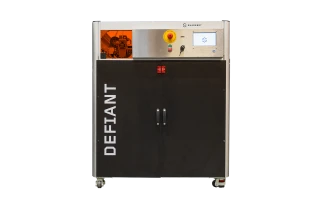
Additive Manufacturing with FDM Technology
Additive Manufacturing using fused deposition modeling (FDM) is a thermoplastic extrusion process where a heated nozzle deposits material layer by layer to create functional parts, tooling, and prototypes. On FindLight, you can source FDM printers tailored for industrial tooling, jigs and fixtures, and low-volume production runs.
In this Additive Manufacturing category, FDM printers typically use engineering-grade thermoplastics such as ABS, PLA, PETG, nylon, and filled composites. Parts are generated from sliced CAD models, enabling complex internal geometries, lightweight structures, and rapid design iteration.
FDM Printers in This Additive Manufacturing Subcategory
The FDM printers listed here for Additive Manufacturing generally fall into these profiles:
- Desktop and benchtop FDM printers for engineering offices and R&D labs, focusing on moderate build volumes, dimensional accuracy, and ease of use.
- Prosumer and light-industrial FDM printers with heated chambers or enclosed build areas for higher-temperature materials and improved layer adhesion.
- Special-purpose FDM systems optimized for specific tasks in Additive Manufacturing such as rapid tooling, composite-filled filaments, or continuous operation.
Buyer Guidance for FDM Additive Manufacturing Systems
When evaluating FDM printers for Additive Manufacturing, compare the following specifications carefully:
- Build volume (X/Y/Z) relative to your largest expected part size and throughput needs.
- Supported materials and filament diameters, including high-temperature or reinforced polymers if your application requires them.
- Nozzle temperature, bed temperature, and chamber control for stable processing of engineering thermoplastics.
- Layer height range, positional accuracy, and repeatability to meet dimensional tolerances for fixtures or functional components.
- Extruder configuration (single, dual, or multi-material) for soluble supports or multi-material builds in Additive Manufacturing workflows.
- Connectivity and workflow options such as Ethernet, Wi-Fi, on-board slicing, and compatibility with standard CAD/CAM toolchains.
Use FindLight to review detailed specifications, compare multiple FDM printers side by side, and assess suitability for your Additive Manufacturing environment. You can contact suppliers directly from each product page to request technical clarifications or volume pricing. Quote requests do not require registration, allowing you to quickly shortlist systems that align with your process requirements and facility constraints.