
Vision Sensors for Industrial Imaging and Control

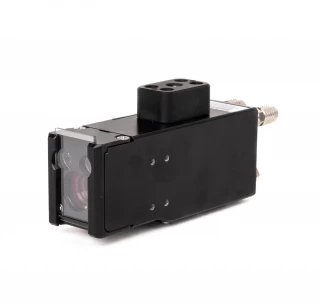

Frequently Asked Questions
What is a vision sensor and how does it differ from a standard industrial camera?
A vision sensor is an integrated device that combines an image acquisition element (typically a CMOS or CCD sensor) with onboard processing, optics interface, and digital I/O to perform specific inspection or detection tasks autonomously. Unlike a standard industrial camera that simply streams raw images to an external PC or controller, a vision sensor typically executes predefined algorithms (e.g., presence/absence, pattern matching, code reading) and outputs pass/fail or measurement data over discrete lines or industrial fieldbuses.
How do vision sensors detect objects or features in an image?
Vision sensors use embedded image processing algorithms such as thresholding, edge detection, blob analysis, pattern matching, and contrast-based tools to identify features within a defined region of interest. The sensor captures images at a set exposure and gain, processes them internally using a DSP or FPGA, and then compares extracted features to taught reference patterns or numeric thresholds to determine good/bad status or to measure positions and dimensions.
What are the main types of vision sensors and how do they differ in operation?
Common types include 2D area-scan sensors, line-scan vision sensors, 3D vision sensors (e.g., structured light or stereo-based), and smart code readers focused on 1D/2D symbol decoding. 2D area-scan units capture full frames for tasks like presence detection or alignment, while line-scan variants build an image line-by-line for continuous web inspection. 3D vision sensors reconstruct height maps or point clouds to measure volume, shape, or position in 3D space, often using laser triangulation or projected pattern techniques.
Which key specifications should I evaluate when selecting a vision sensor for my application?
Critical parameters include sensor resolution (pixels), pixel size, frame rate, dynamic range, and available lenses or lens mount type (e.g., C-mount, M12). You should also evaluate supported communication interfaces (Ethernet/IP, Profinet, Modbus TCP, RS-232), digital I/O count, lighting control capabilities, environmental ratings (IP65/IP67, operating temperature), and the set of onboard tools such as OCR, code reading, and geometric measurement functions.
How do lighting, optics, and mounting constraints affect the choice of a vision sensor?
The field of view, working distance, and required spatial resolution drive the selection of focal length, sensor resolution, and pixel size; insufficient optical resolution or poor depth of field will degrade measurement accuracy. Integrated or external lighting (e.g., diffuse ring lights, backlights, coaxial illumination) must provide stable, high-contrast images for the sensor’s algorithms, and the housing form factor, IP rating, and mounting thread patterns must be compatible with the mechanical constraints of the production line.
What factors influence pricing and lead time for vision sensors, and what customization is typically available?
Pricing is primarily driven by sensor resolution, onboard processing power, environmental ruggedization, integrated lighting, and supported industrial communication protocols or licenses for advanced tools (e.g., 3D measurement, OCR). Lead times can range from stock availability to several weeks, especially for variants with custom optics, specialized housings, non-standard connectors, or preconfigured inspection recipes and firmware options tailored to a specific OEM integration.
Industrial Vision Sensors for Precision Detection
Vision Sensors in this category provide reliable light detection for automated inspection, guidance, and process control. On FindLight you will find compact, integrated devices that combine optics, illumination, and image processing for industrial imaging tasks. These vision sensors are suited for inline inspection, robot guidance, weld quality analysis, and code verification in production environments.
3D Camera Solutions
3D Camera Solutions are vision sensors that capture depth information in addition to 2D intensity. They may use structured light, time-of-flight, or stereo imaging to generate 3D point clouds or depth maps. Key specifications include resolution, measurement range, accuracy, frame rate, and interface options such as GigE, USB3, or Camera Link. When selecting a 3D vision sensor, buyers should also review supported SDKs, trigger modes, synchronization options, and environmental ratings for use in factory cells or robotic systems.
Weld Monitors
Weld Monitors are specialized vision sensors designed to observe and analyze welding processes, including laser, arc, or resistance welding. These sensors typically integrate high dynamic range imaging, coaxial or off-axis illumination, and algorithms for seam tracking or defect detection. Important parameters include spectral sensitivity matched to the welding source, frame rate sufficient for high-speed processes, exposure control, and interfaces for real-time feedback to the welding controller. Buyers should compare available analysis tools, data logging capabilities, and compatibility with existing welding equipment.
OCR and Barcode Readers
OCR and Barcode Readers are vision sensors optimized for decoding printed text, 1D barcodes, and 2D symbols on labels, parts, or packaging. They often include integrated optics, autofocus, and onboard decoding firmware. When evaluating these Vision Sensors, pay attention to supported code symbologies, decoding speed, working distance, depth of field, illumination type, and tolerance to low contrast or damaged markings. Connectivity options such as Ethernet, RS-232, and digital I/O are critical for integration into PLCs and MES systems.
Buying Vision Sensors on FindLight
Use FindLight to compare vision sensors across these subcategories by reviewing datasheets, spectral response, environmental ratings, and communication interfaces. Assess whether the sensor offers required certifications, mounting options, and software integration with your existing vision or automation platform. You can request quotes directly from multiple suppliers for any listed vision sensors, attach technical requirements, and clarify integration details, all without registration. This allows procurement engineers and R&D teams to efficiently shortlist and source vision sensors that match specific performance and budget constraints.