
Optical Systems for Precision Light Transport
Explore Optical Systems for precise light transport, including acousto-optic systems, adaptive optics, electro-optics, beam shapers, and solar systems. Compare specifications, source from verified suppliers, and request quotes for your R&D or production needs.



Frequently Asked Questions
What are optical systems?
Optical systems are composed of various optical components, such as lenses, mirrors, filters, and detectors, that work together to control the behavior of light. These systems are used in a variety of applications, including imaging, sensing, and communication.
What types of optical systems are available on FindLight?
here are a wide variety of optical systems available, including imaging systems, illumination systems, acousto-optic systems, and Adaptive Optics.
What factors should be considered when selecting an optical system?
When selecting an optical system, key factors to consider include the application requirements, the required level of precision, the available budget, and the required size and weight of the system. Other factors may include the durability of the system, the ease of maintenance, and the available support and expertise.
What is the role of simulation in optical system design?
Simulation plays a critical role in optical system design by enabling engineers to test and refine their designs before constructing a physical prototype. This allows for the identification and correction of errors or inefficiencies in the design, which can help reduce development time and costs.
What is the difference between refractive and reflective optical systems?
Refractive optical systems use lenses or other refractive components to bend or focus light, while reflective optical systems use mirrors or other reflective components to reflect and manipulate light. Each type of system has its own advantages and disadvantages and is better suited for certain applications.
Optical Systems for Controlled Light Transport
The Optical Systems in this category are engineered for precise light transport, manipulation, and conditioning in laboratory, industrial, and field environments. You will find integrated solutions and modular assemblies that combine optics, mechanics, and electronics for stable beam routing, shaping, and conversion across UV, visible, and IR bands.
These Optical Systems are used to steer, modulate, shape, and collect light in laser setups, imaging instruments, metrology benches, and energy harvesting platforms. Typical applications include beam delivery for high-power lasers, adaptive correction of wavefront distortions, electro-optic modulation in communication links, and solar radiation capture for test and deployment.
Key Optical Systems Subcategories
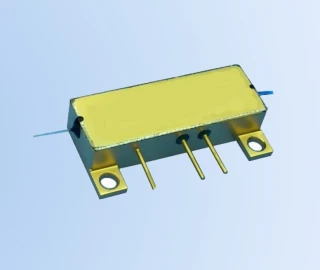
Acousto-Optic Systems use acoustic waves in crystals to diffract and shift the frequency of light. They support beam modulation, deflection, and Q-switching in laser systems, with parameters such as center wavelength, diffraction efficiency, RF power, and switching speed guiding selection.
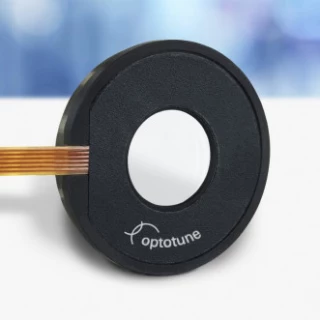
Adaptive Optics Optical Systems incorporate deformable mirrors or spatial light modulators with wavefront sensors and control electronics. They compensate atmospheric or system-induced aberrations in astronomy, microscopy, and laser focusing, where actuator count, stroke, response time, and correction bandwidth are critical.
Electro-Optics solutions enable fast control of phase, polarization, or intensity via electric fields in nonlinear or electro-optic materials. These Optical Systems are central to modulation, pulse picking, and switching, defined by Vπ, bandwidth, aperture, optical damage threshold, and compatible wavelength range.
Beam Shapers transform input beam profiles—such as Gaussian laser beams—into flat-top, line, ring, or custom intensity distributions. Beam shaping Optical Systems are used in material processing, lithography, and uniform illumination, where input beam quality, working distance, and output uniformity are key considerations.
Solar Systems in this context cover optical assemblies for concentrating, directing, or characterizing solar radiation. These Optical Systems include collectors, concentrators, and measurement setups, with emphasis on spectral response, concentration ratio, acceptance angle, and environmental stability.
Buyer Guidance on FindLight
When sourcing Optical Systems for light transport, compare parameters such as wavelength range, optical power handling, clear aperture, transmission, modulation speed, and interface compatibility with your existing setup. Review drawings, connection standards, and control electronics requirements to ensure integration into your optical bench or production line.
FindLight aggregates Optical Systems from multiple specialized suppliers so you can evaluate competing designs side by side. Filter by subcategory and technical specifications, then request quotes directly from manufacturers or distributors. No registration is required to contact vendors, enabling rapid iteration on requirements for both R&D and OEM deployment.