
Motors and Actuators for Precision Motion Control
Frequently Asked Questions
What is the difference between a motor and an actuator?
Motors and actuators are both devices that enable motion control, but they operate differently. Motors convert electrical or hydraulic energy into mechanical motion, while actuators convert energy into linear or rotational motion.
What types of motors are available?
There are several types of motors, including stepper, DC, and servo motors, each with their own advantages and disadvantages depending on the application.
What types of actuators are available?
Actuators can be linear or rotary and can generate linear or rotational motion with high precision and repeatability. Different types of actuators include piezoelectric, voice coil, and hydraulic actuators.
How are motors and actuators controlled?
Motors and actuators can be controlled through dedicated drivers or software, which enable precise and repeatable motion control. The control method depends on the specific type of motor or actuator being used.
What is the difference between a stepper motor and a DC motor?
Stepper motors move in precise, incremental steps, while DC motors rotate continuously. Stepper motors are ideal for applications requiring high precision and control, while DC motors are better suited for applications requiring high speed and torque.
What is a linear actuator?
A linear actuator is a device that converts rotational motion into linear motion. It typically consists of a motor, a lead screw, and a nut. When the motor rotates, the lead screw moves, causing the nut to move along the screw and translating the motion into linear motion.
What is a voice coil actuator?
A voice coil actuator is a type of linear actuator that uses a voice coil motor to move a plunger back and forth along a linear axis. It is commonly used in applications requiring high speed and precise positioning, such as in optical and laser systems.
What are the benefits of using a motor or actuator in a motion control system?
Motors and actuators provide precise and reliable motion control in various applications. They offer high speed, high torque, and accurate positioning, allowing for efficient and repeatable operations. They can also be easily integrated into automated systems, providing increased productivity and reduced labor costs.
Overview of Motors and Actuators
Motors and Actuators convert electrical input into controlled mechanical motion for positioning, alignment, scanning, and transport of light paths and optomechanical assemblies. On FindLight, this Motors and Actuators category focuses on devices used to translate or rotate components in optical benches, laser systems, imaging setups, and other photonics equipment.
Key Types in Motors and Actuators
The Motors and Actuators offerings in this domain include three main sub-types tailored to light transport and precision motion control:
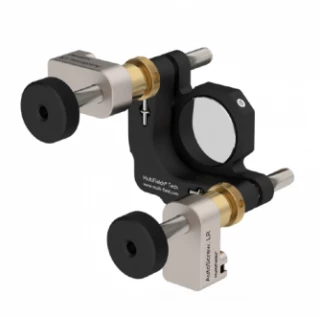
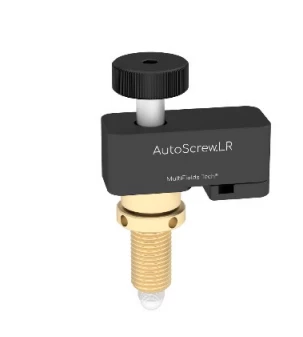
- Linear Actuators: Electromechanical drives that provide linear displacement. These are used to move translation stages, fiber couplers, objectives, and mirrors. Typical specifications include travel range, resolution, repeatability, load capacity, and maximum speed.
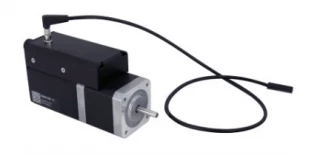
- Stepper Motors: Discrete-step rotary Motors and Actuators that enable open-loop or closed-loop angular positioning. They are often coupled to lead screws, gearboxes, or rotation stages for beam steering, filter wheel control, and aperture adjustment.
- Piezo Actuators: Solid-state Motors and Actuators based on piezoelectric materials, suitable for sub-micron and nanometer-scale positioning. Applications include fast focusing, cavity length tuning, interferometer path control, and active stabilization.
Selection Guidelines for Motors and Actuators
When sourcing Motors and Actuators for photonics and optics setups, compare critical parameters against your application requirements:
- Motion type and range: Linear vs rotary, required travel or rotation angle.
- Resolution and repeatability: Step size, minimum incremental motion, and bidirectional repeatability for precise beam alignment.
- Load capacity and stiffness: Compatibility with mounted optics, stages, and fixtures while maintaining stability.
- Speed and responsiveness: Maximum velocity, acceleration, and bandwidth for scanning or feedback-controlled systems.
- Drive and control interface: Voltage, current, controller compatibility, step/direction or analog input, and feedback options such as encoders or strain gauges.
Use FindLight to evaluate Motors and Actuators from multiple vendors in one place. Review detailed datasheets, compare specifications across Linear Actuators, Stepper Motors, and Piezo Actuators, and request quotes directly from suppliers. No registration is required to contact vendors, allowing you to quickly obtain pricing, lead times, and technical clarification for your motion control design.