
Fiber Test & Measurement Solutions




Frequently Asked Questions
How do you clean fiber optic connectors?
To clean fiber optic connectors, use a lint-free cleaning cloth and an appropriate cleaning solution, such as isopropyl alcohol. Wipe the connector end face gently and avoid touching it with your fingers. Repeat the process until the end face is clean and free of debris.
What is an OTDR and how does it work?
An OTDR (Optical Time Domain Reflectometer) is a device used to test the integrity of a fiber optic cable by measuring the amount of light that is reflected back to the device. The OTDR sends a pulse of light down the fiber and then measures the time and intensity of the reflected light. It can detect and locate fiber breaks, bends, and other abnormalities in the cable.
What is a fiber optic visual fault locator (VFL)?
A fiber optic visual fault locator is a handheld device that emits a visible red light into a fiber optic cable to locate faults or breaks in the cable. The red light is visible through the cable jacket and can help identify breaks or other issues in the cable.
What is the difference between single-mode and multimode fiber?
Single-mode fiber has a smaller core diameter and can transmit light over longer distances than multimode fiber. Multimode fiber has a larger core diameter and is typically used for shorter distances. Single-mode fiber is used in long-haul telecommunications applications, while multimode fiber is used in data centers and other shorter-distance applications.
How do you measure fiber optic loss?
Fiber optic loss can be measured using a power meter and a light source. The light source is connected to one end of the fiber and the power meter is connected to the other end. The power meter measures the amount of light that is transmitted through the fiber, and the difference between the power at the input and output ends of the fiber is the fiber optic loss.
Fiber Test & Measurement Fundamentals
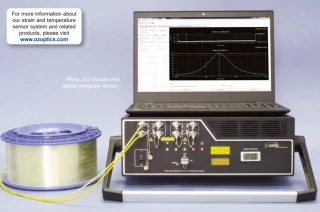
The Fiber Test & Measurement category on FindLight covers instruments used to characterize optical fiber networks, components, and experimental setups. These tools quantify power levels, backreflection, fiber length, polarization behavior, mode content, and distributed parameters such as temperature or strain along the fiber. Accurate Fiber Test & Measurement is essential for qualifying transmission links, validating system design, and diagnosing faults in production or R&D environments.
Key Fiber Test & Measurement Sub‑Categories
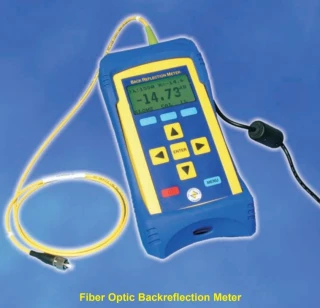
Backreflection meters measure return loss and backreflected power from connectors, splices, and components, helping optimize terminations and reduce parasitic feedback into lasers.
Fiber inspection tools provide visual or video microscopy of connector endfaces to detect scratches, pits, contamination, and geometry defects before mating.
Fiber length meters determine fiber length using time-of-flight or phase methods, supporting inventory control, delay-line design, and precise path matching.
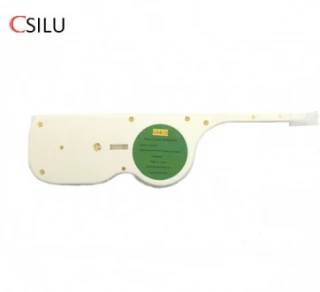
Fiber optics cleaning kits and dedicated fiber cleaners allow controlled removal of dust, oils, and residue from ferrules, adapters, and bulkheads to maintain insertion loss and return loss specs.
Fiber power meters and in-line optical power monitors (taps) measure absolute and relative optical power, enabling link budget verification and live system monitoring.
Optical signal generators provide modulated or swept optical signals for transmitter testing, component characterization, and system stress testing.
Mode controllers manipulate modal distribution in multimode or few-mode fibers, supporting repeatable launch conditions and mode-dependent loss measurements.
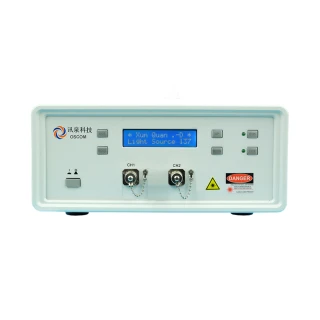
Polarization extinction ratio meters quantify PER for polarization-maintaining fiber, lasers, and modulators, while polarization entanglement analyzers characterize quantum-correlated photon states for quantum communication experiments.
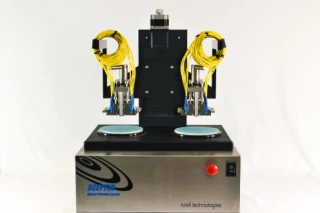
Fiber polishers automate connector polishing sequences to reach specified geometry, return loss, and surface quality with repeatable results.
Buyer Guidance on FindLight
When selecting Fiber Test & Measurement instruments, compare wavelength range, power range and accuracy, dynamic range, connector types, polarization sensitivity, and supported fiber types (SMF, MMF, PM). For distributed sensors, review spatial resolution, sensing range, and measurand (temperature, strain, vibration). In quantum and polarization tools, evaluate extinction ratio, visibility, and timing resolution.
Use FindLight to review detailed datasheets, cross-compare specifications across vendors, and request quotes directly from manufacturers. Inquiry submission does not require registration, enabling fast comparison and procurement of Fiber Test & Measurement solutions for both lab and field environments.