
Optical Coatings for Efficient Light Transport
Frequently Asked Questions
What materials are used in optical coatings?
Optical coatings can be made of a variety of materials, including dielectrics and metals. The choice of material depends on factors such as the desired spectral properties and the degree of reflection.
What factors should I consider when choosing an optical coating?
When choosing an optical coating, consider factors such as the degree of reflection, the amount of light transmitted, and the spectral properties. Some coatings may be optimized for specific applications or wavelengths. Consult with an optics expert or manufacturer to ensure that you choose the right coating for your application.
What is the difference between anti-reflection coatings and high-reflection coatings?
Anti-reflection coatings are designed to reduce reflection and increase transmission, while high-reflection coatings are designed to maximize reflection and minimize transmission. Anti-reflection coatings are commonly used in applications such as imaging and laser systems, while high-reflection coatings are used in applications such as laser cavities and optical filters.
What is the difference between broadband and narrowband coatings?
Broadband coatings operate over a wide range of wavelengths, while narrowband coatings are designed to operate over a specific wavelength range. Broadband coatings are commonly used in applications such as imaging and laser systems, while narrowband coatings are used in applications such as spectroscopy and optical filters.
What is the process for applying optical coatings?
Optical coatings are typically applied using techniques such as physical vapor deposition (PVD) or chemical vapor deposition (CVD). The process involves depositing a thin film of material onto the surface of the optical component. The precise method and conditions used for coating deposition depend on factors such as the material being coated and the desired coating properties.
What is a dichroic coating?
Dichroic coatings are specialized optical coatings that have different reflectivity or transmissivity properties for different wavelengths of light. These coatings are often used in applications such as color filters, beam splitters, and fluorescence microscopy, where it is important to selectively reflect or transmit specific wavelengths of light.
Optical Coatings for Light Transport
Optical Coatings are thin-film structures deposited on substrates to control reflection, transmission, and spectral separation. These Coatings are used on lenses, windows, mirrors, prisms, and other components in laser systems, imaging optics, spectroscopy setups, and illumination assemblies.
By selecting appropriate Coatings, buyers can minimize Fresnel losses, tailor spectral bands, handle specific laser powers, and optimize system throughput. On FindLight you can review detailed specifications and engage directly with suppliers for custom Coatings without registration.
Key Coatings Sub‑Types Available
Antireflection Coatings reduce surface reflections at one or multiple wavelengths to increase transmission. Options include broadband AR Coatings for wide spectral ranges and narrowband designs optimized for laser lines or detector bands. Parameters commonly specified are wavelength range, residual reflectance per surface, angle of incidence, and polarization sensitivity.
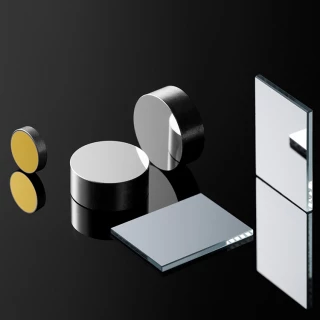
Mirror Coatings provide high reflectivity over designated bands. These Coatings can be metallic (Al, Ag, Au) or dielectric stacks designed for high reflectance (HR) at specific wavelengths and angles. Buyers should review reflectivity curves, damage thresholds, and environmental durability.
Partially Reflective Coatings are used for beam splitters, output couplers, and sampling optics. These Coatings are characterized by well-defined reflection/transmission ratios (e.g., 30/70, 50/50) over a given spectral band. Check spectral flatness, tolerance on R/T ratio, and phase characteristics when used in interferometric systems.
Dichroic Coatings act as wavelength-selective beam combiners or separators. These Coatings feature sharp spectral transitions between high-reflectance and high-transmittance regions. Critical parameters include edge steepness, cutoff wavelengths, angle of incidence, and polarization behavior.
Buyer Guidance on Coatings Selection
When evaluating Coatings on FindLight, compare the following:
- Design wavelength range and bandwidth of the Coatings
- Specified reflectance/transmittance, including tolerance and angle
- Substrate material, clear aperture, and surface quality
- Laser-induced damage threshold and power handling
- Environmental stability of the Coatings (humidity, temperature, abrasion)
Use the platform to compare multiple Coatings side by side, review datasheets, and request quotes directly from manufacturers. No registration is required to contact suppliers, enabling rapid technical clarification and pricing for both catalog and custom Coatings.