
Fiber Optics Manufacturing Tools and Equipment

Frequently Asked Questions
What are the different types of fiber optics manufacturing equipment?
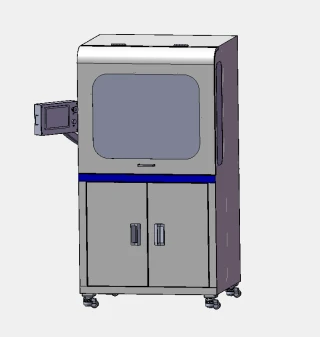
There are several types of fiber optics manufacturing equipment, including fiber drawing towers, fiber recoaters, fiber cleavers, fiber splicers, and fiber testers. Each of these machines performs a specific function in the process of creating optical fibers.
How does a fiber drawing tower work?
A fiber drawing tower is used to create optical fibers by pulling a preform, which is a cylindrical piece of glass or plastic, through a series of small holes called dies. As the preform is pulled through the dies, it is stretched and thinned into a long, thin strand.
What is a fiber recoater used for?
A fiber recoater is used to coat optical fibers with a protective layer of polymer. This helps to protect the fiber from damage and makes it easier to handle during the manufacturing process.
What is a fiber cleaver used for?
A fiber cleaver is used to make a clean, precise cut in an optical fiber. This is important for splicing fibers together or terminating a fiber with a connector.
How do you test an optical fiber?
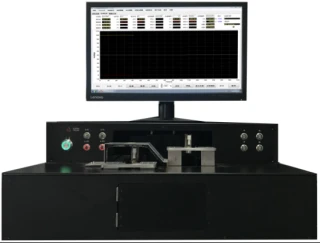
Optical fibers are tested using a variety of techniques, including optical time-domain reflectometry (OTDR), optical spectrum analysis, and insertion loss testing. These tests help to ensure that the fiber is performing properly and that there are no defects or damage to the fiber.
Precision Tools for Fiber Optics Manufacturing
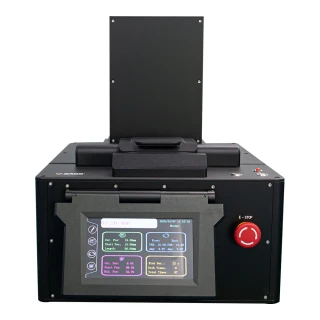
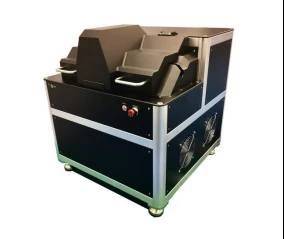
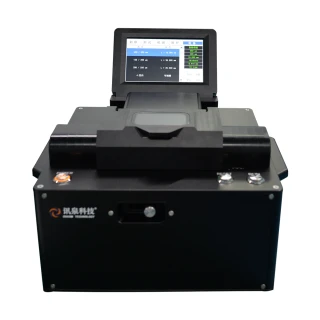
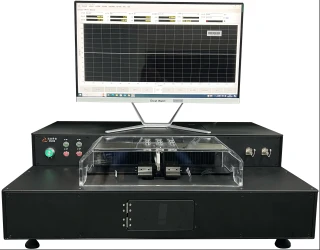
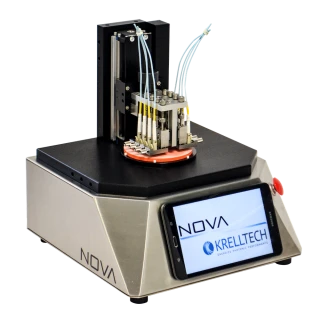
This Fiber Optics category on FindLight aggregates manufacturing and processing tools used in telecom, sensing, medical, and research-grade assemblies. The equipment here is designed for cutting, stripping, splicing, tapering, etching, polishing, and handling optical fibers with tight geometric and optical tolerances.
Key Fiber Optics Subcategories
Fiber Cleaver: Cleavers produce flat, perpendicular end faces with low cleave angle error. When comparing units, review fiber diameter range (e.g., 80 µm to 400 µm), typical cleave angle, blade lifetime, and support for single-mode versus multimode Fiber Optics.
Fiber Coil Winding Machines: Winding systems control coil geometry and tension for delay lines, gyros, and sensing coils. Check spool size, tension range, minimum bend radius, and level of automation or CNC control.
Fiber Core Expander: Core expanders modify mode-field diameter or create expanded-beam interfaces. Evaluate compatibility with specific Fiber Optics types, processing wavelength, achievable expansion ratio, and induced insertion/return loss.
Fiber Etcher: Etching systems reduce cladding diameter or shape tapered sections chemically. Key parameters include etchant chemistry, etch rate control, diameter uniformity, and integrated safety/ventilation requirements.
Fiber Splicer: Fusion and mechanical splicers align and join fibers with minimal loss. Compare alignment method (core vs. cladding), supported fiber types, typical splice loss and return loss, heater profiles, and splice protection options.
Fiber Stripper: Strippers remove polymer coatings or buffers without damaging glass. Review supported coating types (UV, acrylate, polyimide), diameter range, thermal vs. mechanical stripping method, and cycle time.
Fiber Taper: Tapering platforms draw fibers under controlled heat to form adiabatic tapers. Check heater type (flame, CO₂ laser, filament), taper length, minimum waist diameter, and positioning accuracy.
Fiber Waveguide Coupling Platforms: Positioning stages align Fiber Optics to chips, waveguides, or photonic devices. Assess degrees of freedom, resolution, repeatability, and options for active alignment and imaging.
Polishing: Fiber end-face polishing equipment controls geometry and surface finish for various connector standards. Compare ferrule types supported, polishing fixtures, pressure and motion control, and end-face geometry (APC/UPC) compliance.
Buyer Guidance on FindLight
For all Fiber Optics manufacturing tools, examine detailed datasheets, performance specifications, and integration requirements with your existing processes. Use FindLight to compare models from multiple suppliers and request quotes directly without registration, enabling efficient sourcing for R&D labs and production environments.