
Detectors for Precision Light Analysis
Frequently Asked Questions
What is a detector?
A detector is a device that converts electromagnetic radiation (such as light) into an electrical signal.
What are the different types of detectors?
There are several types of detectors, including photodiodes, photomultiplier tubes (PMTs), avalanche photodiodes (APDs), charge-coupled devices (CCDs), and complementary metal-oxide-semiconductor (CMOS) sensors.
What is the difference between a photodiode and a photomultiplier tube?
A photodiode is a semiconductor device that generates a current proportional to the incident light intensity. A photomultiplier tube, on the other hand, uses a photocathode to generate electrons that are then multiplied by a series of dynodes, resulting in a much higher current output.
What is the dark current of a detector?
The dark current of a detector is the electrical current that flows through the detector even when no light is present. It is caused by thermally generated carriers in the detector material.
What is the dynamic range of a detector?
The dynamic range of a detector is the ratio of the maximum measurable signal to the minimum detectable signal. A detector with a high dynamic range is able to detect both weak and strong signals.
What is quantum efficiency?
Quantum efficiency is the ratio of the number of electrons generated by a detector per incident photon. A detector with a high quantum efficiency is able to convert a large percentage of incident photons into electrical signals.
What is the responsivity of a detector?
The responsivity of a detector is the ratio of the output signal to the input signal. It is a measure of how efficiently the detector converts incident light into an electrical signal.
What is the spectral response of a detector?
The spectral response of a detector is the range of wavelengths of light that the detector is sensitive to. Different types of detectors have different spectral responses, which can be tailored to specific applications.
What is the noise equivalent power (NEP) of a detector?
The noise equivalent power (NEP) of a detector is the minimum detectable power level that can be distinguished from noise. A detector with a low NEP is able to detect very weak signals with high accuracy.
Overview of Detectors for Light Analysis
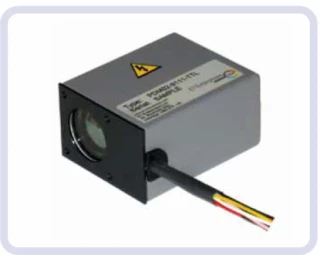
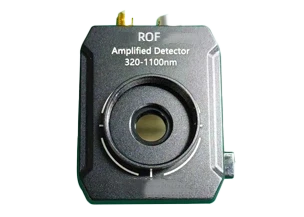
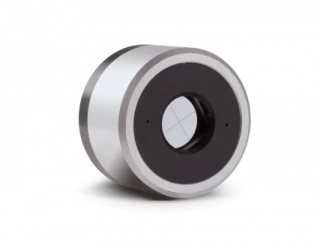
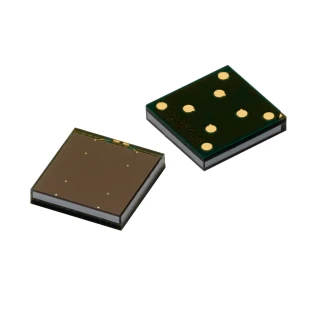
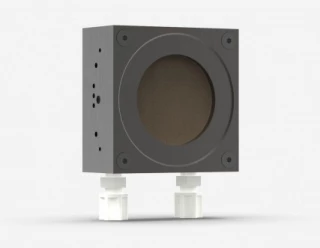
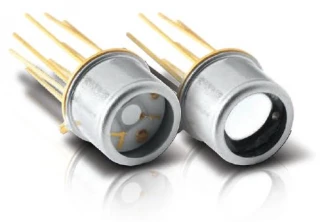
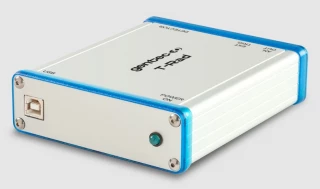
Detectors convert incident optical radiation into electrical signals for measurement, control, and feedback. On FindLight you can compare Detectors optimized for wavelength coverage from UV to THz, dynamic range from single-photon to high-power beams, and response times from femtoseconds to seconds. These Detectors support applications in spectroscopy, lidar, medical diagnostics, metrology, and scientific imaging.
Key Types of Detectors Available
Avalanche Photodiodes (APD) provide internal gain via avalanche multiplication for low-light and time-correlated measurements. PIN Detectors offer linear response and low capacitance for power monitoring and high-speed communications.
Calibrated Photodiodes ship with traceable responsivity data for radiometric and power calibration tasks. Photomultiplier Tubes (PMT) deliver very high gain and low noise for single-photon and scintillation detection.
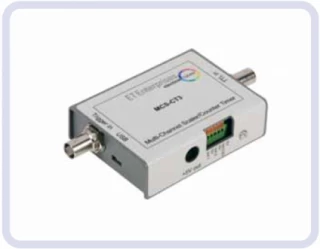
Photon Counters and Pulse Counters quantify discrete events, enabling timing experiments, fluorescence lifetime studies, and low-flux measurements. Position-Sensitive Detectors determine beam centroid or profile for alignment, tracking, and imaging systems.
Silicon Photomultiplier devices (SiPM) are solid-state Detectors providing PMT-like gain with compact form factor and insensitivity to magnetic fields. Thermal Detectors measure incident power independent of wavelength, suitable for broadband or high-power sources. THz Detectors target terahertz imaging, spectroscopy, and security screening. Accessories for Detectors include mounts, housings, preamplifiers, biasing modules, and readout electronics.
Buyer Guidance for Selecting Detectors
When evaluating Detectors, compare spectral response, active area, noise-equivalent power, dark current, gain, bandwidth, linearity, and maximum optical power. Consider package type, fiber or free-space coupling, cooling options, and required supply voltages. Temporal parameters such as rise time, jitter, and count rate are critical for time-resolved work.
On FindLight you can filter Detectors by wavelength range, detector type, active area, bandwidth, and responsivity to narrow candidates for your system. Review datasheets and characterization curves, then request quotes directly from multiple manufacturers to compare pricing and lead times. No registration is required to contact vendors, enabling rapid sourcing of Detectors for your next design or experiment.