
Semiconductor Lasers for R&D and OEM Integration




Frequently Asked Questions
What is a diode laser?
A diode laser is a type of laser that uses a p-n junction diode as the active medium. When current is applied to the diode, it generates light through the process of stimulated emission.
What are some common applications of diode lasers?
Diode lasers have a wide range of applications, including telecommunications, material processing, medical treatments, and consumer electronics.
How do diode lasers compare to other types of lasers?
Diode lasers offer several advantages over other types of lasers, including compact size, high efficiency, low power consumption, and low cost.
What factors should be considered when choosing a diode laser?
When choosing a diode laser, it is important to consider factors such as wavelength, output power, beam quality, and operating temperature. It is also important to select a laser from a reputable manufacturer with a proven track record of quality and reliability.
Can diode lasers be used for spectroscopy applications?
Yes, diode lasers are often used for spectroscopy applications due to their narrow linewidth and tunability.
What are some factors that can affect the lifetime of a diode laser?
Factors that can affect the lifetime of a diode laser include operating temperature, current density, and packaging design. It is important to follow the manufacturer's recommendations for proper operation and maintenance to maximize the laser's lifetime.
What are the benefits of using diode lasers in telecommunications?
Diode lasers are commonly used in telecommunications due to their high efficiency, low power consumption, and ability to modulate the light output for data transmission.
Are diode lasers suitable for high-power applications?
While diode lasers are generally lower in power compared to other types of lasers, they can still be used for high-power applications when multiple diode lasers are combined in an array.
What are some potential safety hazards associated with diode lasers?
Diode lasers can pose a safety hazard if they are not handled properly. Eye damage can occur from direct or reflected laser beams, and skin damage can occur from prolonged exposure to the laser's heat. It is important to follow proper safety guidelines and use appropriate protective equipment when handling diode lasers.
What are the advantages of using diode lasers in military and defense applications?
Diode lasers are often used in military and defense applications due to their compact size, high efficiency, and ability to operate in harsh environments.
How do diode lasers compare to fiber lasers?
Diode lasers are generally lower in power compared to fiber lasers, but they can be more cost-effective and have a wider range of wavelength options.
Can diode lasers be used in 3D printing applications?
Yes, diode lasers are sometimes used in 3D printing applications, particularly for selective laser sintering of thermoplastics.
Engineered Semiconductor Lasers for Precision Light Generation
Semiconductor Lasers are compact, electrically pumped light sources based on laser diode junctions. They offer high wall-plug efficiency, narrow spectral output, and form factors suitable for integration into instrumentation, fiber systems, sensing modules, and OEM platforms.
On FindLight you can compare a broad range of Semiconductor Lasers across output power, wavelength, beam quality, packaging, and electrical interfaces to match specific experimental or production requirements.
Key Semiconductor Laser Types Available
- CW Semiconductor Lasers: Continuous-wave laser diodes for applications requiring stable output, such as interferometry, metrology, and alignment.
- Pulsed Semiconductor Lasers: Gain-switched or Q-switched devices for time-of-flight, LIDAR, fluorescence lifetime, and high-peak-power excitation.
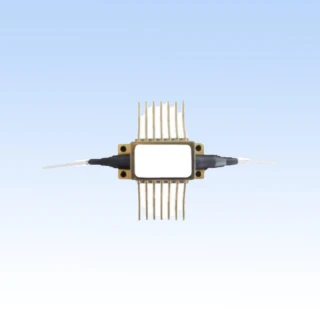
- Fiber-Coupled Diode Lasers: Semiconductor Lasers pre-aligned to single-mode or multimode fibers, enabling straightforward coupling into fiber networks and delivery systems.
- VCSEL: Vertical-Cavity Surface-Emitting Lasers with low divergence and 2D arrays for sensing, 3D imaging, and short-reach optical links.
- Semiconductor Laser Solutions: Integrated modules combining laser diodes with thermal management, control electronics, and optional fiber coupling for plug-in use.
- Semiconductor Optical Amplifiers: SOAs for amplifying existing optical signals in fiber systems or boosting external-cavity Semiconductor Lasers.
- Tunable Semiconductor Lasers: External-cavity or distributed-feedback based designs providing wavelength tuning for spectroscopy and telecom testing.
- Laser Diode Drivers: Matched current sources and pulsed drivers to operate Semiconductor Lasers safely within specified limits.
- Semiconductor Laser Accessories: Mounts, heatsinks, temperature controllers, collimation optics, and coupling optics for complete setups.
Buyer Guidance on FindLight
When specifying semiconductor lasers, compare central wavelength, spectral linewidth, output power, beam quality (M²), polarization, package type (TO-can, C-mount, butterfly, fiber-pigtailed), and required driver characteristics. Thermal management (TEC vs passive), modulation bandwidth, and reliability data (lifetime, burn-in) are also key selection criteria.
Use FindLight to filter semiconductor lasers by these parameters, review datasheets, and evaluate compatibility with your existing drivers and optics. You can contact multiple suppliers, request technical clarifications, and obtain quotations directly from the product pages. No registration is required to access detailed specifications or to initiate RFQs, streamlining component evaluation for both R&D and OEM design teams.