
Spectroscopy Solutions for Advanced Spectral Analysis
Frequently Asked Questions
What is spectroscopy?
Spectroscopy is the study of the interaction between light and matter. It is a powerful tool for analyzing the composition, structure, and properties of materials.
What are some common spectroscopy techniques?
There are many spectroscopy techniques, including Atomic Emission Spectroscopy, Fluorescence Spectroscopy, FTIR, LIBS, Transient Absorption, and X-Ray Fluorescence Spectroscopy.
How do I choose the right spectroscopy solution for my needs?
Choosing the right spectroscopy solution depends on your specific application and requirements. Factors to consider include the type of sample, the required sensitivity and resolution, and the budget. Browse our selection and compare specifications to find the right solution for your needs.
What is the difference between Atomic Emission Spectroscopy and X-Ray Fluorescence Spectroscopy?
Atomic Emission Spectroscopy is a technique that uses the emission of light from excited atoms to identify and quantify elements in a sample. X-Ray Fluorescence Spectroscopy is a non-destructive analytical technique that uses X-rays to excite atoms and molecules in a sample, producing characteristic X-ray fluorescence radiation that can be used to identify and quantify elements in the sample. While both techniques are used for elemental analysis, they have different strengths and limitations and are suited for different applications.
What is FTIR?
FTIR (Fourier Transform Infrared Spectroscopy) is a spectroscopic technique that uses infrared light to analyze the vibrational modes of molecules in a sample. It is used to identify and quantify organic and inorganic compounds in a wide range of materials, including polymers, pharmaceuticals, and foods.
What is LIBS?
LIBS (Laser Induced Breakdown Spectroscopy) is a spectroscopic technique that uses a laser to vaporize and ionize a small amount of material from a sample, creating a plasma that emits light. The light emitted by the plasma is analyzed to identify and quantify the elements in the sample. LIBS is used for elemental analysis in a variety of applications, including metallurgy, environmental monitoring, and forensic science.
What is Transient Absorption Spectroscopy?
Transient Absorption Spectroscopy is a technique that uses ultrashort laser pulses to study the dynamics of excited states in molecules and materials. It is used to study a wide range of phenomena, including photosynthesis, energy transfer, and charge transport in materials. By measuring the absorption of light over time, researchers can gain insights into the mechanisms of these processes.
What is Food and Plant Analysis?
Food and Plant Analysis is the application of spectroscopy to the analysis of food and plant materials. Spectroscopy is used to identify and quantify nutrients, contaminants, and other compounds in food and plant samples. It is used for quality control, safety testing, and research in the food and agricultural industries. Food and Plant Analysis is a rapidly growing field, and spectroscopy is an essential tool for ensuring the safety and quality of our food supply.
Overview of Spectroscopy Solutions
Spectroscopy Solutions on FindLight cover light detection tools for quantitative and qualitative spectral analysis across research and industrial settings. These instruments measure wavelength-dependent absorption, emission, or scattering to determine chemical composition, molecular structure, and dynamic processes in solids, liquids, gases, and biological samples.
Our Spectroscopy Solutions span laboratory, inline, and field configurations, supporting R&D, QA/QC, and process monitoring. Users can compare specifications, download datasheets, and request quotes directly from suppliers without registration.
Key Types of Spectroscopy Solutions
Food and Plant Analysis: Systems optimized for agricultural and food matrices, typically using NIR, VIS-NIR, or fluorescence detection to assess moisture, protein, fat, pigments, and physiological status. Look for calibrated models, supported chemometric methods, and sampling interfaces (fiber probes, cuvettes, reflectance heads).
FTIR (Fourier Transform Infrared): FTIR spectroscopy solutions provide mid-IR and near-IR spectra for functional group identification and compositional analysis. Compare spectral range (e.g., 4000–400 cm⁻¹), resolution, beam configuration (single vs dual), detector type (DTGS, MCT), and available sampling modules (ATR, transmission, diffuse reflectance).
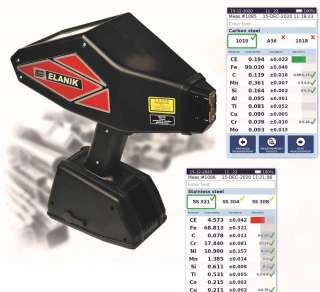
LIBS (Laser-Induced Breakdown Spectroscopy): LIBS systems enable rapid elemental analysis via laser ablation and plasma emission. Key parameters include laser pulse energy, repetition rate, delay/gate settings, and spectral coverage of the detection module. Consider whether you need portable, benchtop, or in-line LIBS spectroscopy solutions.
Spectrofluorometers: These instruments measure fluorescence emission under controlled excitation, suited for molecular sensing, bioassays, and material characterization. Evaluate excitation/emission wavelength ranges, bandwidth, spectral resolution, detection limits, time-resolved options, and sample handling (cuvette, microplate, fiber coupling).
Transient Absorption: Ultrafast spectroscopy solutions that track excited-state dynamics from femtoseconds to nanoseconds. Verify pump–probe delay range, temporal resolution, spectral window, pulse energy requirements, and compatibility with your existing laser systems.
Spectroscopy Accessories: Complementary components such as light sources, cuvette holders, fiber optic probes, integrating spheres, filters, and software packages that extend the functionality of your primary system.
Buyer Guidance on FindLight
When selecting Spectroscopy Solutions, compare spectral range, resolution, signal-to-noise ratio, detector technology, sampling geometry, and integration with your workflow and data analysis tools. Use FindLight to filter products, review technical documentation, and request multiple quotes directly from manufacturers and distributors. No registration is required to contact suppliers or obtain pricing, streamlining procurement for engineers and scientists.