
Multi-Axis Processing Systems for Laser Machining
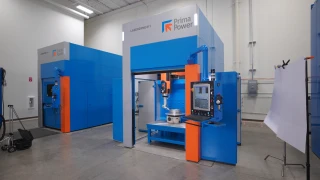
Frequently Asked Questions
What is a multi-axis laser processing system and how does it differ from a standard 2D laser workstation?
A multi-axis laser processing system integrates a laser source with motion stages that provide three or more degrees of freedom, such as X, Y, Z translation and one or more rotary or tilt axes. Unlike a standard 2D workstation that operates mainly in a flat plane, multi-axis systems can orient the workpiece or the beam in complex geometries, enabling true 3D machining, angled cuts, contour following, and processing of non-planar or tubular parts.
How do multi-axis systems achieve coordinated motion between the laser beam and the workpiece?
These systems use CNC or motion controllers that synchronize galvo scanners, linear stages, and rotary axes through interpolated motion profiles. The controller executes toolpaths derived from CAD/CAM data, coordinating axis positions, feed rates, and laser parameters (power, pulse frequency, scanning speed) so the focal spot follows the desired geometry with consistent energy density.
What are the main types of multi-axis laser processing configurations available?
Common configurations include 3-axis (X, Y, Z) stages with fixed workpiece, 4- or 5-axis systems that add rotary (A, B, or C) axes for tube cutting or angled drilling, and hybrid systems combining galvo scan heads with multi-axis stages for both fine-feature scanning and coarse part positioning. There are also robot-based cells using 6-axis articulated arms to move the tool or part, typically used for large or complex 3D components in automotive or aerospace applications.
Which technical specifications are most critical when selecting a multi-axis processing system?
Key parameters include axis travel ranges, positioning accuracy, repeatability, maximum velocity and acceleration, and the load capacity of each stage or rotary axis. You should also evaluate laser compatibility (wavelength, average and peak power, pulse duration), beam delivery optics, available focus ranges, and the controller’s ability to perform multi-axis interpolation and support your preferred CAD/CAM workflow.
How should I compare different systems for my specific material and application (e.g., micro-cutting vs. large-part welding)?
For micro-cutting or drilling, prioritize high-precision stages (sub-micron repeatability), stable beam delivery, small achievable spot size, and high dynamic performance of the motion axes or galvo heads. For large-part welding or structural cutting, focus on axis travel, payload capacity, stiffness, accessibility of the work envelope, and thermal management, as well as evaluating application-specific features such as tube chucks, rotary indexers, or rotary/tilt heads for bevel cutting.
What are typical lead times, customization options, and cost drivers for multi-axis laser processing systems?
Lead times commonly range from 8 to 24 weeks depending on system complexity, laser source availability, and the degree of customization (special fixtures, automation, or software integration). Major cost drivers include the number and precision class of motion axes, type and power of the laser source, integration of vision or process monitoring, and any custom tooling, enclosures, or part-handling automation.
How can I find, compare, and request quotes for multi-axis processing systems on FindLight without creating an account?
On FindLight, you can navigate to Laser Material Processing > Multi-Axis Processing Systems and then filter listings by laser type, axis count, travel range, and other technical attributes using the left-hand filters. You can compare products side-by-side to review specifications and then use the built-in contact or RFQ form on each product page to request technical details or quotations directly from suppliers without registration.
Overview of Multi-Axis Processing Systems
Multi-Axis Processing Systems are laser material processing platforms that synchronize motion in multiple linear and rotational axes to machine complex geometries. By coordinating X, Y, Z translation with rotational A, B, or C axes, these systems enable contouring, drilling, cutting, and surface texturing on parts with non-planar or multi-sided surfaces. They are widely used for micromachining metals, polymers, ceramics, and optical materials.
On FindLight, Multi-Axis Processing Systems are categorized under Light Sources in the Laser Material Processing hierarchy, allowing buyers to evaluate how motion platforms, beam delivery, and integrated laser sources combine into complete workstations.
Multipurpose Workstations
The primary sub-type in this category is Multipurpose Workstations. These Multi-Axis Processing Systems integrate a laser source, beam delivery optics, motion axes, and control software into a single enclosure. Typical configurations include:
- 3–5 axis stages for precision positioning of small parts or wafers
- Galvanometer scan heads for high-speed beam steering over a local field
- Vision or fiducial alignment for accurate registration to existing features
- Enclosures with interlocks and fume extraction for safe laser operation
Multipurpose Workstations are suitable for cutting, drilling, structuring, and welding tasks where flexibility and reconfigurability are important. They allow users to change fixtures, optics, or laser parameters for different materials and part geometries.
Buyer Guidance for Multi-Axis Processing Systems
When comparing Multi-Axis Processing Systems on FindLight, review motion and laser specifications together. Key parameters include:
- Number of mechanical axes and travel ranges for each axis
- Positioning accuracy, repeatability, and achievable feature sizes
- Compatible laser types (fiber, DPSS, ultrafast, CO2) and wavelength ranges
- Peak and average power, pulse duration, and repetition rate
- Work area dimensions, maximum workpiece mass, and fixturing options
- Control software features, path programming, and CAD/CAM integration
Use FindLight to compare datasheets for Multipurpose Workstations and other Multi-Axis Processing Systems, then request quotes directly from manufacturers. No registration is required to contact suppliers, allowing procurement engineers and R&D teams to quickly obtain pricing, lead times, and any required custom configurations.