
Description
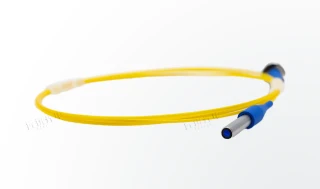
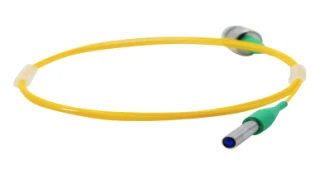
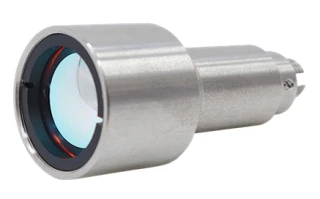
This Polarization Maintaining Fiber Collimator is an optical component designed to deliver exceptional performance in fiber optic systems. This product is engineered to ensure minimal insertion loss and high extinction ratios, making it an ideal choice for applications requiring precise polarization control. With its robust construction, this Fiber Collimator offers high reliability, ensuring consistent performance even in demanding environments.
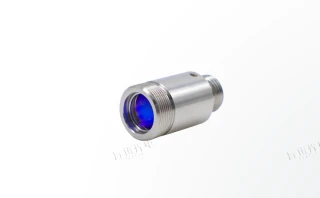
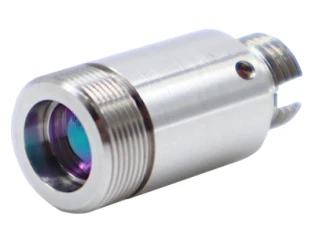
Designed for a range of operating wavelengths, including 1310 nm, 1550 nm, 980 nm, 1064 nm, and 850 nm, the FiberCollimator provides flexibility for various optical systems. Its bandwidth capabilities and working distances are tailored to meet diverse needs, ensuring optimal performance across different setups. The device's construction includes options for both metal holders and glass tubes, allowing for customization based on specific installation requirements.
The FiberCollimator is built to withstand a wide range of temperatures, with an operating temperature range of -5°C to +70°C and a storage temperature range of -40°C to +85°C. This durability ensures that the device maintains its performance in both standard and challenging conditions. The use of Panda Fiber, such as PM1550 or PM1310, further enhances its capability to maintain polarization, making it a reliable component in advanced optical systems.
High Power Polarization Maintaining Fiber Collimator
Specifications
| Center Wavelength: | 1310 nm |
|---|---|
| Bandwidth: | 60 nm |
| Numerical Aperture: | Not Specified |
| Effective Focal Length (EFL): | Not Specified |
| Operating Wavelength (model Dependent): | 1310, 1550, 980, 1064, 850 nm |
| Bandwidth (model Dependent): | ±30, ±20, ±20 nm |
| Working Distance (model Dependent): | 05, 10, 20, 50 mm |
| Typ Insertion Loss (model Dependent): | 0.20, 0.25, 0.30 dB |
| Insertion Loss (model Dependent): | ≤0.25, ≤0.30, 0.35 dB |
| Extinction Ratio (model Dependent): | ≥23, ≥23, ≥23 dB |
| Return Loss (model Dependent): | ≥60, ≥60, ≥60 dB |
| Optical Power (model Dependent): | ≤500, ≤300, ≤300 mW |
| Fiber Type: | PM1550 or PM1310, PM980, PM850 |
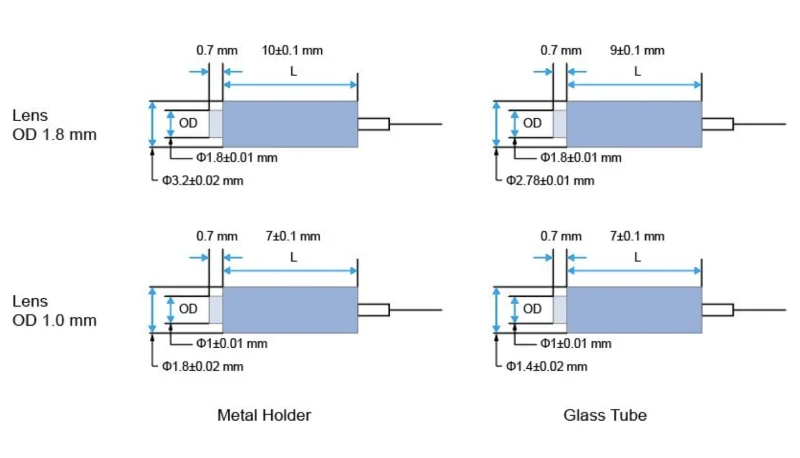
| Package Dimensions (mm): | 1.8(OD) Lens 3.2x10 Metalholder (P1) or 2.78x9.0 Glasstube (P2), 1.0(OD) Lens 1.8x7 Metalholder (P3) or 1.4x7 Glasstube (P4) |
| Operating Temperature (°C): | -5~+70 |
| Storage Temperature (°C): | -40~+85 |
Got questions about specs? Use the inquiry form to ask.
 Download Data Sheet

Features
- Low Insertion Loss: Ensures minimal signal loss for optimal performance.
- High Extinction Ratio & Return Loss: Provides superior signal quality and reduces back reflections.
- High Reliability: Designed for consistent performance in demanding environments.
Specifications:
- Operating Wavelength (nm): 1310, 1550, 980, 1064, 850
- Bandwidth (nm): ±30 for 1310/1550, ±20 for 980/1064/850
- Working Distance (mm): 5, 10, 20, 50
- Typical Insertion Loss (dB): 0.20 for 1310/1550, 0.25 for 980/1064, 0.30 for 850
- Insertion Loss (dB): ≤0.25 for 1310/1550, ≤0.30 for 980/1064, 0.35 for 850
- Extinction Ratio (dB): ≥23 for all wavelengths
- Return Loss (dB): ≥60 for all wavelengths
- Optical Power (mW): ≤500 for 1310/1550, ≤300 for 980/1064/850
- Fiber Type (Panda Fiber): PM1550 or PM1310, PM980, PM850
Package Dimensions (mm):
- 1.8 (OD) Lens 3.2x10 Metal holder (P1) or 2.78x9.0 Glass tube (P2)
- 1.0 (OD) Lens 1.8x7 Metal holder (P3) or 1.4x7 Glass tube (P4)
Temperature Range:
- Operating Temperature (°C): -5 to +70
- Storage Temperature (°C): -40 to +85
Applications
- Polarization‑Maintaining Fiber Lasers – Used as an input/output collimator for single‑frequency and narrow‑linewidth PM fiber lasers at 980, 1064, 1310, and 1550 nm, enabling low insertion loss beam delivery and high polarization extinction.
- PM Optical Isolators and Circulators – Integrated in polarization‑maintaining isolators, circulators, and Faraday rotator assemblies to collimate and re‑focus beams while preserving the polarization state and ensuring high extinction ratio.
- High‑Power Fiber Amplifiers (EDFA, YDFA) – Used at the input and output of erbium‑doped, ytterbium‑doped, and other rare‑earth‑doped PM fiber amplifiers to shape the beam and maintain polarization for coherent and high‑power operation.
- Coherent Communication Systems – Employed in coherent receivers and transmitters to couple light between PM fibers and free‑space optics (e.g., IQ modulators, coherent detectors) with minimal polarization crosstalk.
- Fiber‑Based Interferometers – Deployed in Mach‑Zehnder, Michelson, and Sagnac interferometers using PM fibers, where stable polarization and low insertion loss are essential for high‑contrast interference fringes.
- Quantum Optics & Quantum Key Distribution (QKD) – Used to prepare and deliver well‑defined polarization states from PM fibers into free‑space quantum optics setups, polarization analyzers, and single‑photon detectors.
- Fiber Gyroscopes (FOG) – Incorporated in polarization‑maintaining fiber optic gyroscopes to launch and collect well‑collimated, polarization‑stable light into the PM sensing coil, improving bias stability and sensitivity.
- Optical Sensing & Metrology – Applied in distributed and point fiber sensors (strain, temperature, acoustic, vibration) that rely on polarization‑encoded signals, enabling efficient coupling between PM fiber and free‑space interrogation optics.
- Optical Coherence Tomography (OCT) – Used as a PM collimation interface in OCT interferometers (particularly at 850, 1064, and 1310 nm) where polarization control improves image contrast and reduces polarization‑induced artifacts.
- PM WDM, Filter, and Modulator Integration – Serves as the free‑space coupling element in polarization‑maintaining WDM modules, AOM/EOM modulators, thin‑film filter blocks, and etalons that require a collimated input beam from PM fiber.
- Test & Measurement Instruments – Used on polarization analyzers, optical spectrum analyzers, power meters, and polarization‑sensitive OTDRs as input/output collimators for PM test ports, ensuring stable polarization during characterization.
- Free‑Space to Fiber Coupling in Research Labs – Commonly used in laboratories for coupling laser beams with controlled polarization into PM fibers, or for extracting a collimated, polarization‑maintaining beam from fiber‑based experiments.
- Nonlinear Fiber Optics & Supercontinuum Generation – Helps launch well‑defined polarization states into nonlinear PM fibers and photonic crystal fibers (PCFs), improving the stability of supercontinuum generation and other nonlinear processes.
- Polarization‑Sensitive Imaging & Microscopy – Interfaces PM fiber delivery systems with polarization‑sensitive microscopes and imaging setups, providing a collimated, high‑extinction beam for contrast‑enhanced imaging.
- Fiber‑Coupled Laser Pump Delivery – Used to collimate light from PM pump diodes (e.g., 980 nm) or to couple pump light into PM gain fibers in laser and amplifier systems requiring stable polarization for efficient pumping.
- Integrated Photonics & Chip Coupling – Employed to couple light between PM fibers and planar photonic chips (silicon photonics, InP, LN on insulator) where chip‑level polarization handling demands well‑controlled, collimated input beams.
- R&D Prototyping of PM Optical Components – Used in the development and testing of new PM components (isolators, couplers, splitters, comb filters) where precise control of beam size, divergence, and polarization is required.
- Beam Shaping and Collimation in PM Systems – Functions as a compact PM beam collimator/expander for aligning and matching beam diameters between different subsystems in polarization‑maintaining optical benches.
- PM Free‑Space Links and Alignment Systems – Serves as the termination interface for short free‑space PM optical links and alignment systems, maintaining a defined polarization state across the free‑space path.
Frequently Asked Questions
What are the operating wavelengths for the FiberCollimator?
What is the typical insertion loss for the FiberCollimator?
What is the extinction ratio of the FiberCollimator?
What is the maximum optical power the FiberCollimator can handle?
What are the operating and storage temperature ranges for the FiberCollimator?
What types of connectors are available for the FiberCollimator?
What applications is the FiberCollimator suitable for?
Got more questions? Use the inquiry form to ask the supplier directly.
Similar Products

Your inquiry has been received.
Create an account by adding a password
Why create an account?
- Auto-complete inquiry forms
- View and manage all your past messages
- Save products to your favorites
- Close your account anytime — no hassle