
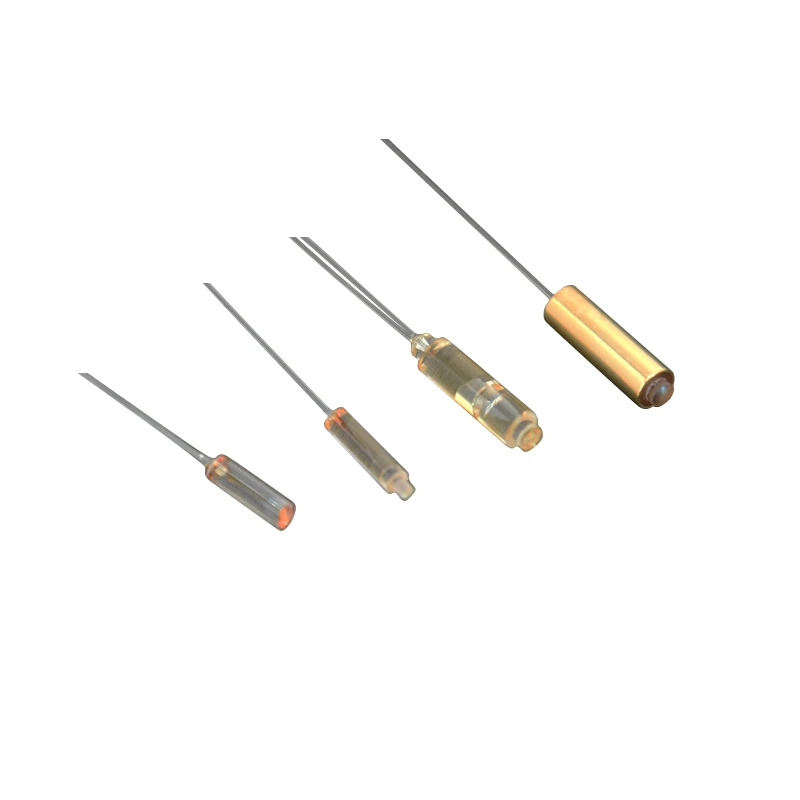
Description
Fiber-optic collimators are used to launch the light from an optical fiber into a free space collimated beam with specified beam diameter or spot size. They can also be used in reverse to focus light into a fiber. In essence, a simple collimation lens is all that is needed for this purpose.
Optical Fiber Collimator
Specifications
| Center Wavelength: | 850 nm |
|---|---|
| Bandwidth: | 60 nm |
| Numerical Aperture: | Not Specified |
| Effective Focal Length (EFL): | Not Specified |
| Center Wavelength (Single Fiber): | 850/1310 nm or 1310/1550 nm |
| Typical Insertion Loss (Single Fiber): | ≤0.15 dB or ≤0.2 dB |
| Max Insertion Loss (Single Fiber): | ≤0.25 dB |
| Return Loss (Single Fiber): | ≥60 dB |
| Lens Type (Single Fiber): | C-Lens |
| Working Distance (Single Fiber): | 5 mm or specify |
| Beam Diameter (Single Fiber): | 0.35 mm |
| Power Handling (Single Fiber): | 500 mW |
| Fiber Type (Single Fiber): | SM or MM |
| Fiber Length (Single Fiber): | 2.0 M |
| Bandwidth (Single Fiber): | +30 nm |
| Operating Temperature (Single Fiber): | to +70 °C |
| Storage Temperature (Single Fiber): | to +85 °C |
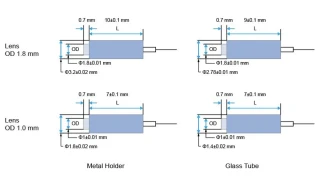
| Package Dimensions (Single Fiber): | 3.20x10 mm or 1.6x10 mm gold plated SS tube or 3.2*8 or 2.78x8 mm glass tube or custom size |
| Center Wavelength (Dual Fiber): | 850/1310 nm or 1310/1550 nm |
| Typical Insertion Loss (Dual Fiber): | ≤0.20 dB or ≤0.22 dB |
| Max Insertion Loss (Dual Fiber): | ≤0.25 dB |
| Return Loss (Dual Fiber): | ≥60 dB |
| Lens Type (Dual Fiber): | C-Lens |
| Beam Diameter (Dual Fiber): | 0.35 mm |
| Power Handling (Dual Fiber): | 500 mW |
| Fiber Type (Dual Fiber): | SM or MM |
| Fiber Length (Dual Fiber): | 2.0 M |
| Bandwidth (Dual Fiber): | +30 nm |
| Operating Temperature (Dual Fiber): | to +70 °C |
| Storage Temperature (Dual Fiber): | to +85 °C |
| Package Dimensions (Dual Fiber): | 3.20x10 mm or 1.6x10 mm gold plated SS tube or 3.2*8 or 2.78x8 mm glass tube or custom size |
Got questions about specs? Use the inquiry form to ask.
 Download Data Sheet

Features
- Low Insertion Los
- High Return Loss
- Low Polarization Sensitivity
Applications
- Optical Fiber Isolators .WDM
- CATV Fiber optic Links
- Fiber optic Systems Testing
- Fiber optic LAN Systems
Frequently Asked Questions
What are the key features of the Optical Fiber Collimator?
The key features of the Optical Fiber Collimator include low insertion loss, high return loss, and low polarization sensitivity.
What applications is the Optical Fiber Collimator suitable for?
The Optical Fiber Collimator is suitable for applications such as optical fiber isolators, WDM, CATV fiber optic links, fiber optic systems testing, and fiber optic LAN systems.
What are the specifications for the single fiber collimator?
The single fiber collimator has a center wavelength of 850/1310 or 1310/1550 nm, typical insertion loss of ≤0.15 or ≤0.2 dB, maximum insertion loss of ≤0.25 dB, return loss of ≥60 dB, a working distance of 5 mm or specified, beam diameter of 0.35 mm, power handling of 500 mW, fiber type SM or MM, fiber length of 2.0 M, and bandwidth of +30 nm.
What are the specifications for the dual fiber collimator?
The dual fiber collimator has a center wavelength of 850/1310 or 1310/1550 nm, typical insertion loss of ≤0.20 or ≤0.22 dB, maximum insertion loss of ≤0.25 dB, return loss of ≥60 dB, beam diameter of 0.35 mm, power handling of 500 mW, fiber type SM or MM, fiber length of 2.0 M, and bandwidth of +30 nm.
What are the operating and storage temperature ranges for the Optical Fiber Collimator?
The operating temperature range is up to +70°C, and the storage temperature range is up to +85°C.
What are the available package dimensions for the Optical Fiber Collimator?
The package dimensions are 3.20x10 mm or 1.6x10 mm gold plated SS tube, 3.2x8 mm or 2.78x8 mm glass tube, or custom size.
Got more questions? Use the inquiry form to ask the supplier directly.
Similar Products
High Power Polarization Maintaining Fiber Collimator
Shanghai Yogel Communication Equipment Co., Ltd.
Collimating Lenses for Optical Fibers and Spectrometers
Ocean Optics
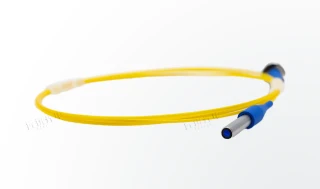
Single-Mode Fiber Collimators Hi1060/SMF-28e
YSenser
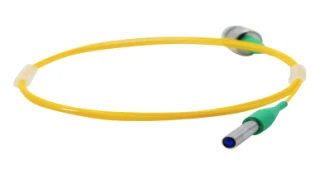
Polarization-Maintaining Fiber Collimators PM980/PM1550
YSenser
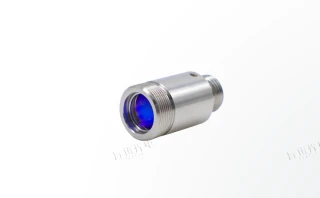
Achromatic Collimators SMA Connector 405nm-1650nm
YSenser
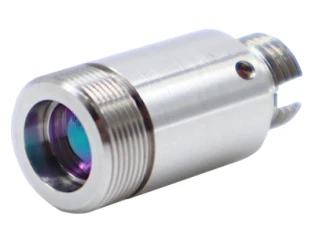
Achromatic Collimators FC/APC Connector 405nm-1650nm
YSenser
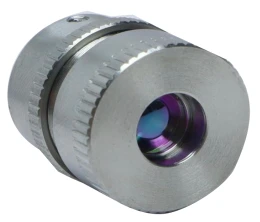
Adjustable Aspheric Collimators FC/APC Connector 4.5mm, 7.5mm, 11mm EFL
YSenser

Long Distance Collimators For 100M FC/APC Connector 405nm-1650nm
YSenser
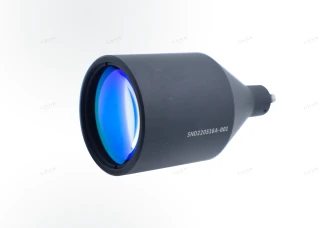
Long Distance Collimators For 300M FC/APC Connector 405nm-1654nm
YSenser
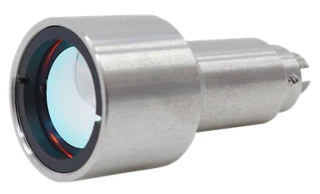
Large Beam Collimators for SM Fibers SMA Connector 405nm-1650nm
YSenser
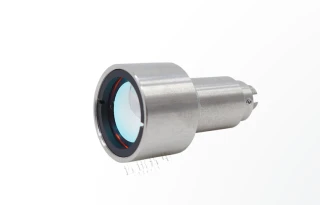
Large Beam Collimators for SM Fibers FC/APC Connector 405nm-1650nm
YSenser
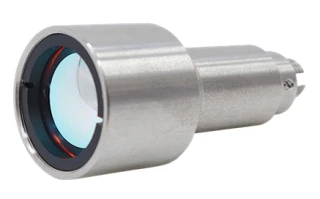
Large Beam Collimators for MM Fibers SMA Connector 450nm-1550nm
YSenser
Thank You!
Your inquiry has been received.
Create an account by adding a password
Why create an account?
- Auto-complete inquiry forms
- View and manage all your past messages
- Save products to your favorites
- Close your account anytime — no hassle