

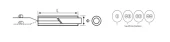
Description
Ascentta manufactures a wide range of optical fiber collimators for the applications required the high performance collimation of lights. The product line offers various configurations of collimators for different wavelength ranges, working distance, single mode, multi mode or polarization maintaining fiber types.
Ascentta Polarization Maintaining (PM) Fiber Optic Collimator (1310nm, 1480nm, 1550nm or Specify)
Specifications
| Center Wavelength: | 1310 nm |
|---|---|
| Bandwidth: | 60 nm |
| Numerical Aperture: | Not Specified |
| Effective Focal Length (EFL): | Not Specified |
| Insertion Loss: | 0.25 dB |
| Extinction Ratio: | 22 dB |
| Working Distance: | <100 mm |
| Wavelength Options (model Dependent): | 1310nm, 1550nm |
| Manufacturer Part Number (MPN): | PMCL-O-15-10-M-T-20-PML-10-C-FA |
| FindLight SKU: | FL-23271 |
Got questions about specs? Use the inquiry form to ask.
 Download Data Sheet

Features
- Polarization maintaining Panda fiber (PM)
- Custom wavelength
- Custom dimension
- Custom working distance
Applications
- Optical calibration
- Optical alignment
- Light measurement
- Spectral analysis
- Optical communication
- Research and developments
Export & Trade Information
| ECCN: | EAR99 |
|---|---|
| HTS Code: | 9027.90.8400 |
| Estimated US Tariff: | 0% |
Frequently Asked Questions
What is the Ascentta polarization maintaining fiber collimator and what wavelengths does it support?
The Ascentta polarization maintaining (PM) fiber collimator is a compact passive optical component that converts a polarized beam from a PM fiber into a free-space collimated beam (or vice versa) while preserving the input polarization state. This model is optimized for telecom and test-and-measurement bands at 1310 nm or 1550 nm, each with a typical operating bandwidth of ±30 nm. It uses PM Panda fiber and is available with various package and lens options to fit into fiber optic systems that require stable polarization, such as interferometers, coherent communication links, and sensing setups.
How does the PM fiber collimator maintain polarization and what is its extinction ratio?
The collimator uses PM Panda fiber with the connector key aligned to the slow axis, ensuring that the launched light remains aligned with the fiber’s principal polarization axis. The internal optical design, including the precision alignment of the PM fiber to the collimating lens, minimizes polarization cross-coupling when light transitions between fiber and free space. As specified, the minimum extinction ratio (ER) is 22 dB at 23 °C, which is typical for high‑quality PM collimators used in polarization-sensitive experiments. For best polarization performance, the user should align external optics to the indicated slow axis and avoid bending or twisting the PM fiber near the collimator.
What are the key optical and mechanical specifications, including insertion loss, return loss, and power handling?
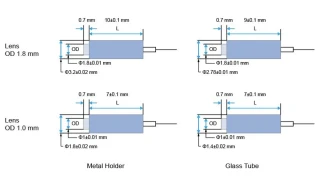
This PM fiber collimator is designed for low loss and high stability in free-space coupling applications. The typical insertion loss (IL) at 23 °C is 0.20 dB, with a maximum of 0.25 dB for connectorless configurations. The minimum return loss (back reflection) is 60 dB, which helps maintain signal integrity in high‑performance fiber systems. The maximum optical power handling is 300 mW, suitable for most telecom, lab, and sensing lasers in the 1310 nm and 1550 nm bands. The mechanical package is typically Φ3.2 mm × 8.0 mm, allowing easy integration into compact optical assemblies and fixtures.
What beam diameter and working distance options are available for the PM fiber collimator?
According to the datasheet, the maximum output beam diameter is 0.5 mm, with a maximum working distance of 100 mm in standard configurations. The ordering code allows you to specify the working distance (for example, 5 mm, 10 mm, 20 mm, or 70 mm, with custom options on request) and select different lens diameters (1.0 mm for single-fiber types or 1.8 mm and others by request). This enables optimization of the beam size and divergence for specific applications, such as free-space coupling into another fiber, interferometer arms, or optical components like beam splitters and polarizers. For custom beam sizes or longer working distances beyond the listed options, Ascentta can provide tailored designs.
What configuration and connector options are available (single, dual fiber, reflection/transmission types, connectors, and packaging)?
The PMCL series is highly configurable to match different system architectures. You can choose: (1) Type: O = single-fiber, T = dual-fiber T-type, F = dual-fiber F-type, and E = dual-fiber E-type, covering common layouts for free-space coupling, reflection monitoring, and interferometric setups. (2) Working type: T = transmission type (light passes through) or R = reflection type (dual-fiber only, for reflective configurations). (3) Package: M = metal holder or G = glass tube, depending on mounting needs and environmental constraints. (4) Lens: G-lens or C-lens depending on desired beam properties. (5) Connectors: a full range including FC/PC, FC/APC, SC/PC, SC/APC, ST/PC, LC/PC, LC/APC, as well as bare-fiber (NE = none). Note that adding connectors can slightly affect insertion loss, return loss, and extinction ratio compared to bare-fiber versions.
What are the operating and storage temperature ranges, and is the collimator suitable for field or lab use?
The specified operating temperature range is –5 °C to +70 °C, and the storage temperature range is –40 °C to +85 °C. These ranges make the PM collimator suitable for typical laboratory environments, OEM instrument integration, and many field or telecom applications where moderate temperature variations are expected. Like other precision PM collimators from manufacturers listed on FindLight and in the broader photonics market, it is not intended for very high-temperature industrial ovens or cryogenic environments without additional engineering measures. For demanding environments (e.g., outdoor enclosures, vibration, or extended temperature), Ascentta can discuss application-specific mounting and packaging solutions.
How do I properly specify and order a customized Ascentta PM fiber collimator for my application?
The product code follows the PMCL ordering structure shown in the datasheet, allowing you to precisely define each parameter. To order, you select: (1) Configuration type (single fiber or one of the dual-fiber styles). (2) Wavelength (13 for 1310 nm, 15 for 1550 nm, or X for others on request). (3) Lens diameter and type (e.g., 1.0 mm or 1.8 mm, G-lens or C-lens). (4) Package style (metal holder or glass tube). (5) Working type (transmission or reflection for dual fiber). (6) Working distance (e.g., 5, 10, 20, 70 mm, or custom). (7) Fiber type (PM Panda 250 μm, 400 μm, 900 μm, or other). (8) Fiber length (1.0 m, 1.5 m, 2.0 m, 3.0 m, or custom). (9) Connector type (FC/PC, FC/APC, SC, LC, ST, or none). If your requirement falls outside the standard code options—such as special wavelengths, unique working distances, or nonstandard fibers—you can contact Ascentta sales with your target beam diameter, wavelength, and mechanical constraints for a tailored PM collimator design.
Got more questions? Use the inquiry form to ask the supplier directly.
Similar Products
High Power Polarization Maintaining Fiber Collimator
Shanghai Yogel Communication Equipment Co., Ltd.
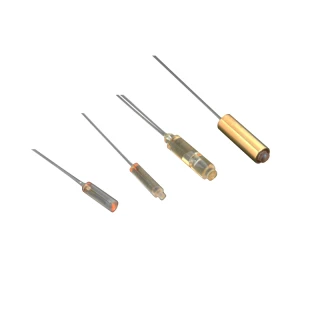
Optical Fiber Collimator
Shanghai Yogel Communication Equipment Co., Ltd.
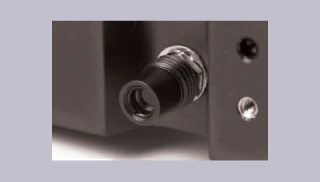
Collimating Lenses for Optical Fibers and Spectrometers
Ocean Optics
Single-Mode Fiber Collimators Hi1060/SMF-28e
YSenser
Polarization-Maintaining Fiber Collimators PM980/PM1550
YSenser
Achromatic Collimators SMA Connector 405nm-1650nm
YSenser
Achromatic Collimators FC/APC Connector 405nm-1650nm
YSenser
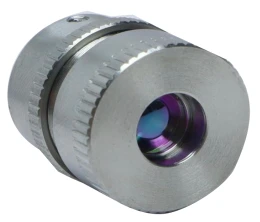
Adjustable Aspheric Collimators FC/APC Connector 4.5mm, 7.5mm, 11mm EFL
YSenser

Long Distance Collimators For 100M FC/APC Connector 405nm-1650nm
YSenser
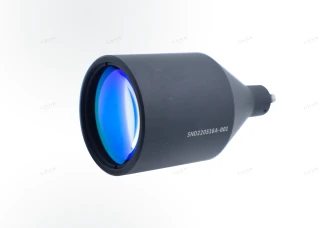
Long Distance Collimators For 300M FC/APC Connector 405nm-1654nm
YSenser
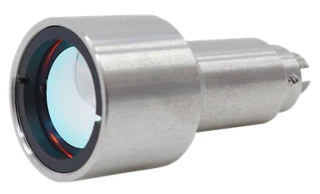
Large Beam Collimators for SM Fibers SMA Connector 405nm-1650nm
YSenser
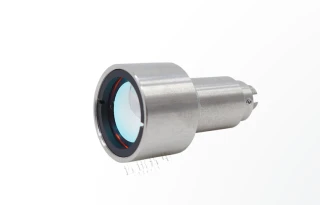
Large Beam Collimators for SM Fibers FC/APC Connector 405nm-1650nm
YSenser
Thank You!
Your inquiry has been received.
Create an account by adding a password
Why create an account?
- Auto-complete inquiry forms
- View and manage all your past messages
- Save products to your favorites
- Close your account anytime — no hassle