
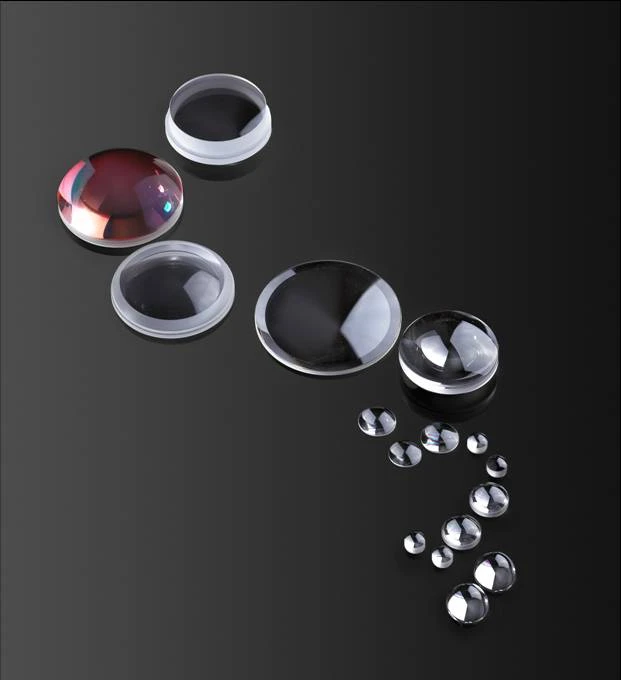
Description
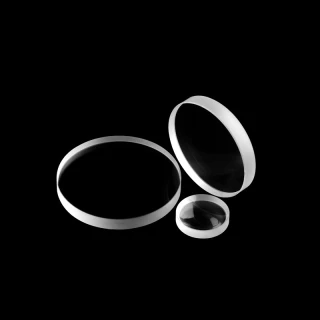
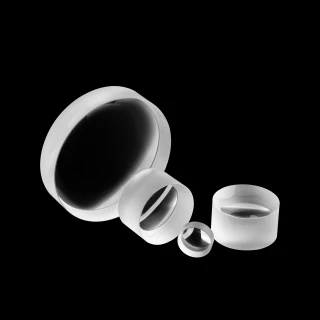
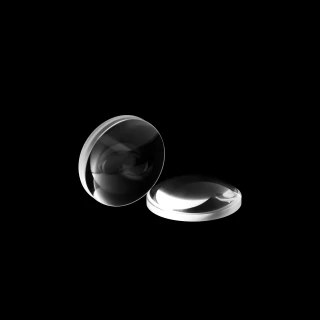
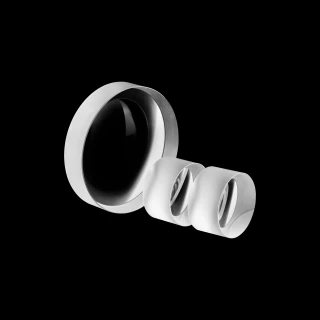
Sapphire spherical lenses are precision optical components designed for demanding UV, visible, and infrared applications requiring exceptional durability, thermal stability, and scratch resistance. Manufactured from single-crystal aluminum oxide (Al2O3), sapphire optics provide excellent optical transmission across a broad spectral range while maintaining superior mechanical strength in harsh operating environments.
Compared to conventional optical glass, sapphire lenses offer significantly higher hardness, improved chemical resistance, and enhanced thermal performance, making them ideal for high-power laser systems, aerospace optics, semiconductor equipment, industrial imaging, spectroscopy, biomedical instrumentation, and defense applications.
With excellent optical transmission from ultraviolet (UV) to infrared (IR) wavelengths, Sapphire Spherical Lenses are widely used in laser systems, imaging equipment, optical sensors, medical devices, aerospace technologies, and scientific instrumentation. Their spherical surface design enables accurate light focusing, collimation, and beam control for high-performance optical systems.
Combining exceptional mechanical strength with high optical performance, Sapphire Spherical Lenses are the ideal choice for precision optical applications operating in harsh or high-temperature environments.
Why Sapphire Is Used in Precision Optical Lenses
Sapphire is widely used in precision optics because of its exceptional combination of optical transmission, mechanical durability, and environmental resistance. Sapphire transmits efficiently from the ultraviolet through the infrared spectrum while offering significantly greater hardness and scratch resistance than conventional optical glass materials.
Its high thermal conductivity and resistance to chemical attack make sapphire especially valuable in laser systems, aerospace optics, semiconductor equipment, and industrial imaging applications operating under demanding environmental conditions.
Advantages of Sapphire Optical Lenses
Sapphire optical lenses provide several important advantages in industrial and scientific photonics systems, including exceptional surface hardness, broad UV-to-IR transmission, thermal stability, and resistance to scratches and chemical exposure.
These characteristics make sapphire lenses particularly effective for high-power laser applications, rugged imaging systems, aerospace optics, and harsh-environment instrumentation where long-term optical performance and durability are critical.
Sapphire Spherical Lenses for UV, Visible, IR, and High-Power Laser Applications
Specifications
| Material: | BK7, FS, UVFS, Al2O3 (Sapphire) |
|---|---|
| Diameter: | 25 mm |
| Focal Length: | Not Specified |
| Edge Thickness, Te: | Not Specified |
| Lens Type: | Plano-Convex, Plano-Concave, Bi-Convex, Bi-Concave |
| Radius: | Maximum 200mm |
| Radius Tolerance: | +/-2% |
| Diameter: | 5mm to 200mm+ |
| Diameter Tolerance: | +/-0.1mm (+/-0.005mm for customized high precision) |
| Thickness Tolerance: | +/-0.1mm (+/-0.005mm for customized high precision) |
| Surface Quality: | 60/40 (10/5 for customized high precision) |
Got questions about specs? Use the inquiry form to ask.
 Download Data Sheet

Features
Engineered with advanced polishing technology and strict quality control, the lenses provide
- outstanding surface quality
- high precision curvature
- minimal optical distortion.
Various dimensions, radii, thicknesses, and coating options such as AR and BBAR coatings are available to meet customized application requirements.
Applications
Applications of Sapphire Spherical Lenses
Sapphire spherical lenses are widely used in high-power laser systems, aerospace imaging, spectroscopy, semiconductor inspection, industrial machine vision, biomedical instrumentation, and defense optics applications.
Their exceptional hardness, broad spectral transmission, and resistance to thermal shock and chemical exposure make sapphire optics ideal for harsh-environment photonics systems requiring long-term optical stability and durability.
Frequently Asked Questions
What are sapphire spherical lenses?
Why are sapphire lenses used in laser systems?
What wavelengths do sapphire optical lenses transmit?
What are the advantages of sapphire optics compared to glass lenses?
Are sapphire lenses scratch resistant?
Can sapphire lenses withstand high temperatures?
What applications use sapphire spherical lenses?
Got more questions? Use the RFQ form to ask the supplier directly.
Similar Products
Need pricing for this product? Send a quick inquiry
Your inquiry has been received.
Create an account by adding a password
Why create an account?
- Auto-complete inquiry forms
- View and manage all your past messages
- Save products to your favorites
- Close your account anytime — no hassle