
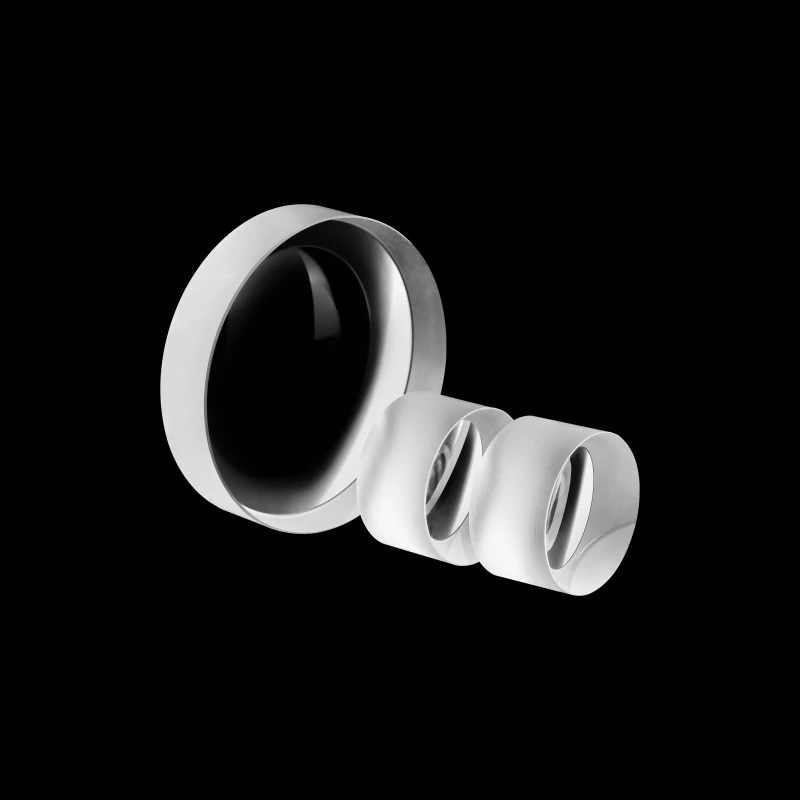
Description
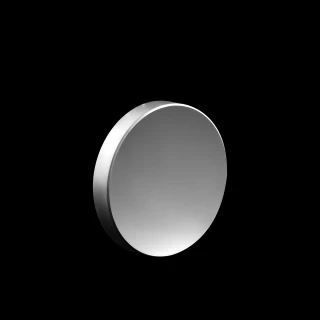
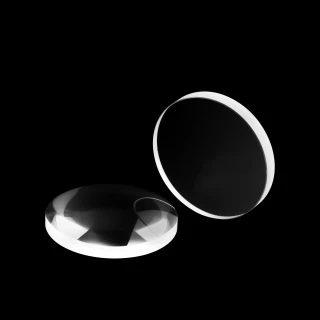
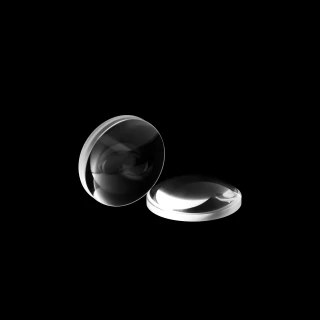
The Barium Fluoride (BaF₂) Biconcave Lens is a high-performance negative focal length optical component with two symmetric concave surfaces, designed for beam divergence, optical path adjustment, and aberration correction in high-end optical systems. Made of high-purity synthetic BaF₂ crystal, it features an ultra-broad spectral transmission range from deep ultraviolet (DUV) to mid-infrared (MIR), excellent radiation resistance, and stable thermo-mechanical properties, making it ideal for demanding applications in aerospace, defense, scientific research, and advanced industrial fields.
Manufacturer Custom High Transmittance Optical BaF2 Barium Fluoride Biconcave Lens for Infrared Detector and Sensor
Specifications
| Material: | BaF2 |
|---|---|
| Diameter: | 25.4 mm |
| Focal Length: | 150 mm |
| Edge Thickness, Te: | 2 mm |
| Lens Type: | Bi-Concave |
| Dimension Tolerance: | +0/-0.1mm |
| Surface Quality: | 60-40,40-20,or better |
| Flatness: | 4λ |
Got questions about specs? Use the inquiry form to ask.
 Download Data Sheet

Features
-
Ultra-Broad Spectral Transmission: Boasts an exceptional transmission range of 0.15μm to 14μm (from DUV to mid-IR)
-
High-Purity Optical Material: Crafted from high-purity synthetic BaF₂ crystal with excellent optical homogeneity, low internal stress, and minimal impurities, ensuring low light scattering and stable optical performance even in extreme conditions
-
Superior Radiation Resistance: Exhibits stronger resistance to high-energy radiation compared to calcium fluoride, making it suitable for use in high-radiation environments such as nuclear detection, high-energy physics experiments, and aerospace optical systems
-
Stable Thermo-Mechanical Performance: Features a moderate thermal expansion coefficient (18.1×10⁻⁶/°C @ 273K), high melting point (1280°C), and good thermal conductivity (11.72 W·m⁻¹·K⁻¹ @ 286K), ensuring stable operation in a wide temperature range (-40℃ to 100℃)
-
Good Scintillation Properties: Possesses fast scintillation response with dual emission peaks (220nm fast component and 310nm slow component), making it suitable for radiation detection and particle counting applications in addition to optical imaging
Applications
- Laser Systems: Used in laser beam expansion (Galilean structure), beam divergence, and aberration compensation for DUV, visible, and IR lasers; suitable for laser cutting, welding, marking, and high-power laser systems where broad spectral transmission and radiation resistance are required
- Thermal Imaging & Cryogenic Systems: Integrated into cryogenic refrigeration imaging systems and thermal cameras for MWIR (3-5μm) thermal imaging, widely used in aerospace, defense, and industrial temperature monitoring applications
- Spectroscopy & Scientific Research: Applied in spectrophotometers, monochromators, and spectrometers for DUV to mid-IR spectroscopy; used in high-energy physics, material science, and atmospheric research due to its broad transmission and radiation resistance
- Aerospace & Defense: Utilized in aerospace optical systems, satellite-borne sensors, and defense equipment (e.g., night vision devices, missile guidance systems) for its stability in extreme temperatures and radiation resistance
- Radiation Detection: Used in scintillation detectors, nuclear radiation monitoring equipment, and particle detectors, leveraging its fast scintillation response and high radiation resistance
- Optical Communication & Fiber Optics: Employed in fiber coupling systems and IR optical communication devices to adjust beam divergence angles and improve coupling efficiency, especially in mid-IR communication bands
- Medical & Biomedical Optics: Used in IR diagnostic equipment, medical spectroscopy, and endoscopic systems where broad spectral transmission and biocompatibility (in dry environments) are required
Frequently Asked Questions
How does BaF₂ compare to CaF₂ in terms of performance?
Is the BaF₂ biconcave lens suitable for high-power laser systems?
How to clean the BaF₂ biconcave lens properly?
What is the thermal expansion coefficient of BaF₂ crystal?
Got more questions? Use the RFQ form to ask the supplier directly.
Similar Products
Need pricing for this product? Send a quick inquiry
Your inquiry has been received.
Create an account by adding a password
Why create an account?
- Auto-complete inquiry forms
- View and manage all your past messages
- Save products to your favorites
- Close your account anytime — no hassle