
Description
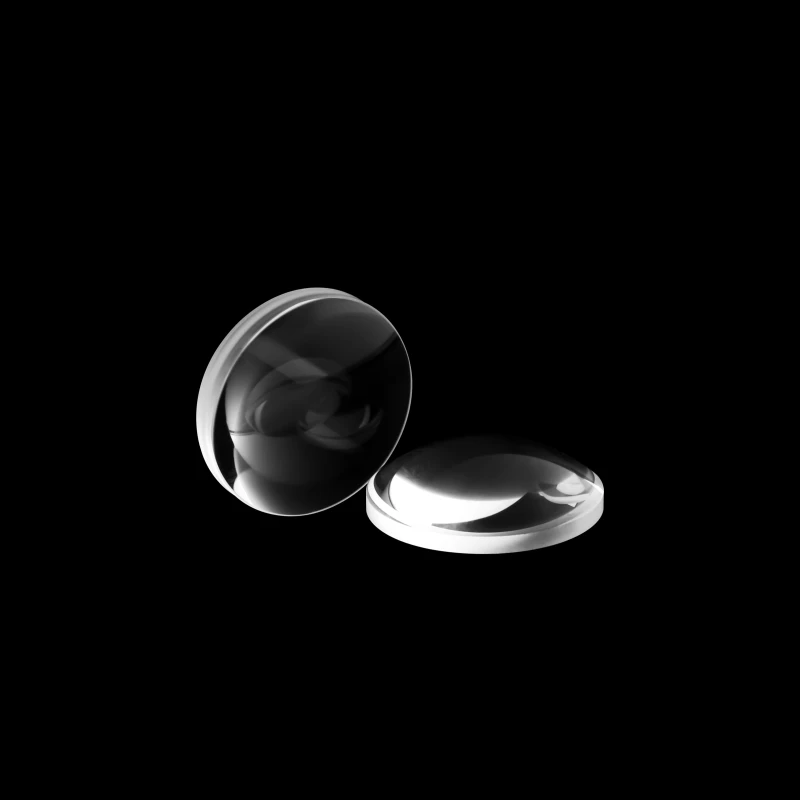
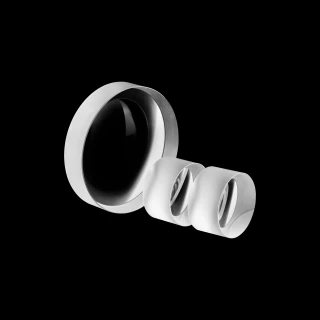
Magnesium Fluoride Biconvex Lens is a high-precision positive focal length optical component featuring two symmetric convex surfaces, designed for efficient light focusing and collimation in ultraviolet (UV), visible, and near-infrared (NIR) optical systems. Fabricated from high-purity synthetic magnesium fluoride single crystal, it offers exceptional optical homogeneity, low scattering, and a wide spectral transmission range. With strict quality control and precision polishing, this lens ensures minimal light loss and high imaging clarity. It is ideal for applications requiring UV durability, laser beam manipulation, and high-transmission efficiency, supporting scientific research, industrial lasers, and precision optical instrumentation
Factory Custom Optical MgF2 Biconvex Extreme Ultraviolet EUV Magnesium Fluoride Double Convex Lens
Specifications
| Material: | MgF2 |
|---|---|
| Diameter: | 12.7 mm |
| Focal Length: | 20 mm |
| Edge Thickness, Te: | 2 mm |
| Lens Type: | Bi-Convex |
| Dimension Tolerance: | +0/-0.1mm |
| Surface Quality: | 60-40,40-20,or better |
| Flatness: | 1/4Lλ |
Got questions about specs? Use the inquiry form to ask.
 Download Data Sheet

Features
- Ultra-Wide Spectral Transmission: Covers 150nm (deep UV) to 7μm (mid-IR), with >90% transmittance in 200nm–6μm, making it suitable for UV, VIS, NIR, and SWIR applications
- High-Purity MgF₂ Substrate: Crafted from high-quality synthetic single-crystal magnesium fluoride with low internal stress, minimal impurities, and excellent optical uniformity
- UV & Radiation Resistance: Superior resistance to UV damage and high-energy radiation, outperforming common optical glasses like K9/BK7, ideal for UV laser systems and harsh environments
- Low Birefringence: Exhibits very low birefringence (Δn < 10⁻⁶), ensuring stable polarization performance and consistent image quality in polarization-sensitive systems
- Excellent Mechanical & Thermal Stability: High hardness (Knoop hardness ~450), good chemical resistance to most acids/alkalis, and a low thermal expansion coefficient, enabling stable operation across -50°C to 200°C
Applications
- UV Laser Systems: Used in excimer lasers (193nm/248nm), UV laser marking/cutting, and laser radar (LiDAR) for UV beam focusing, collimation, and beam shaping
- Scientific Research: Integrated into UV-Vis-NIR spectrophotometers, monochromators, and fluorescence microscopy systems for high-sensitivity light collection and focusing
- Optical Instrumentation: Applied in cameras, telescopes, and binoculars for aberration correction, image enhancement, and wide-spectrum light transmission
- Medical Optics: Utilized in UV medical devices (e.g., dermatology lasers, endoscopes) and biomedical imaging equipment for precise light delivery and low-scatter performance
- Industrial & Defense: Suitable for optical sensors, environmental monitoring equipment, and aerospace systems requiring UV durability and high environmental stability
- Fiber Optics & Communication: Employed in fiber coupling systems to focus divergent light into optical fibers, improving coupling efficiency in UV-VIS-NIR communication links
Frequently Asked Questions
How does MgF₂ compare to K9/BK7 glass in UV applications?
Can the lens be used for high-power UV laser systems?
What is the difference between single-crystal and polycrystalline MgF₂ lenses?
Is the MgF₂ biconvex lens safe for use in high-temperature environments?
Can non-standard focal lengths or diameters be customized?
Got more questions? Use the RFQ form to ask the supplier directly.
Similar Products
Need pricing for this product? Send a quick inquiry
Your inquiry has been received.
Create an account by adding a password
Why create an account?
- Auto-complete inquiry forms
- View and manage all your past messages
- Save products to your favorites
- Close your account anytime — no hassle