


Description
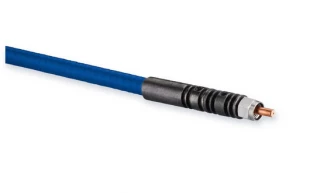
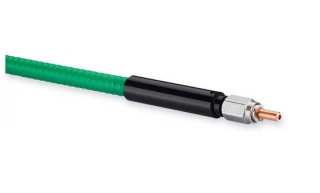
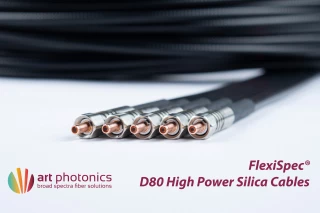
Introducing the **FiberTech® CuSMA Laser Cables**, a premium solution for industrial laser applications. Designed with precision and durability in mind, these laser cables are equipped with F-SMA freestanding fiber connectors, ensuring optimal performance and reliability. The cables are encased in a robust, PVC-coated steel-armored protection tube, providing exceptional protection against environmental factors and mechanical stress.
The **FiberTech® CuSMA Laser Cables** boast a copper-based, high-accuracy fiber ferrule, which is instrumental in effective heat removal and maintaining high fiber centricity. This meticulous design ensures that the fiber core aligns perfectly, allowing for efficient laser beam delivery with minimal deviation. Capable of handling laser power up to 400 W, these cables are ideal for demanding industrial environments. Engineered for versatility, the **FiberTech® CuSMA Laser Cables** feature VIS-IR all-silica step-index fibers with a numerical aperture (NA) of 0.22, with options for NA = 0.12 and graded-index fibers available upon request.
The SMA905 connectors, with their free-standing fiber tips and hex nuts, offer a secure and stable connection. For enhanced customization, keyed SMA905 connectors are also available. These cables are a testament to advanced engineering, ensuring electrical isolation from end to end and superior performance in laser delivery systems.
CuSMA Laser Cables - FCL23-10200-2000
Specifications
| Fiber Core Diameter: | 100 um |
|---|---|
| Cable Length: | 2 m |
| Numerical Aperture (NA): | 0.22 |
| Average Laser Power: | up to 400 W |
| Fiber Centricity: | < 5 µm |
| Protection Tube: | PVC-coated steel-armored |
| Electrical Isolation: | from end to end |
Got questions about specs? Use the inquiry form to ask.
 Download Data Sheet

Features
- High‑Performance Laser Beam Delivery up to 400 W
Engineered for industrial laser applications with reliable transmission of average laser powers up to 400 W, ideal for cutting, welding, marking, and materials processing. - F‑SMA Freestanding Fiber Connectors (SMA905)
Equipped with industry‑standard SMA905 (F‑SMA) connectors featuring a free‑standing fiber tip and hex nut design for robust, repeatable coupling to most diode, solid‑state, and fiber laser sources. - All‑Silica VIS‑IR Step‑Index Fiber
Utilizes VIS–IR all‑silica (silica/silica) step‑index fiber with NA = 0.22 for efficient light collection and delivery across a wide spectral range from visible to infrared. Alternative NA = 0.12 or graded‑index fiber versions are available on request for tailored beam quality. - Copper‑Based High‑Accuracy Fiber Ferrule
Features a copper alloy ferrule designed for effective heat removal at the fiber end face, enhancing thermal stability and lifetime under high‑power operation. - Excellent Fiber Core Centricity (< 5 µm)
Precision alignment with fiber centricity < 5 µm (core to ferrule) minimizes coupling losses, improves beam pointing stability, and supports consistent, high‑quality process results. - Rugged Steel‑Armored Protection Tube
Integrated squarelock, blue PVC‑coated steel‑armored protection tube provides superior mechanical protection against crushing, abrasion, and bending stresses in demanding industrial environments. - Mechanical Strain Relief with Metal Connector Cuffs
Metal connector cuffs at each cable end ensure secure strain relief between connector and armored cable, improving durability under frequent handling, movement, and vibration. - Electrical Isolation End‑to‑End
Designed with full electrical isolation along the cable length, helping to protect sensitive laser sources and peripheral electronics from ground loops and stray currents in industrial installations. - Multiple Core Diameters for Application Flexibility
Available with fiber core diameters of 100, 200, 400, 600, 800, and 1000 µm, enabling optimized beam parameters for a wide variety of laser powers, spot sizes, and working distances. - Standard Cable Length Options
Supplied in convenient standard lengths of 2 m, 3 m, and 5 m to match typical machine layouts; other lengths can be implemented within the same platform on request. - Compatible with a Wide Range of Industrial Laser Systems
SMA905 interface and standard numerical aperture make the FiberTech® CuSMA cables compatible with many OEM and off‑the‑shelf industrial lasers, simplifying integration and replacement of existing fiber delivery lines. - Optimized for Harsh Industrial Use
Steel‑armored construction, PVC outer jacket, and robust connector design provide high resistance to mechanical shock, vibration, and environmental stress, suitable for 24/7 production environments. - Efficient Thermal Management for High Duty Cycles
The combination of copper alloy ferrule and freestanding SMA design supports efficient heat extraction from the fiber face, enabling stable operation at high average powers and long duty cycles. - Customizable Connector Options
Keyed SMA905 connectors are available on request, providing defined rotational orientation for applications requiring precise beam alignment or polarization management. - Low Transmission Loss and Stable Beam Quality
High‑purity silica fibers, tight geometry control, and precision polishing deliver low attenuation and stable output beam characteristics, improving process consistency and reducing scrap rates. - Clear Product Coding for Easy Selection and Replacement
Structured type designations (e.g., CLSxxxxIR08/08.0bl23/23‑0xxxcm100) and order numbers (FCL23‑x0xxx‑2000) simplify identification, reordering, and maintenance planning across different core sizes and lengths.
Applications
- Industrial Laser Beam Delivery – Robust fiber laser delivery for industrial laser systems up to 400 W, including Nd:YAG, fiber lasers and diode lasers in the VIS–IR range.
- Laser Cutting and Precision Micro‑Cutting – High‑accuracy fiber centricity and copper ferrule heat dissipation support clean, stable cuts in metals, plastics, foils and composites in automated cutting cells.
- Laser Welding and Brazing – Reliable power transmission for spot and seam welding of thin sheet metal, small components, sensors, battery tabs and precision assemblies.
- Laser Surface Treatment – Delivery of laser energy for surface hardening, cladding, annealing, texturing and de‑burring of metal and alloy surfaces in production environments.
- Laser Marking, Engraving and Coding – Stable beam guidance for high‑contrast marking and deep engraving on metals, plastics, ceramics and coated parts in traceability and branding applications.
- Laser Soldering and Micro‑Joining – Controlled power transport for fine soldering of electronic components, flex circuits, connectors and sensors where thermal management is critical.
- Robotics and Automation Integration – Flexible, steel‑armored laser cable routing on robot arms and motion stages for automated cutting, welding and material processing cells.
- Machine Tool Integration – Integration into CNC machines and multi‑axis stages for laser drilling, structuring, trimming and edge finishing of metals, ceramics and composites.
- Medical Device and Instrument Manufacturing – Precision laser processing (cutting, drilling, texturing) of stents, guidewires, surgical tools, implants and micro‑components in cleanroom production lines.
- Electronics and Semiconductor Production – Laser trimming, depaneling, micro‑machining, marking and via drilling on PCBs, wafers and microelectronic components.
- Sensor and Photonics Assembly – Laser micromachining and welding in the production of optical sensors, fiber‑optic components, optomechanical mounts and housings.
- Research and Development Laboratories – Versatile beam delivery for laboratory laser setups, experimental benches, spectroscopy systems and prototype industrial laser processes.
- Spectroscopy and Diagnostics – VIS‑IR fiber delivery for excitation in Raman, LIBS, fluorescence and general spectroscopic measurements in industrial and academic environments.
- Process Monitoring and Test Stands – Rugged cable routing in test rigs, endurance testing, burn‑in setups and system qualification benches for industrial laser sources.
- Harsh Industrial Environments – Steel‑armored, PVC‑coated protection tube suitable for factory floors, production lines and environments with mechanical stress and vibration.
- Custom Laser Systems and OEM Integration – OEM laser machines requiring reliable F‑SMA beam delivery with options for different core diameters and NA for tailored spot sizes and working distances.
Frequently Asked Questions
What are FiberTech CuSMA laser cables and what are they used for?
Which fiber core diameters and standard cable lengths are available for the CuSMA laser cables?
What is the maximum average laser power these CuSMA fiber cables can handle?
Which wavelengths and fiber types are supported by these CuSMA laser cables?
What are the key mechanical and thermal advantages of the CuSMA design?
What connector types are used and are keyed SMA905 options available?
How do I select the right CuSMA cable (core size and NA) for my laser application?
Got more questions? Use the inquiry form to ask the supplier directly.
Similar Products

Your inquiry has been received.
Create an account by adding a password
Why create an account?
- Auto-complete inquiry forms
- View and manage all your past messages
- Save products to your favorites
- Close your account anytime — no hassle