



Description
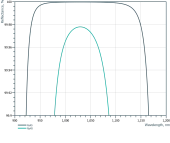
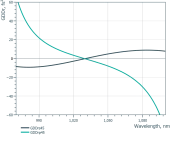
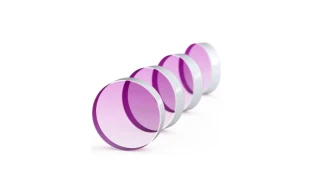
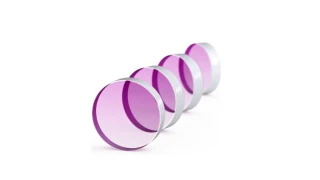
The OPTOMAN PP-UVFS-12.7-6.35-ULLM23 is a premium ultrafast laser mirror engineered for high-performance femtosecond and picosecond laser systems operating in the 1000–1060 nm near-infrared spectral range. Manufactured on a precision UV fused silica substrate and coated using advanced Ion Beam Sputtering (IBS) technology, this dielectric mirror delivers exceptionally high reflectivity, excellent optical durability, and minimal group delay dispersion (GDD), making it ideal for demanding ultrafast laser applications.
Designed for a 45° angle of incidence, the mirror provides average reflectivity exceeding 99.95% for s-polarization and 99.9% for p-polarization while maintaining GDD below 20 fs². Its λ/8 surface flatness, 10-5 scratch-dig surface quality, and precision-polished UV fused silica substrate help preserve beam quality and pulse integrity in advanced laser systems. The robust IBS coating also offers excellent resistance to high laser fluence, ensuring reliable long-term performance in research and industrial environments.
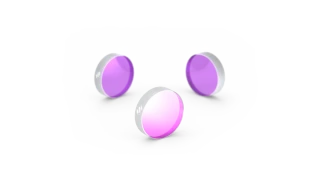
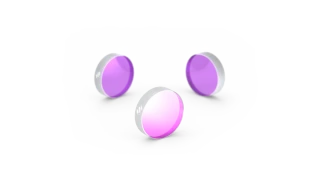
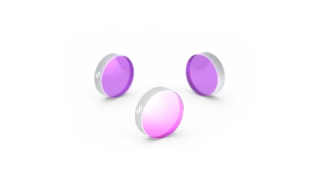
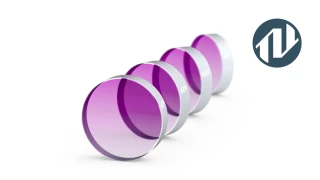
PP-UVFS-12.7-6.35-ULLM23 Ultrafast Laser Mirror
Specifications
| Diameter: | 12.7 mm |
|---|---|
| Thickness: | 6.35 mm |
| Wavelength Range: | 1000 – 1060 nm |
| Clear Aperture (CA): | 80 % |
| Substrate Material: | UV Grade Fused Silica |
| Angle Of Incidence (AOI): | 45 – 45 deg |
| Surface Quality, S1 (scratch-dig): | 10-5 |
| Surface Quality, S2 (scratch-dig): | Inspection Polished |
| Surface Flatness Over CA, S1 (@633nm Or Per Manufacturer): | Lambda/8 |
| Surface Flatness Over CA, S2 (@633nm Or Per Manufacturer): | Unspecified |
| Parallelism: | 0.17 arcmin |
| S1 Surface: | Coated |
| S2 Surface: | Uncoated |
| Reflectivity (HRs @ AOI, @ Peak Wavelength): | 99.95 % |
| Reflectivity (HRp @ AOI, @ Peak Wavelength): | 99.9 % |
| GDD R @ AOI, @ Peak Wavelength: | 20 fs^2 |
| Manufacturer Part Number (MPN): | PP-UVFS-12.7-6.35-ULLM23 |
| FindLight SKU: | FL-24518 |
Got questions about specs? Use the inquiry form to ask.
 Download Data Sheet

Features
- Manufacturer Part Number: PP-UVFS-12.7-6.35-ULLM23
- High-reflectivity dielectric mirror optimized for 1000–1060 nm ultrafast lasers
- Optimized for 45° angle of incidence
- Average reflectivity: Rs >99.95%, Rp >99.9%
- Low Group Delay Dispersion (GDD): <20 fs²
- Precision UV fused silica (UVFS) substrate
- Advanced Ion Beam Sputtering (IBS) coating for superior durability and low optical losses
- Diameter: 12.7 mm
- Thickness: 6.35 mm
- Surface flatness: λ/8
- Surface quality: 10-5 scratch-dig
- High laser-induced damage resistance suitable for ultrafast laser systems
- Excellent beam quality preservation for femtosecond and picosecond applications
Applications
- Femtosecond laser systems
- Picosecond laser systems
- Ytterbium fiber and solid-state lasers
- Ultrafast spectroscopy
- Nonlinear optics experiments
- Optical parametric amplifier (OPA) systems
- Laser material processing
- Scientific research laboratories
- Precision beam steering
- High-power industrial laser platforms
- Advanced photonics and optical instrumentation
Export & Trade Information
| ECCN: | EAR99 |
|---|---|
| HTS Code: | 9001.90.6000 |
| Estimated US Tariff: | 10% |
Frequently Asked Questions
What wavelength range is this mirror designed for?
What makes the IBS coating beneficial?
Is this mirror suitable for femtosecond lasers?
What substrate material is used?
Why is low Group Delay Dispersion important?
Got more questions? Use the inquiry form to ask the supplier directly.
Similar Products

Your inquiry has been received.
Create an account by adding a password
Why create an account?
- Auto-complete inquiry forms
- View and manage all your past messages
- Save products to your favorites
- Close your account anytime — no hassle