

Description
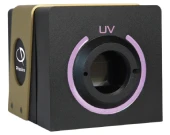
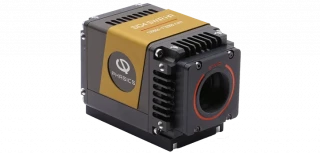
The SID4 UV HR High Resolution UV Wavefront Sensor is a cutting-edge instrument designed for precise wavefront analysis in the ultraviolet spectrum. Engineered to operate within a wavelength range of 190 to 400 nm, this sensor is ideal for demanding applications in UV optics, laser diagnostics, and advanced photonics research. Its large 13.3 x 13.3 mm² aperture dimension accommodates a wide variety of beam sizes, making it suitable for both laboratory and industrial environments where high accuracy and reliability are paramount.
With an impressive spatial resolution of 26 µm and a phase and intensity sampling grid of 512 x 512, the SID4 UV HR delivers exceptionally detailed wavefront measurements. The phase resolution of less than 2 nm RMS ensures that even the most subtle aberrations are detected, while the absolute accuracy of 20 nm RMS provides confidence in quantitative results. This level of precision is particularly valuable for applications such as UV lithography, optical component testing, and laser beam characterization, where minute deviations can significantly impact performance.
The sensor supports a frame rate of 10 Hz and real-time processing at 3 Hz in full resolution, enabling dynamic measurements and immediate feedback during alignment or system optimization. Its robust 10GigE interface ensures rapid data transfer and seamless integration into modern laboratory setups. Despite its advanced capabilities, the SID4 UV HR maintains a compact footprint (80.3 x 78.6 x 108.2 mm³) and lightweight design (~600 g), facilitating easy installation and portability.
Designed for high-resolution, large pupil, and large dynamic range measurements, the SID4 UV HR stands out among UV wavefront sensors for its combination of precision, speed, and versatility. Whether used in research, quality control, or production environments, it provides the detailed insights necessary to advance optical system performance in the ultraviolet domain.
SID4 UV HR High Resolution UV Wavefront Sensor 190-400nm 26µm
Specifications
| Wavelength Range: | 190 – 400 nm |
|---|---|
| # Pixels (Width): | 512 |
| # Pixels (Height): | 512 |
| Lenslet Pitch: | 26 um |
| Wavefront Accuracy: | <= lambda/30 |
| Type: | Lateral Shearing |
| Aperture Dimension: | 13.3 x 13.3 mm² |
| Spatial Resolution: | 26 µm |
| Phase And Intensity Sampling: | 512 x 512 |
| Phase Resolution: | <2 nm RMS |
| Absolute Accuracy: | 20 nm RMS |
| Frame Rate: | 10 Hz |
| Real-time Processing Frequency: | 3 Hz (full resolution) |
| Interface: | 10GigE |
| Dimensions (W X H X L): | 80.3 x 78.6 x 108.2 mm³ |
| Weight: | ~ 600 g |
Got questions about specs? Use the inquiry form to ask.
 Download Data Sheet

Features
- Wide UV Wavelength Range: Operates from 190 nm to 400 nm, ideal for deep and near-UV applications.
- High Spatial Resolution: 26 µm spatial resolution enables precise wavefront measurements for demanding optical systems.
- Large Aperture: 13.3 x 13.3 mm² aperture supports large pupil measurements and high throughput.
- High Phase and Intensity Sampling: 512 x 512 sampling grid for detailed phase and intensity mapping.
- Exceptional Phase Resolution: Less than 2 nm RMS phase resolution for ultra-precise metrology.
- Superior Absolute Accuracy: 20 nm RMS absolute accuracy ensures reliable and repeatable results.
- Fast Frame Rate: Up to 10 Hz frame rate for dynamic measurements and real-time feedback.
- Real-Time Processing: 3 Hz full-resolution real-time processing for immediate data analysis.
- High-Speed Data Interface: 10GigE connectivity for rapid data transfer and integration into advanced systems.
- Compact and Lightweight Design: Dimensions of 80.3 x 78.6 x 108.2 mm³ and weight of approximately 600 g for easy integration.
- Large Dynamic Range: Capable of measuring a wide range of wavefront aberrations, suitable for diverse applications.
- Robust Construction: Engineered for stability and reliability in laboratory and industrial environments.
- Ideal for UV Optics Characterization: Perfect for testing and alignment of UV lasers, lithography systems, and scientific instrumentation.
Applications
- UV Optical System Alignment: Precisely align and optimize ultraviolet (UV) optical systems, including telescopes, microscopes, and spectrometers, by measuring and correcting wavefront aberrations in the 190–400 nm range.
- Laser Beam Characterization: Analyze and optimize the quality of UV laser beams in research, industrial, and medical applications by providing high-resolution wavefront and intensity measurements.
- Semiconductor Lithography: Enhance the performance and yield of photolithography equipment by monitoring and correcting wavefront distortions in deep UV (DUV) lithography processes.
- Metrology for UV Optics Manufacturing: Perform precise quality control and metrology of UV lenses, mirrors, and other optical components during manufacturing and assembly.
- Adaptive Optics Systems: Integrate into adaptive optics setups for real-time correction of wavefront errors in UV imaging and laser systems.
- Scientific Research: Support advanced research in physics, chemistry, and biology by enabling accurate UV wavefront measurements for experiments involving fluorescence, spectroscopy, and photonics.
- Synchrotron and Free Electron Laser Facilities: Monitor and optimize the wavefront quality of UV and extreme UV (EUV) beams used in synchrotron radiation and FEL experiments.
- Space and Astronomy Applications: Calibrate and align UV instruments and telescopes for space missions and astronomical observations, ensuring optimal image quality and data accuracy.
- UV Microscopy: Improve the resolution and contrast of UV microscopes by correcting optical aberrations and ensuring precise wavefront control.
- Nonlinear Optics and Ultrafast Laser Research: Characterize wavefronts in experiments involving UV generation through nonlinear processes, such as harmonic generation and parametric conversion.
- Quality Assurance in UV Coating Processes: Evaluate the uniformity and performance of UV coatings on optical surfaces by detecting phase and intensity variations.
- Industrial Process Monitoring: Integrate into manufacturing lines for real-time monitoring and feedback control of UV-based processes, such as laser micromachining and materials processing.
Frequently Asked Questions
What is the SID4 UV HR high resolution UV wavefront sensor?
What applications is the SID4 UV HR wavefront sensor suitable for?
What is the wavelength range supported by the SID4 UV HR?
How accurate is the SID4 UV HR in measuring wavefronts?
What is the spatial and phase resolution of the SID4 UV HR?
What are the data interface and processing capabilities of the SID4 UV HR?
How does the SID4 UV HR compare to other UV wavefront sensors?
Got more questions? Use the inquiry form to ask the supplier directly.
Similar Products

Your inquiry has been received.
Create an account by adding a password
Why create an account?
- Auto-complete inquiry forms
- View and manage all your past messages
- Save products to your favorites
- Close your account anytime — no hassle