

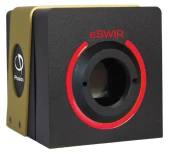
Description
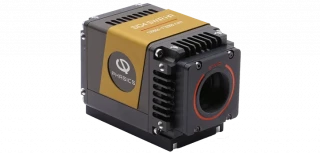
The SID4 eSWIR HR is a state-of-the-art wavefront sensor designed for high-precision measurements in the extended short-wave infrared (eSWIR) spectrum, covering wavelengths from 1.4 to 2.1 µm. Engineered for demanding applications in optical metrology, laser diagnostics, and advanced imaging, this sensor delivers exceptional phase and intensity sampling capabilities, making it a preferred choice for research laboratories and industrial environments requiring meticulous wavefront analysis.
With a large aperture dimension of 9.54 x 7.62 mm² and a fine spatial resolution of 60 µm, the SID4 eSWIR HR enables detailed characterization of optical systems. The device samples phase and intensity at a high density of 159 x 127 points, ensuring comprehensive data acquisition across the entire pupil. Its phase resolution is less than 6 nm RMS for coherent sources, and it achieves absolute accuracy below 40 nm RMS, supporting applications that demand both precision and reliability.
The sensor is equipped with real-time processing capabilities at a frequency of 10 Hz at full resolution, allowing for dynamic measurements and immediate feedback during alignment or quality control processes. Its robust construction, compact dimensions (90 x 115 x 120 mm³), and lightweight design (~1 kg) facilitate integration into a variety of setups, from benchtop experiments to industrial production lines. The Giga Ethernet interface ensures fast and reliable data transfer, supporting seamless operation in modern laboratory and manufacturing environments.
The SID4 eSWIR HR stands out in the market for its combination of high resolution, large dynamic range, and expansive pupil coverage. It is particularly well-suited for applications in adaptive optics, laser beam profiling, and optical component testing, where precise wavefront measurement in the eSWIR range is critical. Its advanced performance and user-friendly integration make it a valuable tool for professionals seeking cutting-edge solutions in optical metrology.
SID4 eSWIR HR High Resolution SWIR Wavefront Sensor 1.4-2.1 µm
Specifications
| Wavelength Range: | 1400 – 2100 nm |
|---|---|
| # Pixels (Width): | 159 |
| # Pixels (Height): | 127 |
| Lenslet Pitch: | 60 um |
| Wavefront Accuracy: | <= lambda/15 |
| Type: | Lateral Shearing |
| Aperture Dimension: | 9.54 x 7.62 mm² |
| Spatial Resolution: | 60 µm |
| Phase And Intensity Sampling: | 159 x 127 |
| Phase Resolution: | < 6 nm RMS |
| Accuracy Absolute: | < 40 nm RMS |
| Real-time Processing Frequency: | 10 Hz (full resolution) |
| Interface: | Giga Ethernet |
| Dimensions (W X H X L): | 90 x 115 x 120 mm³ |
| Weight: | ~ 1 kg |
Got questions about specs? Use the inquiry form to ask.
 Download Data Sheet

Features
- Extended SWIR Wavelength Range: Operates from 1.4 to 2.1 µm, ideal for advanced scientific and industrial applications requiring sensitivity in the extended short-wave infrared spectrum.
- High Spatial Resolution: 60 µm spatial resolution enables precise wavefront analysis and detailed imaging for demanding optical setups.
- Large Aperture: 9.54 x 7.62 mm² aperture dimension accommodates large beams and supports flexible integration into various optical systems.
- High Phase and Intensity Sampling: 159 x 127 sampling grid ensures accurate phase and intensity measurements across the entire aperture.
- Exceptional Phase Resolution: Less than 6 nm RMS phase resolution (for coherent sources) delivers outstanding measurement precision.
- High Absolute Accuracy: Achieves less than 40 nm RMS absolute accuracy, ensuring reliable and repeatable results for critical applications.
- Real-Time Data Processing: Processes wavefront data at 10 Hz (full resolution), enabling live monitoring and fast feedback for dynamic systems.
- Giga Ethernet Interface: High-speed data transfer and easy connectivity for seamless integration into laboratory and industrial environments.
- Compact and Lightweight Design: Dimensions of 90 x 115 x 120 mm³ and weight of approximately 1 kg make it easy to install and handle.
- Large Dynamic Range: Capable of measuring a wide range of wavefront aberrations, suitable for both low and high signal levels.
- Large Pupil Capability: Supports large optical pupils, making it suitable for advanced research and high-power laser applications.
- Robust and Reliable: Designed for long-term stability and consistent performance in demanding environments.
Applications
- Laser Beam Characterization: Accurately measure and analyze the wavefront and intensity profile of laser beams in the extended SWIR range (1.4 – 2.1 µm), making it ideal for laser development, alignment, and quality control.
- Optical System Testing: Evaluate and optimize the performance of advanced optical systems, including lenses, mirrors, and adaptive optics, by providing high-resolution phase and intensity mapping.
- Semiconductor Inspection: Inspect and characterize semiconductor wafers and photonic devices that operate or are tested in the SWIR spectrum, ensuring precise quality assurance and process control.
- SWIR Imaging System Calibration: Calibrate and validate SWIR cameras, sensors, and imaging systems to ensure optimal performance and image quality in scientific, industrial, and defense applications.
- Material Science Research: Analyze material properties, surface topography, and thin film uniformity using high-resolution phase measurements in the extended SWIR range.
- Biomedical Imaging: Support advanced biomedical imaging techniques, such as optical coherence tomography (OCT) and tissue characterization, where extended SWIR sensitivity and high spatial resolution are critical.
- Fiber Optic Component Testing: Characterize and align fiber optic components and assemblies, including connectors, couplers, and waveguides, for telecommunications and sensing applications in the SWIR band.
- Metrology and Surface Profiling: Perform precise non-contact surface profiling and metrology for industrial inspection and quality control, leveraging the sensor’s high phase resolution and accuracy.
- Adaptive Optics Feedback: Provide real-time wavefront data for adaptive optics systems in astronomy, microscopy, and laser machining, enabling dynamic correction of optical aberrations.
- Research & Development: Facilitate cutting-edge research in photonics, quantum optics, and nanotechnology by delivering detailed phase and intensity information in the extended SWIR region.
Frequently Asked Questions
What is the SID4 eSWIR HR wavefront sensor?
What are the key features of the SID4 eSWIR HR?
What applications are suitable for the SID4 eSWIR HR wavefront sensor?
How accurate is the SID4 eSWIR HR in phase measurement?
What is the spatial and phase sampling capability of the SID4 eSWIR HR?
How does the SID4 eSWIR HR connect to data acquisition systems?
What are the physical dimensions and weight of the SID4 eSWIR HR?
Got more questions? Use the inquiry form to ask the supplier directly.
Similar Products

Your inquiry has been received.
Create an account by adding a password
Why create an account?
- Auto-complete inquiry forms
- View and manage all your past messages
- Save products to your favorites
- Close your account anytime — no hassle