


Description
The LDX-XXXX-1550 is a high-power multimode laser diode designed to provide reliable and efficient laser performance at a wavelength of 1550nm. This laser diode offers a wide range of output power options, with up to 5000mW in free space and up to 1400mW when used with fiber optics.
It boasts high output power and dynamic range, making it suitable for various applications. Custom packaging, wavelengths, and laser designs are available to meet specific requirements.
LDX-3310-1550: 1550nm 2500mW Fiber Coupled Multimode Diode Laser
Specifications
| Laser Type: | Continuous Wave (CW) |
|---|---|
| Fiber Type: | Multi-Mode |
| Wavelength: | 1550 nm |
| Output Power: | 1500 mW |
| Fiber Core Diamater: | 100 um |
| Fiber Cladding Diameter: | 250 um |
| Package Types: | Chip on Carrier, C-Mount, B-Mount, Q-Mount, 9mm, TO-3 no TEC, HHL, 9mm SMA, 2-Pin FC, 8-pin HHL, 9-pin HHL |
| Operating Temperature: | 25 °C |
| Threshold Current: | 500 mA |
| Operating Current: | 9200 mA |
| Operating Current: | 1.4 V |
| Beam Divergenc E (FWHM): | 8 θ// (°) |
| Spectral Width FWHM: | 10.0 nm |
Got questions about specs? Use the inquiry form to ask.
 Download Data Sheet

Features
- Wide Visible Wavelength Coverage (445–665 nm) – Comprehensive selection of multimode laser diodes spanning blue to deep red (445 nm, 520 nm, 622–665 nm) for maximum flexibility in spectroscopy, bio-fluorescence, alignment, and display applications.
- High Optical Output Power up to 3.5 W – Single-emitter multimode designs deliver up to approximately 3,500 mW free-space power (e.g., 445 nm) and up to 2,000 mW at 660 nm, providing high brightness for demanding industrial and scientific use.
- Efficient Fiber-Coupled Output – Optimized coupling into standard fibers with typical output up to 2,800 mW from fiber, supporting core sizes from 100 μm to 600 μm for easy integration into existing fiber-based systems and beam delivery setups.
- Multiple Emitter Sizes for Beam Shaping Flexibility – Emitter widths from 15 μm to 300 μm (e.g., 15 μm at 520 nm, 50–300 μm in the 620–665 nm range) allow a tailored balance between brightness, divergence, and coupling efficiency.
- High Electrical-to-Optical Efficiency – Typical operating voltages around 2.1–4.5 V and optimized threshold/operating currents enable efficient conversion, reducing thermal load and improving system-level power efficiency.
- Controlled Beam Divergence – Well-defined far-field beam divergence (FWHM) typically around 7° (parallel/slow axis) and 40° (perpendicular/fast axis) simplifies collimation optics, beam shaping, and system alignment.
- Narrow Spectral Width for Stable Output – Typical spectral widths around 0.3–2.0 nm FWHM (depending on wavelength) support applications requiring wavelength stability and spectral purity, such as sensing, fluorescence excitation, and interference-based setups.
- Selectable Polarization (TE or TM) – Availability of both TE- and TM-polarized diodes in the 620–660 nm range enables optimal coupling into polarization-maintaining fibers, holographic setups, and polarization-sensitive measurement systems.
- Robust Operating Temperature Range – Designed for stable performance in typical operating temperature conditions around 15–25 °C (with proper thermal management), suitable for lab environments and thermally controlled OEM platforms.
- Multiple Standard Package Options – Offered in a wide variety of industry-standard packages (e.g., 9 mm, C-mount, HHL, butterfly) for fast, drop-in integration into existing mounts, drivers, and optical benches.
- Fiber-Coupled and Free-Space Configurations – Available in configurations optimized for direct free-space output or pre-aligned fiber-coupled modules, reducing integration time and ensuring consistent beam quality at the fiber exit.
- Comprehensive Safety and Handling Documentation – Detailed guidance on general precautions, open and sealed package handling, and thermal management helps extend diode lifetime and maintain performance in OEM and laboratory environments.
- High Reliability for OEM and Industrial Use – Designs based on proven multimode diode technology and supported by established manufacturers (LDX Optronics & RPMC Lasers) for long lifetime, repeatable performance, and secure supply for high-volume applications.
Applications
- Medical and Biomedical Applications
- Photodynamic therapy (PDT) and low-level laser therapy (LLLT) in the red spectral region (620–665 nm)
- Non-invasive diagnostics, tissue imaging, and fluorescence excitation for biomedical research
- Ophthalmic instrumentation and retinal imaging illumination sources
- Capillary and flow cytometry light sources at 635 nm and 650–660 nm bands
- In vitro diagnostics, clinical analyzers, and point-of-care devices
- Endoscopy and minimally invasive surgical illumination (fiber-delivered light)
- Industrial and Manufacturing Applications
- Material processing, selective soldering, and micro-welding of plastics and metals using high-power multimode diodes
- Laser cutting, drilling, and scribing of thin films and semiconductor wafers
- Laser sintering and additive manufacturing (3D printing) using visible and NIR wavelengths
- Machine vision illumination, alignment, and structured light projection
- High-speed barcode reading and industrial code marking at 635–660 nm
- Optical printing, lithography pre-alignment, and photoplotting applications
- Scientific Research and Laboratory Uses
- Excitation sources for fluorescence microscopy and confocal microscopy
- Raman spectroscopy, resonance Raman, and photoluminescence excitation
- Atomic and molecular spectroscopy in the 445–665 nm range
- Pump lasers for dye lasers and Ti:Sapphire systems (using 445–520 nm pump bands)
- Optical trapping, optical tweezers, and cold atom experiments
- General-purpose lab illumination, alignment lasers, and interferometry sources
- Fiber-Optic and Telecom-Adjacent Applications
- Fiber-coupled visible sources for sensing and metrology with HHL, BTF, and 9 mm SMA packages
- Plastic optical fiber (POF) communication links around 650 nm
- Optical component testing, insertion-loss measurements, and system characterization
- Short-reach visible data links and specialty fiber illumination
- Sensing, Measurement, and Metrology
- Displacement, position, and vibration sensing with visible multimode beams
- Gas and chemical detection using absorption and fluorescence-based sensors
- Optical coherence and low-coherence interferometry with controlled spectral width sources
- Speckle-based metrology, surface roughness, and strain measurements
- Optical encoders and precision alignment systems
- Defense, Aerospace, and Security
- Target designation, range finding, and visible aiming lasers at 630–660 nm
- Night-vision compatible illuminators and training simulators
- Surveillance, active imaging, and scanning systems with fiber-delivered beams
- Beacon and marker lights for aerospace and unmanned platforms
- Displays, Projection, and Entertainment
- RGB laser projection systems using 445 nm blue and 520 nm green diodes
- Laser light shows and entertainment lighting in the 635–660 nm red band
- Heads-up displays (HUD), head-mounted displays (HMD), and pico-projectors
- Stage and architectural lighting with fiber-coupled laser sources
- Instrumentation and Imaging
- Confocal scanners and OCT illumination (short-wavelength channels)
- Flow imaging, particle sizing, and scattering-based analyzers
- Microscopes, cytometers, and bio-imagers requiring stable, narrow-band visible sources
- Precision spectrophotometers and colorimetric analyzers
- Environmental and Agricultural Applications
- Fluorescence-based water and air quality monitoring
- Plant physiology studies and chlorophyll fluorescence excitation (around 445 nm and 660–665 nm)
- Remote sensing and LIDAR-like short-range scanners in the visible range
- Scientific Education and OEM Integration
- Educational laser kits, laboratory teaching tools, and university experiments
- OEM integration into analytical instruments, medical devices, and inspection systems
- Prototype development platforms for new photonics products using robust multimode diodes
Frequently Asked Questions
What is the wavelength of the LDX-3310-1550 laser diode?
The wavelength of the LDX-3310-1550 laser diode is 1550nm.
What is the output power of the LDX-3310-1550 laser diode?
The output power of the LDX-3310-1550 laser diode is 3500mW in free space packages and 2800mW from the fiber in fiber coupled packages.
What applications is the LDX-3310-1550 laser diode suitable for?
The LDX-3310-1550 laser diode is suitable for diode laser solutions, scientific and industrial applications, and OEM applications.
Are custom packaging and laser designs available for the LDX-3310-1550 laser diode?
Yes, custom packaging and laser designs are available for the LDX-3310-1550 laser diode.
What is the operating temperature range for the LDX-3310-1550 laser diode?
The operating temperature range for the LDX-3310-1550 laser diode is not provided in the product description.
Got more questions? Use the inquiry form to ask the supplier directly.
Similar Products
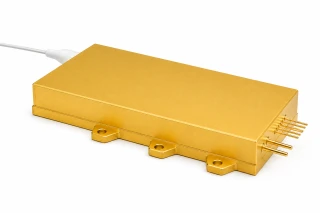
793nm 135W Fiber-Coupled Diode Laser
PhotonTec Berlin GmbH
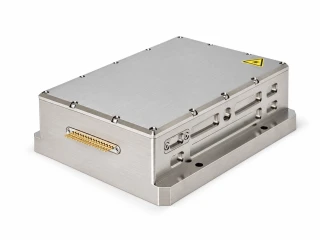
Green 520nm 30W Fiber-Coupled Diode Laser
PhotonTec Berlin GmbH
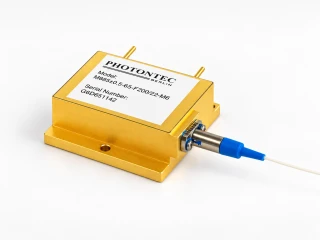
885nm Wavelength-Stablized Fiber-Coupled Diode Laser
PhotonTec Berlin GmbH

878.6nm 90 W Wavelength-Stabilized Fiber Coupled Diode Laser
PhotonTec Berlin GmbH

10G DFB Pigtail Laser Diode Module
Shenzhen Box Optronics Technology Co.,Ltd.
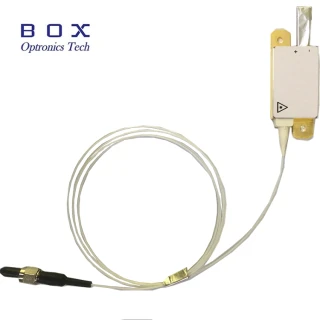
878.6nm 15W Fiber Coupled Stabilized Wavelength Diode Laser
Shenzhen Box Optronics Technology Co.,Ltd.
Multi-module High Power Fiber Pump Laser Source
Shenzhen Box Optronics Technology Co.,Ltd.

1064nm Multimode Fiber High-Power Pump Source
Shenzhen Box Optronics Technology Co.,Ltd.

976nm 350W Fiber Coupled Diode Laser
Shenzhen Box Optronics Technology Co.,Ltd.

808nm Multimode Fiber High-Power Pump Source
Shenzhen Box Optronics Technology Co.,Ltd.

520nm 50W Fiber Coupled Diode Laser
Hangzhou Brandnew Technology Co., Ltd.

50W 808nm Fiber Coupled Diode Laser System
Hangzhou Brandnew Technology Co., Ltd.
Thank You!
Your inquiry has been received.
Create an account by adding a password
Why create an account?
- Auto-complete inquiry forms
- View and manage all your past messages
- Save products to your favorites
- Close your account anytime — no hassle