


Description
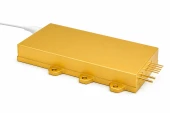
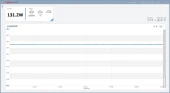
The M793±3-135-F135/22-DK is a high-power, fiber-coupled diode laser module designed for demanding industrial, medical, and scientific applications that require reliable near-infrared emission around 793 nm. Delivering up to 135 W of optical output power directly from the exit fiber, this module offers a powerful and compact pumping and illumination solution for integration into advanced laser systems. Its high brightness, excellent thermal behavior, and stable spectral characteristics make it well suited for integration into OEM platforms where performance and uptime are critical.
Operating in the 790–796 nm wavelength range with a typical center wavelength of 793 nm and a narrow spectral width of 3 nm (FWHM), this diode laser module is optimized for use as a pump source for thulium- and holmium-doped fiber lasers and solid-state lasers, as well as for various near-IR applications such as materials processing, medical therapy systems, spectroscopy setups, and defense-related illumination. The narrow emission bandwidth improves pumping efficiency and system stability, while the specified wavelength temperature coefficient of 0.35 nm/°C allows precise wavelength tuning and stabilization through temperature control.
The module is fiber-coupled through a large-core, multimode fiber specifically tailored for high-power transmission. With a core diameter of 135 µm and a cladding diameter of 155 µm, the fiber supports efficient coupling of the diode output into downstream optical stages. A numerical aperture of 0.22 at the fiber and a specified NA of 0.18 for 95 % encircled energy at the exit ensure good beam delivery and compatibility with common collimation and focusing optics in pumping and illumination setups. The standard fiber length of 2 m provides installation flexibility in laser systems and optical benches, and an SMA905 connector configuration is available as an option for straightforward integration with existing optomechanical interfaces.
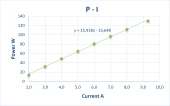
Electrically, the M793±3-135-F135/22-DK is engineered for efficient and stable high-power operation. With a threshold current in the 1.4–1.5 A range and a typical operating current around 9–10 A, the module achieves a slope efficiency of approximately 17.5 W/A. This leads to a power conversion efficiency of about 44 %, which is competitive with similar high-power 793 nm pump modules and reduces thermal load on the system. The typical operating voltage is 32.6–33.0 V, making the module compatible with standard high-current diode laser drivers used in industrial and scientific environments. This combination of high efficiency and robust electrical design supports long-term stable output power when integrated with appropriate driver electronics and thermal management.
For safe and reliable operation, the module incorporates a thermistor for accurate temperature monitoring. The thermistor has a resistance of 10 kΩ at 25 °C, enabling precise feedback control in conjunction with temperature controllers or TEC-based cooling systems. The recommended operating temperature range at the thermistor is 20–35 °C, which supports stable wavelength and power characteristics in typical laboratory and industrial environments. The module can be stored safely in the temperature range from –20 °C to +80 °C, which simplifies logistics and long-term stocking for OEM system manufacturers. Allowed operating humidity is below 75 %, aligning with standard cleanroom and manufacturing conditions.
An important aspect of the M793±3-135-F135/22-DK is its integrated back reflection isolation in the 1800–2100 nm wavelength range, providing more than 30 dB attenuation for that band. This is particularly relevant when the module is used as a pump source for mid-IR or 2 µm-class fiber and solid-state lasers, where back-reflected signal radiation can potentially couple back into the pump source. The integrated isolation helps protect the diode laser against destabilizing reflections and enhances overall system robustness, reducing the need for additional external optical isolators in many configurations.
The electrical interface provides clearly defined pins for the laser diode anode and cathode, photodiode anode and cathode, and thermistor connections. This layout facilitates straightforward integration into OEM driver electronics and control boards. The built-in photodiode enables power monitoring and feedback control functions that are typically required in precision pumping applications, where constant optical output or controlled ramp-up profiles are critical. Together with suitable driver and control electronics, the module can be operated with high stability in power- or current-regulated modes.
From a system design perspective, the M793±3-135-F135/22-DK aligns well with state-of-the-art high-power 793 nm fiber-coupled pump modules commonly deployed in f
793nm 135W Fiber-Coupled Diode Laser
Specifications
| Laser Type: | Continuous Wave (CW), Modulated |
|---|---|
| Fiber Type: | Multi-Mode |
| Wavelength: | 793 nm |
| Output Power: | 135000 mW |
| Fiber Core Diamater: | 135 um |
| Fiber Cladding Diameter: | 155 um |
| Model: | M793±3-135-F135/22-DK |
| Output Power Range (exit Fiber): | 130 – 135 W |
| Central Wavelength Range: | 790 – 796 nm (typ. 793 nm) |
| Spectral Width (FWHM): | 3.0 nm |
| NA With 95% Encircled Energy: | 0.18 |
| Wavelength Temperature Coefficient: | 0.35 nm/°C |
| Fiber Core Diameter: | 133.5 – 136.5 µm (typ. 135 µm) |
| Fiber Numerical Aperture: | 0.22 |
| Fiber Length: | 2.0 m |
| Connector (optional): | SMA905 |
| Threshold Current: | 1.4 – 1.5 A |
| Operating Current: | 9.0 – 10.0 A |
| Operating Voltage: | 32.6 – 33.0 V |
| Slope Efficiency: | 17.5 W/A |
| Power Conversion Efficiency: | 44 % |
| Back Reflection Isolation Wavelength Range: | 1800 – 2100 nm |
| Back Reflection Isolation Attenuation: | > 30 dB |
| Thermistor Resistance At 25°C: | 10 kΩ |
| Operating (Thermistor) Temperature: | 20 – 35 °C |
| Operating Humidity: | < 75 % |
| Storage Temperature: | -20 – +80 °C |
Got questions about specs? Use the inquiry form to ask.
 Download Data Sheet

Features
- High Output Power 135 W @ 793 nm – Delivers up to 135 W optical power at the fiber exit, ideal for demanding pumping and industrial applications requiring high brightness and stability.
- Narrow Spectral Width (3 nm FWHM) – Typical 3.0 nm full-width at half-maximum (FWHM) spectrum provides excellent spectral control for pumping solid‑state and fiber lasers and for precision thermal and materials processing.
- Optimized 793 nm Center Wavelength – Center wavelength of 793 nm (790–796 nm range) specifically suited for Tm- and Ho-doped fiber/solid-state laser pumping and other 790–800 nm applications.
- High-Efficiency Fiber-Coupled Design – Power conversion efficiency of up to 44% reduces electrical power consumption and heat load, enabling compact and energy-efficient OEM system integration.
- Large-Core, High-NA Fiber Output – 135 µm core diameter (typical) and 0.22 NA provide a robust, easy-to-align output beam that is well matched to many pump delivery fibers and coupling optics.
- 95% Encircled Energy NA 0.18 – NA with 95% encircled energy of 0.18 ensures that the majority of power is confined to a well-defined numerical aperture, simplifying downstream collimation and focusing.
- Standard 2 m Fiber Length with Optional SMA905 Connector – 2.0 m rugged fiber pigtail supports flexible routing in laser systems; optional SMA905 connector offers plug‑and‑play coupling to standard opto‑mechanical components.
- High Slope Efficiency (17.5 W/A) – Efficient electrical-to-optical conversion minimizes driver current requirements and helps achieve high output power with moderate drive electronics.
- Stable Wavelength vs. Temperature (0.35 nm/°C) – Well-characterized wavelength temperature coefficient of 0.35 nm/°C allows precise wavelength tuning and stabilization via TEC control in OEM designs.
- Integrated Back-Reflection Isolation (1800–2100 nm) – Built-in isolation with >30 dB attenuation in the 1800–2100 nm band protects the diode from detrimental back reflections originating from Tm/Ho lasers and other IR sources.
- Reliable Operating Current and Voltage Range – Typical operating current of 9–10 A and voltage of ~33 V support straightforward integration with standard high‑power laser diode drivers.
- Integrated Thermistor for Temperature Monitoring – 10 kΩ thermistor at 25°C enables precise temperature sensing and closed‑loop control, improving wavelength stability and lifetime in long‑term operation.
- OEM-Ready Fiber-Coupled Module – Designed specifically for system builders; compact fiber‑coupled form factor simplifies mechanical integration into medical, industrial, and scientific laser systems.
- Defined Operating and Storage Ranges – Operating temperature (thermistor) 20–35°C, storage temperature −20 to +80°C, and <75% operating humidity support reliable performance in typical laboratory and industrial environments.
- Designed for Compliance in OEM Systems – Supplied as an OEM fiber-coupled laser module; final IEC 60825-1 and FDA/CDRH laser safety compliance is facilitated by clear electrical, optical, and safety interface definitions for system integrators.
Applications
The high-power, 793 nm, fiber‑coupled diode laser with 135 W output and 135 µm / NA 0.22 delivery fiber is optimized for demanding OEM and system-integration tasks in industrial, medical, and scientific fields. Typical and emerging applications include:
1. Solid‑State and Fiber Laser Pumping- Pumping of thulium-doped fiber lasers (TDFL) for 1.9–2.1 µm emission in materials processing, medical surgery, and LIDAR.
- Pumping of Ho-doped fiber and solid-state lasers for 2.0–2.1 µm high‑energy pulsed and CW sources.
- Cladding‑pumped fiber laser architectures requiring high-brightness 793 nm pump modules with 135 µm core fibers.
- Multi‑kilowatt fiber laser pump combiners where several 793 nm diode modules are wavelength- or power-combined.
- High-efficiency DPSSL pumping for crystals with absorption bands near 790–795 nm.
- 2 µm surgical laser pumping (Tm/Ho systems) for precise cutting and ablation in ENT, urology, and pulmonology.
- Endovenous laser therapy (EVLT/EVLA) via 1.9–2.1 µm fiber lasers pumped at 793 nm.
- Dermatology and aesthetic platforms using Tm/Ho-based mid‑IR sources for fractional skin resurfacing and scar revision.
- Laser lithotripsy sources where 793 nm diodes pump Tm or Ho lasers employed in kidney and ureter stone fragmentation.
- Photothermal therapy research systems leveraging 2 µm lasers pumped by high‑power 793 nm modules.
- Precision cutting and micro‑machining with 2 µm fiber lasers pumped at 793 nm for polymers, plastics, and specialty materials.
- Marking and surface structuring using Tm/Ho lasers for specialized materials where 1 µm or 1.06 µm are less effective.
- Thin‑film and polymer processing where 2 µm absorption is advantageous (e.g., in transparent polymers or composites).
- Selective laser sintering of polymers in R&D setups based on 2 µm sources pumped at 793 nm.
- Pumping of 2 µm LIDAR transmitters used for eye‑safe ranging and 3D mapping.
- Gas sensing systems where Tm/Ho lasers around 2 µm target absorption lines of H2O, CO2, CH4, and other species.
- DIAL (Differential Absorption LIDAR) sources for atmospheric monitoring pumped by 793 nm diodes.
- Industrial in‑line process monitoring using 2 µm spectroscopic probes excited via 793 nm‑pumped fiber lasers.
- Nonlinear optics experiments where 793 nm pumping drives parametric processes in specialty fibers and crystals.
- Development of new Tm/Ho-doped fibers and gain media, including characterization of efficiency and thermal behavior.
- Laboratory prototypes of mid‑IR sources built around 2 µm lasers and OPOs pumped by 793 nm diode modules.
- Laser cooling and trapping platforms (support lasers) in experimental setups requiring robust 793 nm pump sources.
- Optical component and fiber reliability testing under high optical power at ~793 nm.
- Integration into rack‑mount pump units for multi‑channel fiber laser systems.
- Use in modular pump cassettes for scalable industrial or medical laser platforms.
- Redundant or hot‑swappable pump modules for high‑uptime laser systems in production environments.
- Custom pump combiners and beam delivery assemblies using 135 µm / NA 0.22 fibers and SMA905 connectors.
- Pumping of eye‑safe 2 µm rangefinder and target designator lasers for ground or airborne platforms.
- Directed infrared countermeasure (DIRCM) source pumping in research and qualification setups.
- Long‑range atmospheric propagation studies with 2 µm lasers driven by 793 nm pump diodes.
- High‑reliability pump modules for ruggedized fiber laser sources in aerospace and defense applications (OEM integration).
- Broadband or tunable 2 µm illumination systems where the primary source is a Tm/Ho
Frequently Asked Questions
What is the PhotonTec Berlin M793±3-135-F135/22-DK laser module and what are its key specifications?
What are typical applications for a 793 nm, 135 W fiber‑coupled diode laser like this one?
How should the M793±3-135-F135/22-DK diode laser be driven and thermally managed for reliable operation?
How does the back‑reflection isolation work and what protection does it provide?
What fiber parameters and connector options are available, and how should the output fiber be handled?
What environmental and storage conditions are recommended for this OEM laser diode module?
Is the M793±3-135-F135/22-DK a certified laser product and what are the regulatory responsibilities of the integrator?
Got more questions? Use the inquiry form to ask the supplier directly.
Similar Products




Your inquiry has been received.
Create an account by adding a password
Why create an account?
- Auto-complete inquiry forms
- View and manage all your past messages
- Save products to your favorites
- Close your account anytime — no hassle