


Description
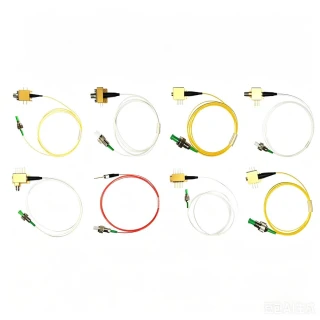
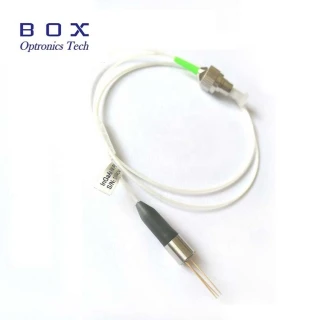
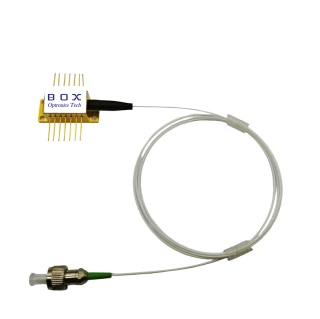
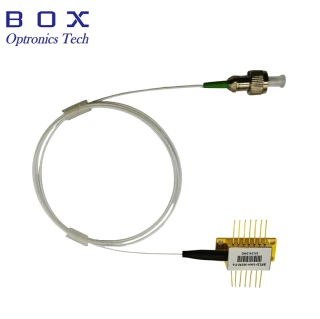
High-power Raman lasers are specialized excitation sources designed for Raman spectroscopy, chemical analysis, biomedical sensing, and optical characterization applications requiring stable narrow-linewidth laser illumination. These spectrum-stabilized multimode diode laser systems are available at Raman excitation wavelengths of 532nm, 638nm, 785nm, and 1064nm, enabling flexible optimization across a wide range of organic, inorganic, pharmaceutical, and biological spectroscopy workflows.
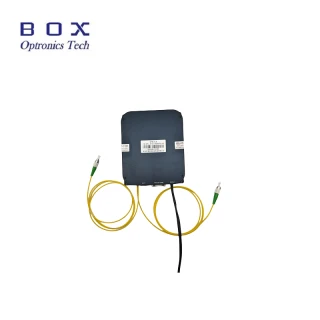
The integrated Raman laser modules combine laser drive electronics, thermoelectric cooling (TEC), wavelength stabilization, and safety interlock systems into compact turnkey packages optimized for laboratory instrumentation and OEM spectroscopic integration. With side-mode suppression ratios greater than 40 dB, spectral linewidths around 0.2 nm, and power stability below 3% peak-to-peak over extended operating periods, these lasers are engineered to support high signal-to-noise Raman measurements and long-duration analytical experiments.
Multiple excitation wavelengths are available to accommodate different Raman spectroscopy requirements. The 532nm excitation source is commonly used for inorganic materials and applications requiring strong Raman scattering efficiency, while 638nm excitation provides a balance between Raman signal intensity and fluorescence suppression for biomedical and life-science measurements. The widely used 785nm Raman laser minimizes fluorescence in many organic and chemical samples, making it one of the most popular excitation wavelengths in laboratory Raman spectroscopy. For fluorescence-sensitive materials, pigments, and biological tissues, the 1064nm excitation option further reduces fluorescence background while supporting near-infrared Raman analysis.
The laser subsystems support high-output continuous-wave (CW) operation with output powers exceeding 500 mW for selected wavelengths. Integrated TEC stabilization maintains wavelength consistency independent of case temperature fluctuations, helping preserve Raman spectral accuracy during long acquisitions and variable operating conditions. TTL modulation capability up to 100 kHz enables synchronization with spectroscopy systems, scanning platforms, and automated instrumentation workflows.
Designed for integration with fiber-optic Raman probes, spectrometers, hyperspectral systems, and OEM spectroscopy platforms, these Raman excitation lasers support applications in pharmaceutical analysis, material science, biomedical diagnostics, semiconductor inspection, environmental monitoring, and advanced research instrumentation.
Choosing the Right Raman Excitation Wavelength:
532nm - Inorganic materials, Higher fluorescence
638nm - Biomedical samples, Moderate fluorescence
785nm - Organic chemicals, Slightly weaker Raman signal
1064nm - Highly fluorescent samples, Lower detector sensitivity
High-Power Raman Lasers for Spectroscopy | 532nm, 638nm, 785nm & 1064nm Excitation Sources
Specifications
| Center Wavelength: | 0.532 um |
|---|---|
| Output Power: | 100 mW |
| Dimensions: | 110 mm x 89 mm x 53 mm |
| Weight: | 600 g |
| Noise: | <0.5% RMS |
| Output Fiber: | 100 µm @ 0.22 NA |
| Warm-up: | 15 minutes |
| Temperature: | -10 °C to 40 °C |
| Stability: | <3% peak-to-peak in 8 hours |
| Humidity: | 5-95% non-condensing |
| Laser Life: | 10,000 hours |
| Power Consumption: | 3.0 A @ 5 VDC |
| Power Output (CW): | >500 mW |
| Peak Wavelengths: | 785 +/- 0.3 nm |
| Spectral Line Width: | 0.2 nm (typical) |
| Rise Time: | <500 msec |
| Control: | TTL modulation -- 0 to 100 kHz |
| Connector: | SMA 905 or FC |
| High-power Lasers: | 532nm, 638nm, 785nm, 1064nm |
| Typical Output Power (532 Nm): | >100 mW |
| Typical Output Power (638 Nm): | >350 mW |
| Typical Output Power (785 Nm): | >350 mW |
| Typical Output Power (1064 Nm): | Adjustable to >500 mW |
| Laser Source: | Diode |
Got questions about specs? Use the inquiry form to ask.
 Download Data Sheet

Features
- Multiple Raman Excitation Wavelengths
Available in 532nm, 638nm, 785nm, and 1064nm configurations for optimized Raman spectroscopy performance across different sample types. - Spectrum-Stabilized Laser Output
Integrated wavelength stabilization maintains narrow spectral linewidth and minimizes drift during long-term operation. - High Output Power
Continuous-wave output powers exceed 500 mW for selected models, supporting strong Raman excitation and improved signal collection. - Narrow Spectral Linewidth
Typical spectral linewidth around 0.2 nm supports high spectral resolution Raman measurements. - Integrated TEC Cooling
Thermoelectric cooling helps maintain wavelength stability and consistent optical performance across varying environmental conditions. - Low Noise Operation
Noise levels below 0.5% RMS support high signal-to-noise Raman spectroscopy measurements. - Fiber-Coupled Output
Available with SMA 905 or FC optical connectors for integration with Raman probes, spectrometers, and fiber-optic instrumentation. - TTL Modulation Support
TTL modulation from 0–100 kHz enables synchronization with scanning systems and automated spectroscopy workflows. - Turnkey Integrated Design
Includes integrated laser drivers, TEC electronics, safety interlocks, and control interfaces for laboratory and OEM deployment.
Applications
- Raman Spectroscopy
High-stability excitation sources for Raman chemical fingerprint analysis and vibrational spectroscopy. - Pharmaceutical Analysis
Suitable for molecular identification, counterfeit detection, and process analytical technology (PAT). - Biomedical Spectroscopy
638nm and 785nm excitation wavelengths are commonly used in biomedical Raman systems to balance Raman signal intensity and fluorescence suppression. - Material Science and Semiconductor Analysis
Supports Raman characterization of semiconductors, crystalline materials, carbon structures, and nanomaterials. - Environmental Monitoring
Useful for chemical contaminant analysis and field-deployable spectroscopy systems. - Fiber-Optic Raman Systems
Compatible with fiber-coupled Raman probes and miniature spectrometer architectures. - Hyperspectral and OEM Integration
Compact integrated modules support custom spectroscopy platforms and embedded instrumentation systems.
Frequently Asked Questions
What is a Raman laser used for?
Why are different Raman excitation wavelengths used?
What is the advantage of 785nm Raman excitation?
When is 1064nm Raman excitation preferred?
Why is 532nm excitation used in Raman spectroscopy?
What does spectrum stabilization mean in Raman lasers?
What is side-mode suppression ratio (SMSR)?
What optical connectors are supported?
Are these lasers suitable for OEM spectroscopy systems?
What is Raman scattering?
Got more questions? Use the inquiry form to ask the supplier directly.
Similar Products






Your inquiry has been received.
Create an account by adding a password
Why create an account?
- Auto-complete inquiry forms
- View and manage all your past messages
- Save products to your favorites
- Close your account anytime — no hassle