


Description
Narrow Linewidth DFB Lasers for Precision Photonics
Narrow linewidth distributed feedback (DFB) lasers are critical light sources for high‑precision photonic systems that demand exceptional wavelength stability, spectral purity, and low phase noise. Yogel’s Narrow Linewidth DFB Laser series is engineered around a Bragg grating integrated directly into the semiconductor active waveguide. This distributed feedback structure enforces single longitudinal mode operation and stabilizes the emission wavelength, delivering a remarkably narrow linewidth down to below 1 MHz at 780 nm, 795 nm, and 852 nm, and approximately 0.1 nm at 1030 nm and 1064 nm. Compared with conventional Fabry–Pérot or standard DFB devices, these lasers offer higher side‑mode suppression and better long‑term frequency stability, making them particularly well suited for advanced metrology and quantum applications.
The product line covers several key wavelengths across the near‑infrared and visible‑near‑infrared bands. At 780 nm, 795 nm, and 852 nm, the lasers are widely used for atomic and molecular spectroscopy, laser cooling, and precision interrogation of rubidium and cesium transitions in atomic clocks. At 1030 nm and 1064 nm, they serve as reliable seed sources for fiber and solid‑state laser systems, frequency doubling into the visible, and coherent optical communication experiments. All wavelength options are designed to provide a high side‑mode suppression ratio (SMSR) of around 40 dB, ensuring that the output spectrum is dominated by a single, clean longitudinal mode with minimal spurious side peaks that could degrade measurement accuracy or link performance.
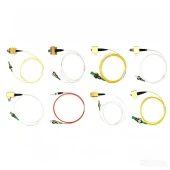
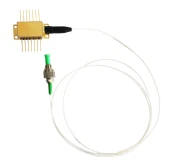
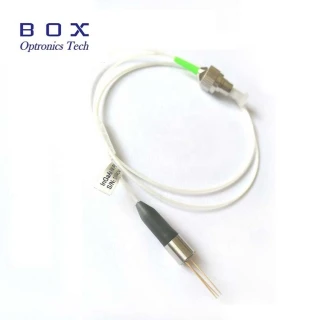
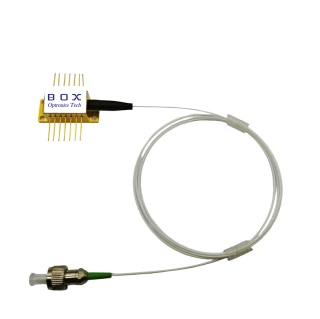
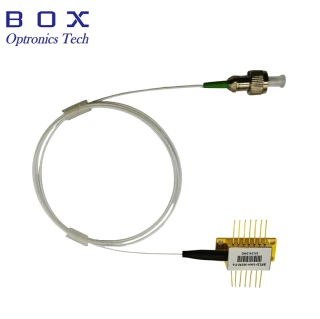
These Narrow Linewidth DFB Lasers are available in a variety of power levels and mechanical configurations to match different integration requirements. For 780/795/852 nm operation, fiber‑coupled butterfly 14‑pin packages with polarization‑maintaining (PM) fiber deliver output powers from 10 mW up to 90 mW while maintaining a high polarization extinction ratio of about 20 dB. Free‑space butterfly packages at the same wavelengths support higher output powers up to approximately 150 mW for applications that benefit from direct collimated beams or custom beam‑shaping optics. For cost‑sensitive or compact designs, TO‑56 cans with flat windows are also offered at 780/795/852 nm with output powers in the 10–150 mW range, ideal for OEM integration into sensing heads and portable instruments.
At 1030 nm and 1064 nm, the lasers are predominantly provided in telecom‑style butterfly 14‑pin packages with output powers from about 20 mW to 200 mW. The integrated thermoelectric cooler (TEC) and monitor photodiode in these packages enable closed‑loop temperature and power stabilization, a necessity for long‑term wavelength lock and repeatable performance in demanding laboratory or industrial environments. The 0.1 nm class linewidth at these wavelengths provides sufficiently narrow emission for seeding high‑gain fiber amplifiers, high‑resolution interferometry, and efficient nonlinear frequency conversion, while still offering robust and stable operation over a wide range of environmental conditions.
The narrow spectral width and excellent polarization control make these DFB lasers highly attractive for quantum communication and quantum key distribution systems, where coherence properties and deterministic polarization states directly affect system fidelity and secure key rates. In atomic clock spectroscopy and fundamental physics experiments, they provide the frequency‑stable optical reference necessary to resolve narrow atomic resonances and to maintain frequency locks over extended periods. In fiber‑optic sensing — including distributed acoustic, strain, and temperature sensing — the combination of narrow linewidth and high coherence length improves interferometric sensitivity and extends measurement range, while stable single‑mode operation helps reduce noise and cross‑talk in complex sensor networks.
Beyond research environments, these Narrow Linewidth DFB Lasers are also well suited for deployment in industrial and telecom‑adjacent systems. Coherent optical communication links benefit from the high SMSR and low phase noise, which support higher‑order modulation formats and longer transmission distances. In test and measurement instrumentation, they act as dependable reference sources for characterizing passive and active optical components, fiber networks, and photonic integrated circuits. The combination of flexible packaging (PM fiber‑coupled butterfly, free‑space butterfly, and TO‑56), multiple wavelength choices, and power scalability allows system designers to select a configuration that precisely matches their optical architecture without compromising on spectral performance.
780nm - 1064nm Narrow Linewidth DFB Lasers
Specifications
| Center Wavelength: | 780 um |
|---|---|
| Output Power: | 90 mW |
| Wavelength Options: | 780 nm / 795 nm / 852 nm / 1030 nm / 1064 nm |
| Linewidth (780/795/852 Nm, Fiber): | < 1 MHz |
| Output Power (780/795/852 Nm, Fiber): | 10–90 mW |
| PER (780/795/852 Nm, Fiber): | 20 dB |
| Package (780/795/852 Nm, Fiber): | Butterfly 14-pin (PM fiber) |
| Linewidth (780/795/852 Nm, Free-space): | < 1 MHz |
| Output Power (780/795/852 Nm, Free-space): | 10–150 mW |
| Package (780/795/852 Nm, Free-space): | Butterfly 14-pin (Free-space) |
| Linewidth (780/795/852 Nm, TO-56): | < 1 MHz |
| Output Power (780/795/852 Nm, TO-56): | 10–150 mW |
| Package (780/795/852 Nm, TO-56): | TO-56 Flat Window |
| Linewidth (1030 Nm): | 0.1 nm |
| Output Power (1030 Nm): | 20–200 mW |
| PER (1030 Nm): | 20 dB |
| Package (1030 Nm): | Butterfly 14-pin |
| Linewidth (1064 Nm): | 0.1 nm |
| Output Power (1064 Nm): | 20–200 mW |
| PER (1064 Nm): | 20 dB |
| Package (1064 Nm): | Butterfly 14-pin |
| SMSR: | 40 dB |
| Integrated PD: | Yes (except TO-56 Flat Window) |
| Integrated TEC: | Yes (except TO-56 Flat Window) |
| Type: | Component |
| Order Code Prefix: | NLDFB |
| Orderable Wavelengths: | 1030 nm (code 1030), 1064 nm (code 1064) |
| Orderable Linewidth Codes: | 1 = 1 MHz; 0.1 nm also available |
| Orderable Package Code: | 05 = 14-pin |
| Orderable Connector Option: | FA = FC/APC |
| Orderable Fiber Length: | 10 = 10 m |
| Power Code Suffix: | W |
Got questions about specs? Use the inquiry form to ask.
 Download Data Sheet

Features
- Ultra-Narrow Linewidth – Linewidth <1 MHz at 780/795/852 nm and ~0.1 nm at 1030/1064 nm for highly coherent, low-noise laser emission ideal for precision metrology and sensing.
- High Output Power – Available power levels from 10 mW up to 200 mW (model dependent), supporting both low-power laboratory use and higher-power industrial and research applications.
- Excellent Spectral Purity – High side-mode suppression ratio (SMSR) of up to 40 dB ensures single-longitudinal-mode operation with minimal spectral side modes.
- Polarization-Maintaining Output – Polarization extinction ratio (PER) up to 20 dB (PM fiber versions) provides stable polarization state for coherent detection, interferometry, and quantum optics experiments.
- Multiple Wavelength Options – Standard wavelengths at 780 nm, 795 nm, 852 nm, 1030 nm, and 1064 nm cover key atomic transitions (Rb, Cs, etc.) and common wavelengths for fiber lasers, frequency conversion, and precision instrumentation.
- Optimized for Quantum and Atomic Applications – Designed for quantum communication, atomic clock spectroscopy, and cold atom experiments where frequency stability and narrow linewidth are critical.
- High Stability with Integrated TEC and PD – Integrated thermoelectric cooler (TEC) and monitoring photodiode (PD) in butterfly packages (excluding TO-56) enable accurate temperature and power stabilization for long-term wavelength and power stability.
- Versatile Package Options – Offered in 14-pin butterfly packages (PM fiber-coupled or free-space output) and compact TO-56 flat-window cans to support benchtop, OEM, and field-deployable systems.
- Fiber-Coupled or Free-Space Output – Choose PM fiber-coupled versions for plug-and-play integration into fiber-based setups or free-space output for custom optical layouts and beam-shaping optics.
- High Reliability DFB Chip Design – Distributed feedback grating integrated along the active waveguide provides intrinsic single-mode operation with robust wavelength locking and reduced mode-hopping.
- Excellent Wavelength Stability – Bragg grating design and temperature-controlled packaging ensure stable emission wavelength; fine tuning is possible via injection current and temperature control.
- Ideal for Frequency Doubling – Narrow linewidth and good beam quality make these lasers well suited for frequency doubling and other nonlinear optical processes requiring high coherence and stable input.
- Optimized for Fiber-Optic Sensing – Coherent, low-noise output is ideal for distributed fiber sensing, interferometric sensors, OTDR, and other fiber-optic test and measurement applications.
- Coherent Optical Communication Ready – Narrow linewidth and high SMSR support advanced coherent modulation formats and high-capacity fiber-optic communication links.
- Low Phase and Frequency Noise – Single-frequency DFB operation with narrow linewidth reduces phase noise, benefiting coherent detection, spectroscopy, and long-interferometer paths.
- Fast Modulation Capability – Semiconductor DFB platform supports current modulation for frequency or intensity control, facilitating locking schemes and dynamic tuning in spectroscopy and sensing.
- Wide Power Range Configurations – Available power classes from 10 mW to 90 mW (PM fiber), and up to 150–200 mW in free-space and selected wavelengths, allowing easy selection for specific system requirements.
- Compact, OEM-Friendly Design – Industry-standard 14-pin butterfly and TO-56 footprints simplify integration into commercial instruments, rack systems, and portable devices.
- Designed for Precision Instrumentation – Targeted at high-end laboratory and industrial instruments such as atomic clocks, high-resolution spectrometers, interferometers, and fiber test equipment.
- Custom Options Available – Configurable wavelength, linewidth, package type, connector, and output power, with engineering support for integration into specialized quantum, sensing, and communication platforms.
Applications
Applications of Narrow Linewidth DFB Lasers
- Quantum Communication and Quantum Key Distribution (QKD)
– Single-frequency, narrow linewidth sources at 780 nm, 795 nm, 852 nm and 1 µm are ideal for fiber-based and free-space quantum communication links.
– Used as stable carrier lasers in entanglement distribution, quantum repeaters, and quantum network testbeds.
– Support low phase noise operation required for high-fidelity quantum state preparation and measurement. - Atomic Clock Spectroscopy and Precision Metrology
– Excellent for laser cooling, trapping, and interrogation of rubidium (Rb) and cesium (Cs) atomic transitions (D1/D2 lines near 780 nm, 795 nm, and 852 nm).
– Provide the narrow and stable optical reference needed in optical clocks, frequency standards, and timekeeping systems.
– Used in frequency stabilization loops (Pound–Drever–Hall, saturated absorption spectroscopy) to lock onto atomic transitions. - High-Resolution Laser Spectroscopy
– Enable Doppler-free and sub-Doppler spectroscopy of atoms, ions, and molecules in laboratory and industrial environments.
– Suitable for measuring fine and hyperfine structure, isotope shifts, and for characterizing narrow molecular absorption lines.
– Used in cavity-enhanced spectroscopy, ring-down spectroscopy, and other ultra-sensitive measurement schemes. - Laser Sensing and Environmental Monitoring
– Ideal for tunable diode laser absorption spectroscopy (TDLAS) and wavelength modulation spectroscopy (WMS) in gas sensing.
– Support real-time monitoring of trace gases (e.g., CO2, CH4, NH3, H2O) in industrial process control and environmental analysis.
– Narrow linewidth and high side-mode suppression ratio help achieve high selectivity and low detection limits. - Frequency Doubling and Nonlinear Frequency Conversion
– Provide stable seed sources for second-harmonic generation (SHG) and sum-frequency generation in nonlinear crystals and waveguides.
– Used to generate visible or UV radiation from NIR wavelengths (e.g., doubling 1030/1064 nm to 515/532 nm).
– High coherence and narrow linewidth significantly improve conversion efficiency and spectral purity. - Fiber-Optic Sensing Systems
– Serve as interrogation sources for fiber Bragg grating (FBG) sensors, distributed acoustic sensing (DAS), and distributed temperature/strain sensing (DTS/DSS).
– Narrow linewidth allows long-range, high-spatial-resolution sensing with reduced noise and improved dynamic range.
– High polarization extinction ratio is beneficial for polarization-maintaining sensor networks and interference-based measurement schemes. - Fiber-Optic Testing and Instrumentation
– Used in optical time-domain reflectometers (OTDR), optical frequency-domain reflectometers (OFDR), and coherent optical spectrum analyzers.
– Serve as reference lasers in wavelength calibration, insertion loss measurements, and polarization-related tests.
– Suitable for characterizing fiber components such as couplers, isolators, filters, and amplifiers. - Coherent Optical Communication
– Act as local oscillators and transmit lasers in coherent detection systems for long-haul and metro DWDM networks.
– Narrow linewidth and high SMSR enable advanced modulation formats (QPSK, 16QAM and beyond) with low phase noise and improved OSNR performance.
– Suitable for coherent transceivers in research testbeds, data center interconnects, and high-capacity backbone networks. - Microwave Photonics and RF Signal Generation
– Used to generate low-phase-noise microwave and millimeter-wave signals via optical heterodyning of closely spaced narrow-linewidth lasers.
– Enable photonic RF filters, optoelectronic oscillators, and high-frequency signal distribution over fiber.
– Narrow spectral width directly translates into reduced RF linewidth and improved spectral purity. - Optical Frequency Combs and Frequency Metrology
– Provide the seed or reference line for optical frequency comb generation in microresonators or mode-locked lasers.
– Support high-precision optical frequency synthesis, optical clock comparison, and optical-to-RF division.
– Used in metrology-grade systems where ultra-stable single-frequency operation is essential. - Interferometry and Coherent Imaging
– Suitable for Mach–Zehnder, Michelson, and Sagnac interferometers requiring long coherence length and stable phase.
– Used in coherent optical time-domain reflectometry, interferometric fiber sensing, and precision displacement measurements.
– Support coherent imaging techniques such as holography and synthetic aperture imaging where spectral purity is critical.
Frequently Asked Questions
What is a narrow linewidth DFB laser and how does it work?
Which wavelengths and output powers are available for Yogel narrow linewidth DFB lasers?
What are the typical linewidth, SMSR, and polarization extinction ratio (PER) of these DFB lasers?
What package types are available and do they include TEC and monitor photodiode?
What are the main applications of Yogel narrow linewidth DFB lasers?
How do I choose between PM‑fiber, free‑space, and TO‑56 packages for my application?
How should I specify and order a Yogel narrow linewidth DFB laser?
Got more questions? Use the inquiry form to ask the supplier directly.
Similar Products






Your inquiry has been received.
Create an account by adding a password
Why create an account?
- Auto-complete inquiry forms
- View and manage all your past messages
- Save products to your favorites
- Close your account anytime — no hassle