


Description
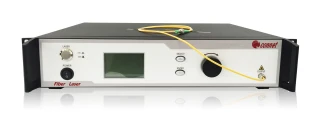
The 780 nm Single Frequency Fiber Laser (model CoSF-FC-780) is a high‑performance, frequency‑doubled laser source specifically engineered for applications that demand exceptional spectral purity, power stability, and ultra‑low noise. Operating in continuous‑wave (CW) single frequency and single longitudinal mode with linear polarization, this laser delivers up to 2 W of output power at 780 nm through polarization‑maintaining fiber or free-space output. Its design and performance are comparable to advanced narrow‑linewidth 780 nm systems used in cold atom experiments, optical clocks, and quantum research labs worldwide.
At the heart of this source is a high‑power 1560 nm single frequency fiber laser, which is internally frequency doubled to 780 nm using a high‑efficiency Periodically Poled Lithium Niobate (PPLN) module. This architecture provides the combined advantages of robust telecom‑grade fiber technology at 1560 nm and efficient nonlinear conversion, resulting in a 780 nm output with excellent beam quality (M² ≤ 1.1) and long‑term reliability. In comparison with many direct‑diode 780 nm lasers, this approach offers superior coherence, lower phase noise, and better pointing and power stability, making it highly suitable for demanding metrology and quantum optics setups.
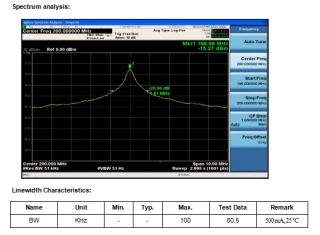
Designed for experiments that rely on narrow linewidths and stable optical frequencies, the laser offers an optical linewidth down to below 20 kHz, with configurations available that can reach below 5 kHz depending on the integrated seed laser model. This narrow spectral width, together with a high side‑mode suppression ratio (SMSR ≥ 50 dB at 50 pm resolution), ensures a clean single‑frequency output with minimal spurious modes. The low phase noise and low relative intensity noise (RIN) performance (down to –140 dBc/Hz at 10 MHz) meet or exceed the requirements typically specified for top‑tier lasers used in cold atom trapping, Rydberg excitation, and high‑resolution spectroscopy.
The source offers linear polarized output with a high polarization extinction ratio (PER ≥ 18–20 dB), which is crucial for polarization‑sensitive experiments such as atom cooling and trapping, Raman transitions, and coherent manipulation in quantum computing platforms. Power stability is maintained within ±1–2% peak‑to‑peak, supporting long measurement sessions and integration into feedback‑controlled systems. With an output power up to 2 W at 780 nm, it can comfortably serve as a primary light source for magneto‑optical traps (MOTs), optical pumping, and as a pump for nonlinear frequency conversion such as optical parametric oscillation (OPO), where both coherence and high power are essential.
The 780 nm Single Frequency Fiber Laser is particularly well aligned with the stringent needs of rubidium‑based systems and optical frequency standards. Its center wavelength around 780 nm is ideal for addressing rubidium D2 transitions, making it an excellent choice for rubidium atomic clocks, optical atomic clocks, and precision spectroscopy around the Rb resonance lines. Compared with many multi‑mode or broader linewidth lasers often used in simpler setups, this device provides the coherence and stability required for cutting‑edge time‑keeping, frequency metrology, and quantum sensing experiments that must minimize systematic shifts and fluctuations.
For advanced control and modulation requirements, the laser incorporates both thermal and piezoelectric (PZT) tuning capabilities. A built‑in thermal wavelength tuning range of approximately 0.4–0.5 nm enables coarse frequency alignment to desired atomic or molecular transitions. On top of that, an optional PZT fast modulation function provides linear frequency modulation with modulation frequencies from DC up to 10–20 kHz and wavelength modulation ranges greater than 8–10 GHz. This combination supports fine frequency locking to ultra‑stable references, rapid scanning across narrow resonances, and integration into sophisticated servo‑lock systems commonly used in quantum optics and precision measurement laboratories.
The system is designed as a turnkey, user‑friendly benchtop or modular unit with integrated control electronics and an AC 100–240 V power supply, suitable for laboratory environments and OEM integration alike. Control and monitoring are facilitated via an RS232 communication interface, enabling computer‑controlled operation, remote diagnostics, and automation within larger experimental platforms. The output is delivered either through PM780 polarization‑maintaining fiber with FC/APC connector or as a free‑space collimated beam, providing flexibility for direct coupling into optical tables, vacuum chambers, or fiber networks.
Operating over a temperature range of 0–40 °C with robust environmental stability, this 780 nm sin<
780nm Single Frequency Fiber Laser
Specifications
| Center Wavelength: | 780 nm |
|---|---|
| Output Power: | 2 W |
| Output Mode: | Continuous Wave (CW), Single Frequency, Single Longitudinal Mode |
| Beam Quality (M^2): | 1.05 |
| Spectral Linewidth: | 4.06E-8 nm |
| Output Power Stability: | 0.9% ~ 1.0% |
| Output Fiber Type: | PMF |
| Output Fiber Length: | 0.5 m |
| Interface: | RS-232 |
| Cooling: | Air Cooled |
| Electrical Requirements: | 110V - 60Hz, 115V - 50Hz, 115V - 60Hz, 120V - 60Hz, 127V - 50Hz, 127V - 60Hz, 220V - 50Hz, 230V - 50Hz, 230V - 60Hz, 240V - 50Hz |
| Linewidth: | 20 kHz |
| RIN Peak Frequency: | 600 kHz |
| RIN Peak: | -100 dBc/Hz |
| RIN @10MHz: | -140dBc/Hz |
| SMSR (50pm Resolution): | 50 dB |
| Output Polarization: | Linear |
| Polarization Extinction Ratio (PER): | 20 dB |
| Wavelength Thermal Tuning Range: | 0.4 nm |
| PZT Wavelength Modulation: | Optional |
| PZT Modulation Frequency (Linear): | 10 kHz |
| PZT Modulation Wavelength Range: | >8 GHz |
| Operating Temperature: | 0~40 ℃ |
| Storage Temperature: | -20~60 ℃ |
| Output Fiber Connector: | FC/APC or Collimator |
| Dimension: | 510x480x150 mm |
Got questions about specs? Use the inquiry form to ask.
 Download Data Sheet

Features
- True Single-Frequency Operation – Real single-frequency, single longitudinal mode output at 780 nm for ultra-stable, coherent light in demanding atomic and quantum experiments.
- Narrow Ultra-Stable Linewidth – Linewidth options <20 kHz or <5 kHz (typical, at 1560 nm fundamental) deliver excellent frequency stability for high-resolution spectroscopy and laser cooling.
- High Output Power up to 2 W – Fiber-coupled 780 nm output power up to 2 W, providing ample optical power for laser cooling, trapping, optical lattices, and nonlinear optics.
- Low Phase Noise & Low RIN – Very low phase noise and relative intensity noise (RIN peak <-95 dBc/Hz, RIN @10 MHz <-130 dBc/Hz) support precision metrology, frequency standards, and quantum sensing.
- Excellent Beam Quality – Near diffraction-limited beam quality with M² typically 1.05 (max. 1.1) for efficient coupling into optical systems, cavities, and fibers.
- Linear Polarization with High PER – Linearly polarized output with polarization extinction ratio (PER) ≥20 dB (≥18 dB min), ideal for polarization-sensitive experiments, interferometry, and quantum optics.
- Polarization-Maintaining Fiber or Free-Space Output – Standard PM780 fiber output (>0.5 m) with FC/APC connector, or optional free-space collimated output for flexible system integration.
- Robust Frequency-Doubled Architecture – Based on a high-power 1560 nm single-frequency fiber laser and an integrated frequency-doubling unit using Periodically Poled Lithium Niobate (PPLN) technology for high efficiency and stability.
- Thermal Wavelength Tuning – Built-in thermal tuning function providing 0.4–0.5 nm wavelength tuning range (coarse tuning) for convenient locking and frequency matching to atomic transitions (e.g., rubidium lines).
- Fast PZT Modulation (Optional) – Optional PZT wavelength modulation with DC–10–20 kHz linear modulation bandwidth and >8–10 GHz tuning range for rapid frequency scanning and active locking to cavities or atomic references.
- Mode-Hop Free Tuning – Carefully engineered cavity and control electronics allow mode-hop-free tuning across the specified wavelength range, ensuring continuous and predictable frequency scans.
- High SMSR > 50 dB – Side-mode suppression ratio ≥50 dB (50 pm resolution) ensures clean single-frequency operation with negligible competing modes.
- Stable Output Power – Power stability within ±1% typical (±2% max) for long-term experiments requiring consistent optical intensity and reduced drift.
- Low-Noise 780 nm Output Maintained from 1560 nm Seed – The 780 nm frequency-doubled output inherits the low-noise properties of the 1560 nm single-frequency fiber laser, ideal for precision and quantum applications.
- Benchtop or Module Configurations – Available as a compact benchtop unit or integrable module (CoSF-FC-780-B/M) to suit both laboratory setups and OEM system integration.
- Simple Electrical and Software Control – Operates from universal AC 100–240 V supply and features RS232 communication for remote control, monitoring, and easy integration into automated experiments.
- Turnkey, Easy-to-Use Design – Fully integrated, alignment-free fiber-coupled system with front-panel controls for quick setup, minimizing downtime and complexity compared to bulk solid-state or diode-laser systems.
- Optimized for Quantum and Atomic Physics – Specifically designed for applications such as rubidium atomic clocks, optical atomic clocks, quantum computing, Rydberg excitation, quantum sensing, and precision measurement at 780 nm.
- Ideal for Nonlinear & OPO Pumping – High-power, narrow-linewidth 780 nm output is well-suited as a pump laser for optical parametric oscillators (OPOs) and other nonlinear optical processes.
- Laboratory-Ready Environmental Specifications – Operates from 0–40 °C with storage from -20–60 °C; rugged design suitable for long-term laboratory use and system-level deployment.
Applications
Applications of 780 nm Single Frequency Fiber Laser
- Laser Cooling and Trapping of Neutral Atoms
Ideal for laser cooling and magneto-optical trapping (MOT) of rubidium and other alkali atoms where 780 nm transition lines are required. The narrow linewidth (<20 kHz or <5 kHz) and single longitudinal mode ensure efficient atom–photon interaction, stable detuning control, and long-term trapping performance in cold atom experiments. - Rubidium Atomic Clocks
Used as an ultra-stable optical source for interrogating the rubidium D2 transition near 780 nm in atomic clock systems. The low phase noise, low relative intensity noise (RIN), and excellent power stability support improved frequency stability and reduced clock uncertainty in next-generation Rb frequency standards. - Optical Atomic Clocks and Optical Frequency Standards
Serves as a reference laser for optical atomic clock architectures, including those based on trapped ions, neutral atoms, and optical lattice clocks. The single-frequency operation and ultra-narrow linewidth make it suitable for locking to high-finesse cavities or atomic transitions to realize ultra-stable optical frequency references. - Quantum Sensing and Quantum Metrology
Provides a coherent light source for quantum-enhanced sensors such as atomic interferometers, gravimeters, gyroscopes, and magnetometers. The low-noise, linearly polarized output improves sensitivity and signal-to-noise ratio in precision phase and frequency measurements used in quantum metrology setups. - Precision Spectroscopy and High-Resolution Metrology
Suitable for Doppler-free and sub-Doppler spectroscopy, saturation spectroscopy, and frequency-comb referenced measurements around 780 nm. The narrow linewidth and thermal/PZT tuning allow fine frequency scans for resolving narrow atomic and molecular spectral features and performing precision line-shape analysis. - Rydberg Atom Excitation and Rydberg Physics
Used as the primary or auxiliary laser for exciting Rydberg states in alkali atoms, often in combination with additional lasers at different wavelengths. Stable, high-power 780 nm radiation is crucial for coherent excitation, electromagnetically induced transparency (EIT) with Rydberg states, and exploring strong atom–photon interactions. - Quantum Computing with Neutral Atoms
Provides the addressing and control light for neutral atom qubits, optical tweezers, and optical lattices operating at or near 780 nm. Single-frequency, linearly polarized output supports coherent qubit operations, state preparation, readout, and entangling gates in scalable neutral atom quantum processors. - Quantum Communication and Quantum Networks
Acts as a stable pump or control laser in quantum memory interfaces, atom–photon entanglement schemes, and wavelength-conversion modules linking 780 nm atomic transitions with telecom-band photons. The low phase noise enhances coherence in long-distance quantum key distribution and entanglement distribution experiments. - Optical Parametric Oscillators (OPO) and Nonlinear Frequency Conversion
Serves as a pump source for OPOs and other nonlinear crystals to generate tunable visible and infrared wavelengths. The stable, high-quality TEM00 beam (M2 ≈ 1.05) and up to 2 W output power improve conversion efficiency and spectral purity in second-harmonic generation, sum-frequency generation, and difference-frequency generation setups. - Frequency Doubling and Frequency Comb Stabilization
Used as a reference or pump in systems that require precision frequency conversion or linking to optical frequency combs. The laser’s narrow linewidth and single-frequency behavior enable tight phase locking to combs and high-accuracy transfer of frequency stability across spectral regions. - Interferometry and Optical Coherence Measurements
Suitable for high-coherence interferometric measurements, including Michelson, Mach–Zehnder, and Fabry–Perot configurations. The long coherence length from the ultra-narrow linewidth supports precision displacement, vibration, and refractive index measurements in research and industrial metrology. - Holography and Coherent Imaging
Provides a stable coherent source for digital holography, coherent diffraction imaging, and phase-contrast techniques at 780 nm. The excellent beam quality and polarization control improve fringe contrast and reconstruction fidelity in advanced imaging systems. - Atomic and Molecular Magnetometry
Used in optically pumped magnetometers and spin-precession experiments where resonant or near-resonant 780 nm light is required.
Frequently Asked Questions
What is the CoSF-FC-780 780 nm single frequency fiber laser and what makes it different from standard diode lasers?
What are the typical applications of this 780 nm single frequency fiber laser?
What are the key optical performance specifications (power, linewidth, noise, polarization) of the CoSF-FC-780 laser?
How is the wavelength of the 780 nm single frequency fiber laser tuned and what are the tuning ranges?
What output formats, fiber types, and connectors are available for the CoSF-FC-780 laser?
How stable is the output power and what are the recommended operating conditions?
How do I choose the right configuration and ordering code for my application (power, package, PZT, output type)?
Got more questions? Use the inquiry form to ask the supplier directly.
Similar Products



Your inquiry has been received.
Create an account by adding a password
Why create an account?
- Auto-complete inquiry forms
- View and manage all your past messages
- Save products to your favorites
- Close your account anytime — no hassle