


Description
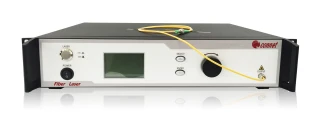
The 532 nm Single Frequency Fiber Laser is a high-performance, frequency-doubled green laser source designed for demanding scientific, industrial, and defense applications where spectral purity, coherence, and stability are critical. Based on a 1064 nm single frequency seed and an integrated frequency doubling stage, this laser delivers a narrow linewidth below 20 kHz, long coherence length, and excellent beam quality in a compact, integration-ready package. Its architecture is optimized for applications such as underwater laser communication, underwater remote sensing, precision LIDAR, and advanced optical research, where reliable single longitudinal mode operation and linear polarization are essential.
At the core of this system is a high-power 1064 nm single frequency fiber laser that provides an ultra-stable, low-noise seed. This seed is coupled via optical fiber to a high-efficiency frequency doubling module using Periodically Poled Lithium Niobate (PPLN) technology. The result is a 532 nm output that faithfully preserves the spectral purity and noise characteristics of the fundamental wavelength. Compared to conventional bulk solid-state or DPSS green lasers, this fiber-based design offers superior pointing stability, reduced sensitivity to mechanical and thermal perturbations, and better long-term reliability. The typical beam quality (M² ≈ 1.05–1.1) ensures a near-diffraction-limited Gaussian output, making the laser ideal for tight focusing and long-distance propagation in water or air.
From an application standpoint, the combination of narrow linewidth and long coherence length provides clear advantages for coherent detection, interferometry, and high-resolution spectroscopy. In underwater laser communication systems, the stable single longitudinal mode output helps maintain consistent modulation performance and minimizes signal distortion over extended ranges. For underwater remote sensing and LIDAR, the low relative intensity noise (RIN) and stable power reduce background noise in detection channels, improving signal-to-noise ratio and measurement accuracy. The high polarization extinction ratio (PER) and strictly linear polarization further enhance performance in polarization-sensitive schemes such as coherent beam combining, polarization-based multiplexing, and high-contrast imaging.
The laser supports both fiber optic and collimated free-space output configurations, giving system designers flexibility in how the source is integrated. Standard polarization-maintaining fiber (PM460) is used for fiber delivery, with an FC/APC connector to minimize back reflections, while the free-space collimated version is suitable for direct coupling into optical benches, telescopes, or scanning heads. With output powers scalable up to 1 W at 532 nm, the system can address both low-power laboratory experiments and more power-demanding field deployments. The excellent power stability (typically around 1%) ensures consistent performance over long measurement periods, which is especially important in monitoring, mapping, and sensing applications.
For users requiring tunability and advanced control, the built-in thermal tuning mechanism provides a fine wavelength adjustment range of around 0.4 nm at 532 nm, useful for aligning with specific absorption lines or optimizing system-level interference conditions. Additionally, an optional PZT (piezoelectric) fast modulation function enables high-speed wavelength modulation up to tens of kilohertz, covering a wavelength shift on the order of several gigahertz. This capability is particularly valuable for frequency locking, active stabilization, frequency modulation spectroscopy, and coherent detection schemes where precise and rapid control of optical frequency is needed. The combination of thermal and PZT tuning provides both coarse and fine wavelength control within a robust, integrated platform.
The laser is available in different package formats to support both laboratory and OEM system integration scenarios. A benchtop version with AC 220 V operation and RS232 communication provides a turnkey solution for research environments, offering straightforward front-panel control and remote configuration. A compact module version is designed for direct integration into larger systems, where space and weight are at a premium but high-end laser performance is still required. The small form factor, fiber-coupled architecture, and robust optical design make it well-suited for deployment in complex instruments such as underwater imaging platforms, distributed sensing arrays, compact LIDAR units, and high-precision metrology tools.
Overall, this 532 nm Single Frequency Fiber Laser combines the advantages of fiber laser stability with advanced nonlinear frequency conversion to deliver a highly coherent, low-noise green source suitable fo<
532nm Single Frequency Fiber Laser
Specifications
| Center Wavelength: | 532 nm |
|---|---|
| Output Power: | 1 W |
| Output Mode: | Single Frequency |
| Beam Quality (M^2): | 1.1 |
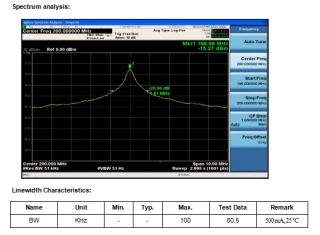
| Spectral Linewidth: | 1.9E-8 nm |
| Output Power Stability: | 0.9% ~ 1.0% |
| Output Fiber Type: | PMF |
| Output Fiber Length: | 0.5 m |
| Interface: | RS-232 |
| Cooling: | Air Cooled |
| Electrical Requirements: | 220V - 50Hz |
| Seed Laser Linewidth: | 15 kHz |
| Seed Laser Linewidth((Ring Cavity Optional): | 1 |
| RIN Peak Frequency: | 1000 kHz |
| RIN Peak: | -105 dBc/Hz |
| RIN @10MHz: | -140 dBc/Hz |
| SMSR (50pm Resolution): | 55 dB |
| Output Polarization: | Linear |
| Polarization Extinction Ratio (PER): | 23dB |
| Wavelength Thermal Tuning Range: | 0.4 nm |
| PZT Wavelength Modulation: | 100 kHz |
| PZT Modulation Frequency (Linear): | 10 kHz |
| PZT Modulation Wavelength Range: | >10 GHz |
| Output Fiber Connector: | FC/APC |
| Operating Temperature: | 0~40℃ |
| Storage Temperature: | -20~60℃ |
| Dimension: | 510x480x150mm |
Got questions about specs? Use the inquiry form to ask.
 Download Data Sheet

Features
- True Single Frequency Operation – Delivers genuine single longitudinal mode output at 532 nm, ideal for applications requiring ultra‑stable, narrowband laser emission.
- Ultra‑Narrow Linewidth (< 20 kHz) – Seed laser linewidth typically around 15 kHz enables long coherence length, high spectral purity, and precise interferometric measurements.
- Long Coherence Length – Extremely narrow linewidth translates to very long coherence length, supporting high‑resolution LIDAR, coherent detection, and advanced metrology.
- High Beam Quality (M² ≤ 1.1) – Near‑diffraction‑limited Gaussian beam (M² ≈ 1.05) ensures excellent focusability and efficient coupling into fibers or optical systems.
- Linear Polarization with High PER – Linearly polarized output with polarization extinction ratio typically ≥ 23 dB, providing stable polarization for sensitive polarization‑dependent experiments.
- High Output Power up to 1 W at 532 nm – Frequency‑doubled output power from 100 mW up to 1 W supports demanding applications such as underwater communication and remote sensing.
- Fiber or Free‑Space Output Options – Available with PM460 polarization‑maintaining fiber and FC/APC connector, or free‑space collimated output for maximum integration flexibility.
- Frequency‑Doubled Architecture – Combines a high‑power 1064 nm single‑frequency fiber laser with an efficient PPLN‑based frequency‑doubling unit to provide stable 532 nm green output.
- Periodically Poled Lithium Niobate (PPLN) Technology – Utilizes high‑efficiency PPLN nonlinear crystals, delivering robust second‑harmonic generation and excellent long‑term stability.
- Low Relative Intensity Noise (RIN) – Low‑noise performance inherited from the 1064 nm seed laser, with RIN peak down to about –105 dBc/Hz and RIN at 10 MHz down to about –140 dBc/Hz for superior signal‑to‑noise ratio.
- High Side‑Mode Suppression Ratio (SMSR ≥ 50 dB) – Excellent suppression of side modes (typically ≥ 55 dB) ensures clean, single‑mode spectral output required in precision spectroscopy and coherent detection.
- Excellent Power Stability – Output power stability typically around 1% (up to 3% max) supports long measurement runs and system reliability in scientific and industrial environments.
- Thermal Wavelength Tuning – Built‑in thermal tuning offers up to ~0.4 nm wavelength adjustment, enabling fine wavelength alignment in laboratory and OEM systems.
- Fast PZT Wavelength Modulation (Optional) – Optional PZT module allows high‑speed wavelength modulation up to ~100 kHz, with linear modulation from DC to 10–20 kHz and wavelength tuning range > 10–15 GHz for locking, scanning, and sensing applications.
- Compact Module or Benchtop Package – Offered as a small‑size module (M) for OEM/system integration or a benchtop unit (B) for turnkey lab use, minimizing footprint while maximizing performance.
- RS‑232 Control Interface – Standard RS‑232 communication for remote monitoring and control, simplifying integration into automated test setups and complex optical systems.
- Robust PM Fiber Delivery – Standard PM460 output fiber (> 0.5 m) with FC/APC connector ensures stable polarization and easy connection to other fiber‑optic components.
- AC 220 V Operation – Direct AC input (220 V) for straightforward installation in laboratory and industrial environments without external driver complexity.
- Optimized for Underwater and LIDAR Applications – High power, narrow linewidth green emission at 532 nm is well suited for underwater laser communication, underwater remote sensing, LIDAR, and other demanding scientific research tasks.
- Rugged, Integration‑Ready Design – Compact 510 × 480 × 150 mm footprint (benchtop) and robust internal architecture facilitate reliable long‑term operation and seamless system integration.
Applications
- Underwater Laser Communication Systems – Use the 532 nm single-frequency output for high-bandwidth, long-distance optical links in water where RF or acoustic communication is limited, enabling secure point-to-point or networked subsea data transmission between AUVs, ROVs, buoys, and fixed subsea nodes.
- Underwater Remote Sensing & Imaging – Integrate into underwater imaging systems and bathymetric instruments for high-resolution mapping, target identification, and inspection of subsea structures, pipelines, and cables, benefiting from the excellent beam quality (M² ≈ 1.05) and long coherence length.
- Green LIDAR (LiDAR) for Bathymetry & Topography – Use as a narrow-linewidth 532 nm source in airborne or land-based bathymetric LIDAR to measure water depth, coastal profiles, and riverbeds, and in terrestrial LIDAR for high-precision ranging and 3D mapping where eye-safe, visible wavelengths are preferred.
- Coherent Doppler LIDAR & Vibration Sensing – Exploit the single-frequency, single longitudinal mode operation for coherent detection in Doppler LIDAR, enabling high-sensitivity velocity measurements of aerosols, particles, and surfaces, as well as remote vibration and displacement sensing.
- Interferometry & Holography – Use the ultra-narrow linewidth (<20 kHz) and long coherence length for high-contrast interferometric measurements, digital holography, and speckle metrology in precision surface profiling, flatness testing, and wavefront analysis.
- Optical Coherence & Phase-Sensitive Measurements – Integrate into phase-sensitive detection setups, coherent optical time domain reflectometry (C-OTDR), and long-baseline interferometers in fiber and free-space configurations requiring high phase stability and low RIN.
- Atomic, Molecular & Optical (AMO) Physics Experiments – Use as a stable 532 nm source for laser cooling, optical pumping, and spectroscopy of atoms and ions (e.g., pumping transitions or as a second-harmonic pump), where single-frequency, linearly polarized light is critical for state preparation and control.
- High-Resolution Laser Spectroscopy – Apply in Doppler-free and sub-Doppler spectroscopy, saturated absorption spectroscopy, and cavity-enhanced techniques that demand narrow linewidth and excellent frequency stability for resolving fine spectral features and line shifts.
- Frequency Doubling Pump Source / SHG Reference – Use as a frequency reference or pump source in nonlinear optical experiments, optical parametric oscillators (OPOs), and further frequency-conversion stages, leveraging the stable 532 nm output generated via PPLN-based frequency doubling.
- Metrology, Frequency Stabilization & Optical Standards – Employ in optical frequency locking schemes (to cavities, atomic or molecular lines), refractive index measurements, and as a reference in optical frequency comb calibration where low noise and narrow linewidth are essential.
- Raman Spectroscopy & Microscopy (Excitation Source) – Use as a high-quality 532 nm excitation source in Raman spectrometers and Raman microscopes for materials analysis, semiconductor inspection, polymer characterization, and biological samples, benefiting from the high beam quality and stable output.
- Confocal & Fluorescence Microscopy – Integrate into advanced optical microscopes as a 532 nm excitation line for fluorescence imaging, confocal microscopy, and live-cell imaging where linear polarization and power stability (<3%) improve image quality and reproducibility.
- Holographic & Laser Projection Systems – Use for high-coherence green light in holographic displays, digital holographic data storage, and precision laser projection or alignment systems that require low speckle and stable single-mode emission.
- Precision Alignment & Positioning – Utilize the collimated, low-divergence beam for high-accuracy alignment of optical components, lithography masks, and mechanical stages in laboratories and manufacturing environments.
- Fiber Optic Sensor Interrogation – Employ with fiber Bragg grating (FBG), interferometric, and distributed fiber-optic sensors where narrow linewidth and polarization-maintaining fiber output enhance sensitivity and resolution in strain, temperature, and acoustic sensing.
- Laser Vibrometry & Structural Health Monitoring – Implement in laser Doppler vibrometers for non-contact vibration measurement of mechanical structures, bridges, machinery, and aerospace components, leveraging the stable single-frequency output for precise phase and velocity detection.
Frequently Asked Questions
What is the Connet 532 nm single frequency fiber laser and what makes it different?
What are the typical applications of this 532 nm single frequency fiber laser?
What are the key optical and noise specifications of the Connet 532 nm single frequency laser?
What output configurations, fiber types, and connectors are available?
How stable is the wavelength and can the 532 nm laser be tuned or modulated?
What electrical, mechanical, and interface options does this laser provide for system integration?
How do I specify and order the correct Connet 532 nm single frequency laser configuration?
Got more questions? Use the inquiry form to ask the supplier directly.
Similar Products



Your inquiry has been received.
Create an account by adding a password
Why create an account?
- Auto-complete inquiry forms
- View and manage all your past messages
- Save products to your favorites
- Close your account anytime — no hassle