
Description
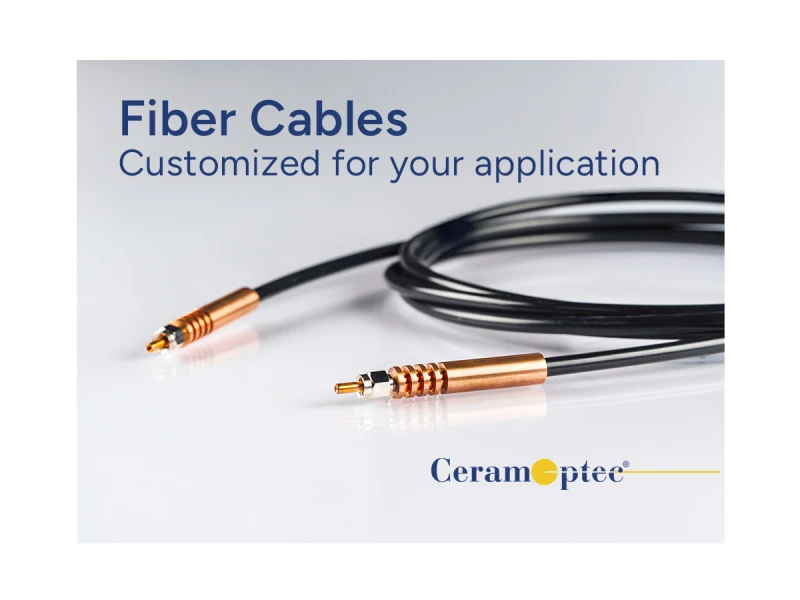
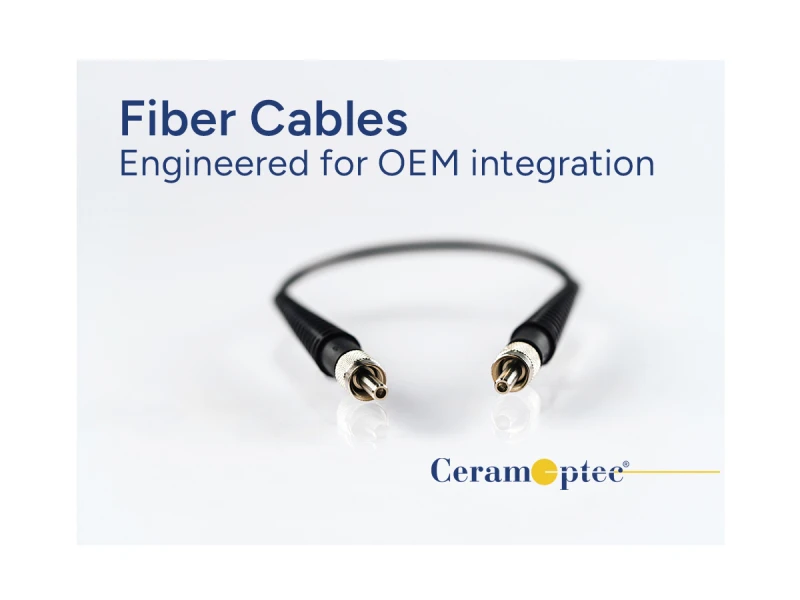
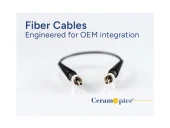
Custom multimode fiber cables and assemblies based on Optran® optical fibers are designed for integration into demanding optical systems.
Fiber cables and bundles can be configured according to application-specific requirements, covering a wide range of wavelengths from UV to NIR depending on the selected fiber type. Assemblies can be manufactured using all Optran® fiber types, including UV, VIS-NIR, broadband and high numerical aperture fibers. Detailed specifications of the individual fiber types, including spectral performance and material properties, are available in the corresponding Optran® fiber listings.
Design parameters such as core diameter, numerical aperture and fiber composition are selected based on the optical requirements of the application. This allows assemblies to be tailored to specific wavelength ranges, transmission characteristics and coupling conditions.
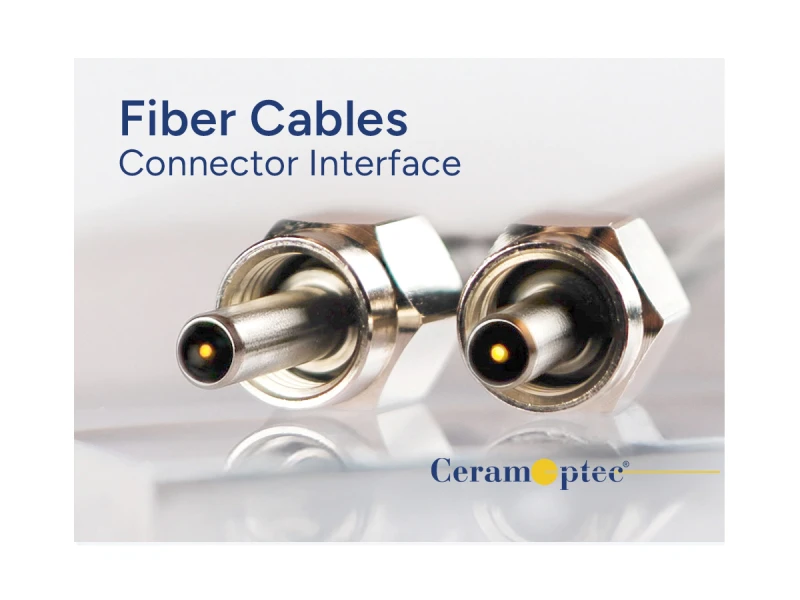
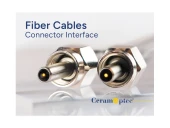
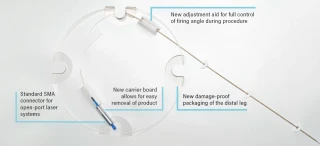
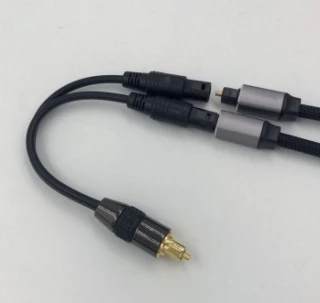
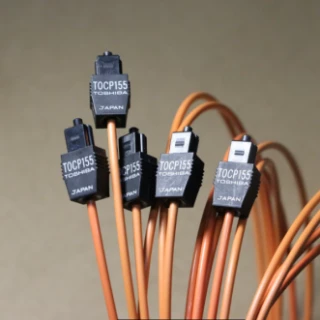
A wide range of customization options is available, including cable length, connector types, protective tubing and multi-fiber configurations. Bundles can be configured for light distribution into multiple individual fibers or structured multi-leg assemblies.
Additional customization options include selection of protective tubing and jacketing materials such as stainless steel, PTFE or polymer coatings, depending on environmental and mechanical requirements. Fiber end preparation can be adapted to the application, including polishing and customized end-face geometries for optimized coupling and system integration.
Assemblies can also be designed for applications involving high optical intensities. Configuration parameters such as core size, fiber type and connector interface are adapted to the specific requirements of laser delivery and high-power optical systems.
Optran® fiber assemblies are used in spectroscopy, laser systems, analytical instrumentation and industrial sensing applications where reliable and application-specific optical performance is required.
Custom Multimode Fiber Cables - Optran® Fiber Assemblies
Specifications
| Wavelength Range: | 0.19 – 2.4 um |
|---|---|
| Fiber Core Material: | Fused Silica |
Got questions about specs? Use the inquiry form to ask.
 Download Data Sheet

Features
- Custom multimode fiber cable and bundle assemblies
- Based on all Optran® fiber types (UV, VIS-NIR, broadband, high-NA)
- Spectral coverage depending on fiber type (~190–2400 nm)
- Core diameters from 25 µm to 2000 µm (fiber-dependent)
- Numerical aperture options from 0.12 up to 0.57 (fiber-dependent)
- Configurable cable lengths and protective jacketing
- Connectorization options (e.g. SMA, FC, ST or custom interfaces)
- Multileg configurations available
- Design adaptable for high optical intensity and laser applications
- Step-index fiber designs with stable optical performance
- Custom protective tubing (e.g. stainless steel, PTFE, polymer)
- Application-specific fiber end preparation and polishing
- Design adaptable to mechanical and environmental conditions
Suitable for integration into medical and analytical systems depending on fiber type and assembly design
Applications
- Industrial Laser Power Delivery
High-power laser transmission for cutting, welding, drilling, ablation, surface treatment, and additive manufacturing (metal 3D printing), using all‑silica and metal‑coated fibers for robust beam delivery in harsh environments. - UV Curing and Photolithography
Precise delivery of UV and deep‑UV radiation for resin curing, photoresist exposure, semiconductor processing, and micro‑structuring, leveraging high‑OH and solarization‑resistant fibers (e.g., Optran® UV, UVNS, UVNSS, UVWFS). - Spectroscopy and Sensor Systems
Light collection and delivery in UV‑VIS‑NIR spectroscopy, fluorescence spectroscopy, Raman and SERS systems, LIBS, and environmental monitoring, employing low‑OH broadband fibers, GeO₂‑doped fibers (Optran® WFGE), and fused‑end fiber bundles. - Medical Laser Delivery and Therapeutics
Customized medical fibers and probes for endoscopy, dermatology, urology, ENT, ophthalmology, oncology, and photodynamic therapy (PDT), including sterilizable single fibers, multi‑fiber bundles, and side‑firing or diffusing tips. - Biomedical Imaging and Diagnostics
Illumination and imaging in endoscopes, dental instruments, surgical microscopes, OCT, and fluorescence imaging systems, using coherent and non‑coherent fiber bundles, multi‑core fibers, and non‑circular core fibers for enhanced image quality. - Process Monitoring and Machine Vision
Fiber‑coupled illumination and signal collection for inline inspection, quality control, flame monitoring, high‑temperature process monitoring, and vision‑guided robotics, supported by robust industrial fiber cables and tailored jacket materials. - High‑Temperature and Harsh‑Environment Sensing
Metal‑coated silica fibers and specialized jackets for operation in furnaces, turbines, reactors, and automotive exhaust systems, enabling distributed temperature sensing (DTS), strain sensing, and structural health monitoring. - Telecommunications and Data Transmission in Demanding Environments
Short‑distance data links and signal routing in vacuum systems, radiation‑exposed areas, and industrial plants where standard telecom fibers are unsuitable, benefiting from all‑silica, high‑NA, and jacket‑optimized designs. - Illumination Systems and Light Guides
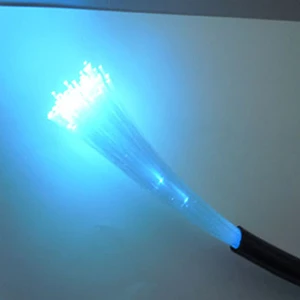
High‑intensity white light and laser‑based illumination for microscopy, machine vision lighting, architectural lighting, and special effects, using single‑fiber cables, multi‑fiber assemblies, and fused‑end bundles for homogeneous light distribution. - Analytical and Laboratory Instruments
Fiber‑optic links in spectrometers, fluorimeters, flow cytometers, HPLC detectors, and laboratory automation, where stable transmission, defined core geometries, and UV/visible compatibility are critical. - Non‑Circular Core Fibers for Beam Shaping
Square, rectangular, and polygonal core fibers (e.g., Optran® UVNCC, WFNCC) for homogenizing laser beam profiles, line illumination, and top‑hat formation in material processing, metrology, and medical illumination. - Multi‑Core and Specialty Fiber Applications
Concentric and individually addressable multi‑core fibers for sensing arrays, multiplexed illumination, multi‑channel spectroscopy, and compact multi‑spot delivery in both industrial and biomedical systems. - Laser Pump Delivery for Solid‑State and Fiber Lasers
Efficient coupling and transport of pump light into solid‑state, diode‑pumped, and fiber laser modules, utilizing high‑NA, large‑core fibers and tailored connectorized assemblies. - Scientific Research and Laboratory Prototyping
Versatile fibers and assemblies for physics, chemistry, and life science research—time‑resolved spectroscopy, quantum optics experiments, nonlinear optics, and prototype laser systems—thanks to the broad portfolio of core sizes, dopants, and geometries. - Safety and Sensing with Specialty Safety Fibers
Safety fiber solutions for monitored power delivery, fail‑safe operation, and leakage detection in critical systems such as medical laser equipment, industrial processing cells, and defense‑related platforms. - Defense, Aerospace, and Avionics
Ruggedized optical links for target designation, laser range finding, UV sensing, IR countermeasures, and airborne or space‑borne instrumentation, supported by radiation‑tolerant, metal‑coated, and mechanically robust fiber designs. - Environmental and Remote Monitoring
Remote sensing of pollutants, gas composition, water quality, and UV index using fiber‑coupled spectrometers, probe assemblies, and robust outdoor cables.
Frequently Asked Questions
What types of industrial optical fibers does CeramOptec offer?
What is the difference between low OH and high OH all‑silica fibers like Optran WF and Optran UV?
What are the advantages of Optran UVNSS and UVWFS broadband fibers for UV applications?
What are CeramOptec multi‑core and non‑circular core optical fibers used for?
What jacket and coating options are available for CeramOptec silica fibers?
Does CeramOptec provide custom fiber geometries, assemblies, and medical probes?
How does CeramOptec ensure quality and reliability of its industrial fiber optics?
Got more questions? Use the inquiry form to ask the supplier directly.
Similar Products

Your inquiry has been received.
Create an account by adding a password
Why create an account?
- Auto-complete inquiry forms
- View and manage all your past messages
- Save products to your favorites
- Close your account anytime — no hassle