
Description
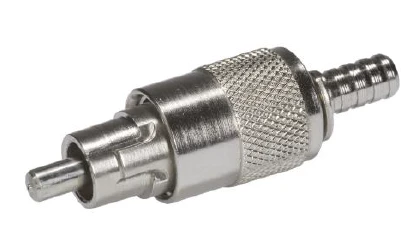
This FC connector assembled to HCS / PCF cable is a ruggedized fiber optic connection solution engineered for reliable data transmission in demanding indoor environments. Built around hard clad silica / polymer clad fiber (HCS / PCF) technology, it offers a durable, flexible alternative to traditional glass multimode patch cords, particularly where mechanical robustness, easy handling, and stable performance are critical. With a typical attenuation of ≤ 8 dB/km at 850 nm and low insertion loss of ≤ 0.25 dB (fiber dependent), this assembly is optimized for short to medium distance data links commonly found in industrial automation, vehicle systems, and medical equipment.
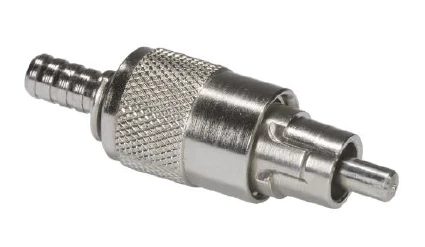
On both ends, the cable is terminated with FC simplex connectors in accordance with IEC 61754-13, DIN EN 61754-13, and TIA 604-4-B. The 2.5 mm metal ferrules are made from Arcap AP1D and are axially spring-loaded, ensuring precise fiber alignment and stable optical performance even under repeated mating. The FC connectors feature a metal housing with a threaded coupling nut and anti-rotation protection, providing secure, vibration-resistant connections that are particularly advantageous in control cabinets, test setups, and other environments where connectors are frequently handled or exposed to mechanical stress. A wide key (2.09–2.14 mm) is supplied as standard, with narrow key versions available on request for systems that require specific keying.
The cable itself is based on polymer clad fiber with a 200/230 µm core/cladding geometry, arranged as two PCF elements in a compact 2.2 × 4.5 mm duplex structure. This design combines the handling benefits of larger-core fibers with the optical characteristics needed for reliable data transmission using LED or laser sources. Typical attenuation is specified as ≤ 10 dB/km at 650 nm (laser) and ≤ 8 dB/km at 850 nm (LED), making the assembly suitable for a wide range of short-reach links such as fieldbus connections, sensor / actuator networks, and point-to-point data connections in buildings and machines.
To support deployment in harsh industrial and technical environments, the cable jacket is halogen-free and flame-retardant, meeting common safety expectations for installation in machinery, transport systems, and medical facilities. The orange outer jacket, standard for multimode optical cabling, provides clear visual identification in mixed-media cable routes and distribution racks. Inside the jacket, non-metallic aramid strength members provide strain relief of ≥ 150 N at the connector and a cable tensile strength of up to 300 N short-term, significantly improving resistance to pulling, bending, and handling during installation and maintenance.
With an operating temperature range from −20 to +70 °C (limited by the cable), this FC–FC HCS / PCF assembly is well suited for indoor applications where temperature fluctuations, mechanical stress, and tight routing spaces are expected. Typical use cases include industrial automation networks, automotive and transport technology, medical diagnostic and treatment equipment, and laboratory instrumentation where robust, low-maintenance fiber optic links are required. The low insertion loss, repeatable performance over at least 500 mating cycles, and standards-compliant FC interfaces make it easy to integrate into existing infrastructures that already use FC connectors for reliable, screw-coupled connections.
Each assembly is factory-terminated and tested, with connector ferrule bores matched to the specific HCS / PCF fiber used to ensure optimal centering and minimal optical loss. Cable length is configurable on request, and each end is equipped with two FC simplex connectors (one per fiber), enabling straightforward duplex data links or separate transmit/receive paths. By combining mechanically robust FC hardware with flexible, halogen-free HCS / PCF cabling, this product delivers a dependable, easy-to-install solution for environments where conventional glass multimode cords may be too fragile or difficult to handle, while still providing the optical performance needed for modern industrial and medical communication systems.
Amphenol FC to FC HCS PCF Duplex Fiber Optic Patch Cable Orange
Specifications
| Core Diameter: | 200 um |
|---|---|
| Wavelength Range: | 0.65 – 0.85 um |
| Fiber Core Material: | Fused Silica |
| Cable Length: | 20 m |
| Fiber Manufacturer: | Weinert Fiber Optics GmbH |
| Temperature Range (assembly): | −20 … +70 °C (limited by cable) |
| Connectors Per End: | 2 × simplex (one per fiber) |
| Cable Jacket: | Halogen-free, flame-retardant |
| Attenuation 850 Nm (LED): | ≤ 8 dB/km |
| Attenuation 650 Nm (laser): | ≤ 10 dB/km |
| Strain Relief (cable): | Non-metallic (aramid) |
| Operating Temperature: | −20 … +70 °C |
| Fiber: | PCF 200/230 µm |
| Tensile Strength: | 300 N (short-term) |
| Cable Core: | 2 PCF elements |
| Outer Diameter: | 2.2 × 4.5 mm |
| Connector Type: | FC, simplex on both ends |
| Jacket Color: | Orange (multimode) |
| Cable Labeling: | I-V(ZN)H 2x1K200/230 |
| Strain Relief (connector): | ≥ 150 N |
| Mating Cycles: | 500 |
| Insertion Loss: | ≤ 0.25 dB (depends on fiber) |
| Ferrule Bore: | Depends on fiber |
| Fiber Type: | HCS / PCF |
| Housing: | Metal housing; thread with anti-rotation protection |
| Key Width: | Wide key 2.09 – 2.14 mm (narrow key on request) |
| Ferrule: | Ø 2.5 mm, metal (Arcap AP1D), axially spring-loaded |
| Compliance: | IEC 61754-13, DIN EN 61754-13, TIA 604-4-B |
Got questions about specs? Use the inquiry form to ask.
 Download Data Sheet

Features
- FC–FC HCS / PCF Patch Cable for Industrial Use – Factory-assembled fiber optic cable with FC simplex connectors on both ends, specifically designed for HCS / PCF 200/230 µm fibers, ideal for robust data links in industrial, automotive, and medical applications.
- Low Insertion Loss for Reliable Signal Quality – Precision 2.5 mm metal ferrules (Arcap AP1D), axially spring-loaded, deliver typical insertion loss ≤ 0.25 dB (fiber-dependent), ensuring stable, low-loss connections over short and medium distances.
- Industrial-Grade FC Connector Design – Complies with IEC 61754-13, DIN EN 61754-13, and TIA 604-4-B, featuring a robust metal housing, threaded coupling with anti-rotation protection, and a wide key (2.09 – 2.14 mm) for secure, repeatable mating; narrow key versions available on request.
- High Durability and Long Service Life – Designed for up to 500 mating cycles per connector, making it suitable for test setups, frequent re-plugging, and demanding industrial environments without significant performance degradation.
- Strong Mechanical Strain Relief – Connector strain relief rated at ≥ 150 N and cable tensile strength of 300 N (short-term) help protect the fiber from mechanical stress during installation and operation, reducing risk of breakage and signal failure.
- Rugged, Flame-Retardant Cable Jacket – Halogen-free, flame-retardant outer jacket supports safety in industrial and building installations, limiting the spread of fire and corrosive gases in case of an incident.
- Optimized for Visible and Near-IR Wavelengths – PCF 200/230 µm fiber offers low attenuation with ≤ 10 dB/km at 650 nm (laser) and ≤ 8 dB/km at 850 nm (LED), making it suitable for industrial data transmission, sensing, and control systems that use common light sources.
- Flexible Indoor Installation – Compact 2.2 × 4.5 mm cable cross-section with 2 PCF elements and non-metallic aramid strain relief allows easy routing in cabinets, machines, and tight spaces, while maintaining mechanical robustness.
- Wide Operating Temperature Range – Cable specified for operation from −20 °C to +70 °C, ensuring stable performance in harsh indoor industrial environments such as factory floors, automation equipment, and transportation systems.
- High-Visibility Multimode Jacket Color – Orange cable jacket clearly identifies the assembly as multimode / PCF-based, simplifying cable management, troubleshooting, and standards-compliant labeling in structured cabling systems.
- Non-Metallic Strength Member – Aramid yarn strength elements provide excellent pull and bend resistance while remaining non-conductive, ideal for installations where electrical isolation and EMC immunity are critical.
- Custom Lengths and Configurations on Request – Cable length is fully customizable, and each end is equipped with 2× FC simplex connectors (one per fiber), enabling tailored solutions for machinery, test benches, and system integrations.
- Stable Fiber Alignment and Repeatability – Precision ferrule bore (matched to fiber) and keying ensure consistent core alignment, minimizing modal loss and enabling repeatable performance in multi-channel and multi-device networks.
- Ideal for Harsh Indoor Industrial, Automotive & Medical Environments – Combination of robust FC metal connectors, PCF 200/230 µm fiber, and flame-retardant jacket makes this assembly well suited for control systems, diagnostic equipment, and rugged communication links.
- Standards-Compliant and Vendor-Backed Quality – Manufactured by Amphenol Sachsenkabel using cable from Weinert Fiber Optics GmbH, meeting international connector standards and high-quality assembly processes for dependable long-term operation.
Applications
- Industrial Automation and Factory Networking
Ideal for fieldbus and real-time Ethernet backbones in production lines, PLC interconnects, and machine-to-machine links where robust, low-loss connections are needed in harsh indoor environments. - Process Control Systems in Harsh Environments
Suitable for chemical plants, refineries, and food & beverage facilities requiring reliable data transmission resistant to electromagnetic interference and moderate mechanical stress. - Robotics and Motion Control
Used to connect controllers, sensors, encoders, and vision systems on industrial robots, gantries, and automated handling systems, benefiting from the cable’s flexibility and stable insertion loss. - Automotive Manufacturing and Test Systems
Well-suited for data links in automotive assembly lines, test benches, end-of-line diagnostics, and EMC-critical areas where copper cabling is prone to interference. - On-Vehicle Data Links (Automotive and Commercial Vehicles)
Applicable for short-to-medium distance data transmission inside vehicles (buses, trucks, rail cars, special-purpose vehicles) where vibration-resistant, halogen-free cabling is required. - Medical Equipment Interconnects
Used in imaging systems, diagnostic equipment, treatment devices, and data links between medical instruments where electrical isolation and resistance to EMI are critical. - Laboratory and Research Facilities
Suitable for connecting optical instruments, measurement setups, and control units in physics, optics, and biomedical labs requiring repeatable low insertion loss and robust connectors. - Test and Measurement Systems
Applied in optical power meters, light sources, OTDRs, and custom measurement rigs that require FC-terminated HCS/PCF patch leads for reliable and repeatable test configurations. - Building Automation and Control Networks
Integrates HVAC controllers, lighting systems, access control, and safety systems over interference-immune optical links in commercial and industrial buildings. - Short-Distance Industrial Backbone and Distribution Links
Deployed as backbone or distribution cabling in production halls, warehouses, and technical rooms where moderate distances and rugged handling are expected. - EMI-/RFI-Critical Environments
Perfect for data transmission in environments with high electromagnetic fields, such as welding stations, large drives, inverters, and power distribution areas. - Sensor and Actuator Networks
Connects distributed sensors, actuators, and intelligent field devices in industrial and transportation systems, ensuring stable optical performance over time. - Machine Vision and Inspection Systems
Supports data transfer between cameras, illumination controllers, image-processing units, and control cabinets in quality assurance and automated optical inspection. - Railway and Transportation Infrastructure
Useful for onboard subsystems, signaling cabinets, and wayside installations that require flame-retardant, halogen-free cabling and robust FC connectors. - Energy and Utility Facilities
Applied in power plants, substations, and renewable energy installations (wind, solar) where galvanic isolation and immunity to high-voltage interference are required. - Data Links in Cleanrooms and Controlled Environments
Appropriate for semiconductor manufacturing, pharmaceutical production, and clean labs, where robust, low-particle optical cabling with non-metallic strain relief is beneficial. - Broadcast and Event Technology (Fixed Installations)
Used for control and data links between stage controllers, lighting desks, and media servers in fixed installations where industrial-grade reliability is demanded. - Instrumentation for Aerospace and Defense Ground Systems
Suitable for ground test equipment, simulators, and monitoring systems that need robust, low-maintenance optical links with FC terminations. - Replacement and Upgrade of Legacy Multimode Copper Links
Serves as an upgrade path from shielded copper to optical cabling in existing industrial or building infrastructures to increase noise immunity without excessive complexity. - Educational and Training Setups in Fiber Optics
Used in universities, vocational schools, and training centers for demonstrating optical communication principles and for practical exercises with FC-terminated HCS/PCF cabling.
Frequently Asked Questions
What is an FC connector assembled to HCS/PCF cable and what applications is it designed for?
What are the key technical specifications of this FC to FC HCS/PCF patch cable?
What is HCS/PCF fiber and how does it compare to standard glass multimode fiber?
What transmission distances can I achieve with this FC HCS/PCF cable at 650 nm or 850 nm?
Is this FC to FC HCS/PCF cable suitable for harsh industrial or medical environments?
Can I order this FC HCS/PCF patch cable in custom lengths and connector configurations?
How does the FC connector design improve reliability compared to push‑pull connectors?
Got more questions? Use the inquiry form to ask the supplier directly.
Similar Products


Your inquiry has been received.
Create an account by adding a password
Why create an account?
- Auto-complete inquiry forms
- View and manage all your past messages
- Save products to your favorites
- Close your account anytime — no hassle