
Description
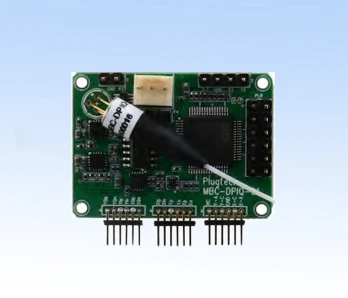
The ultra-compact DP‑IQ modulator bias controller is a high‑precision, fully digital control platform specifically engineered for dual‑polarization IQ (DP‑IQ) LiNbO3 and other advanced coherent modulators. In demanding coherent transmission systems using formats such as QPSK, 16‑QAM, and advanced OFDM, small drifts in modulator bias can severely degrade constellation quality, eye opening, and overall system margin. This controller is designed to continuously track and compensate those drifts, keeping the modulator locked to its optimal operating points over time and temperature without the need for manual intervention.
At the heart of a DP‑IQ modulator are two IQ structures and a polarization rotator. Each IQ structure comprises three independent LiNbO3 modulators: I and Q arms act as nested Mach‑Zehnder intensity modulators, while the phase arm (P) provides the required phase shift for generating complex modulation formats. For stable DP‑QPSK and higher‑order QAM performance, all six of these bias points must be precisely controlled. This controller simultaneously generates six independent, automatically optimized bias voltages for the two I arms, two Q arms, and two phase arms, ensuring that each sub‑modulator operates at its correct null, peak, or quadrature point.
The control architecture is based on low‑frequency, low‑amplitude dither tones that are injected together with the DC bias into each modulator electrode. By continuously monitoring the modulated optical output, the controller evaluates the sign and magnitude of the residual error at each operating point and digitally adjusts the bias voltages in real time. This closed‑loop, fully digital signal‑processing approach provides excellent long‑term stability and repeatability compared with older analog controllers, and it is designed to preserve the intrinsic modulator extinction ratio (up to the intrinsic >40–50 dB range typically specified for high‑performance LiNbO3 devices).
In operation, the I and Q arms are locked either at the minimum (null) or maximum (peak) transmission points of their transfer functions, depending on system configuration. This ensures that the nested Mach‑Zehnder structure can deliver high‑contrast on/off states with excellent extinction ratios, closely tracking the intrinsic modulation capability of the device. The phase arms are held at the right or left quadrature (Q+ or Q–), with a typical bias‑point accuracy of about ±2 degrees. This level of precision is critical in coherent links, as it minimizes residual phase error, reduces EVM, and produces cleaner QPSK and QAM constellation diagrams, as well as improved eye patterns and optical spectra across a wide range of baud rates.
The controller is designed to be modulation‑format agnostic and supports a broad set of advanced schemes commonly deployed in modern coherent fiber‑optic networks. Single‑sideband (SSB) formats, QPSK, multi‑level QAM (including 16‑QAM), and OFDM have all been verified with this control platform. This makes the unit highly suitable for high‑capacity coherent transponders, test and measurement setups, and research environments where modulation formats may change frequently but require consistent, repeatable bias conditions. By maintaining proper quadrature and intensity bias, the controller helps to preserve constellation symmetry, suppress unwanted sidebands, and optimize OSNR requirements.
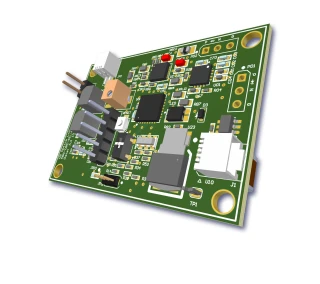
From an integration standpoint, the controller has been engineered as an OEM‑friendly solution. It is housed in a very low‑profile package of approximately 40 mm (W) × 29 mm (D) × 8 mm (H), facilitating direct integration inside transceiver modules, line cards, or custom optical sub‑assemblies where PCB real estate and height are tightly constrained. Electrical requirements are compatible with typical laboratory and system power rails: symmetric positive and negative supply voltages around ±15 V with modest current consumption on each rail. The output bias voltage ranges cover the majority of LiNbO3 DP‑IQ modulators on the market, with I/Q arm outputs spanning approximately −14.5 V to +14.5 V and phase outputs spanning approximately −13 V to +13 V, matching the Vπ characteristics of standard devices.
To maximize usability across both R&D and volume production environments, the controller offers multiple modes of operation. In the fully automatic bias control mode, the unit performs complete auto‑calibration and continuous drift compensation, enabling true plug‑and‑play behavior without user tuning. For applications requiring explicit user control, a user‑defined bias mode allows external setting of bias voltages while still leveraging the compact hardware platform.
Ultra Compact DP-IQ Modulator Bias Controller Automatic Bias Controller
Specifications
| Product Type: | QPSK-DP/SP |
|---|---|
| Modulation Type: | QPSK |
| Detector Input Power: | Not Specified |
| Locking Slope: | Positive, Negative |
| Locking Mode: | Other / Not specified |
| Photodetector Type: | Unspecified |
| Tunability: | Unspecified |
| Extinction Ratio (MER): | 50 dB |
| Quadrature Accuracy (Parm): | ±2 degree |
| Stabilization Time: | 45–55 s |
| Positive Power Voltage: | +14.5 to +15.5 V |
| Positive Power Current: | 20–30 mA |
| Negative Power Voltage: | -15.5 to -14.5 V |
| Negative Power Current: | 8–15 mA |
| Output Voltage Range (YI/YQ/XI/XQ): | -14.5 to +14.5 V |
| Output Voltage Range (YP/XP): | -13 to +13 V |
| Dither Amplitude: | 1% Vπ |
| Input Optical Power: | -30 to -8 dBm |
| Input Wavelength: | 1100–1650 nm |
| Dimensions (W×D×H): | 40 mm × 29 mm × 8 mm |
Got questions about specs? Use the inquiry form to ask.
 Download Data Sheet

Features
- Six‑Channel Automatic Bias Control for DP‑IQ Modulators
Simultaneously provides six independent automatic bias voltages tailored for dual‑polarization IQ (DP‑IQ) modulators, ensuring all I, Q, and phase (P) arms are optimally biased for long‑term stable operation. - Modulation‑Format Independent Operation
Optimized digital control loop supports format‑agnostic operation, verified with SSB, QPSK, m‑QAM, and OFDM, enabling seamless use in advanced coherent and complex modulation schemes without controller reconfiguration. - Ultra‑Stable Digital Bias Control Architecture
Fully digital signal‑processing implementation injects a low‑frequency, low‑amplitude dither together with the bias voltage, continuously monitors the modulator output, and auto‑compensates bias drift, delivering exceptional long‑term stability in varying temperature and environmental conditions. - Peak/Null Control for I and Q Arms with High Extinction Ratio
I and Q intensity modulators are automatically locked at user‑selectable Null (Minimum) or Peak (Maximum) operating points, achieving up to 50 dB maximum extinction ratio, limited only by the intrinsic extinction ratio of the LiNbO3 or equivalent modulator. - Accurate Quadrature Control for Phase (P) Arms
Phase arm (P) bias is precisely controlled at Q+ (right quadrature) or Q− (left quadrature) with a typical accuracy of ±2°, providing highly stable quadrature operation essential for DP‑QPSK and higher‑order QAM coherent transmission systems. - Automatic and User‑Defined Bias Modes
Two operating modes: Automatic Bias Control (ABC) for closed‑loop stabilization and User‑Defined Bias Mode for externally specified bias voltages, supporting both turnkey operation and advanced OEM integration or custom algorithms. - Fast Bias Stabilization Time
Closed‑loop controller converges to the optimum bias points with a typical stabilization time of ~50 s, allowing rapid startup, reconfiguration, and recovery after power cycling or environmental changes. - Compact Low‑Profile OEM Form Factor
Ultra‑compact controller module with a low‑profile design of approximately 40 mm (W) × 29 mm (D) × 8 mm (H), ideal for high‑density integration in coherent transponders, test setups, and OEM optical subsystems. - Wide Programmable Bias Voltage Range
Provides broad output voltage capability of −14.5 V to +14.5 V for I/Q arms and −13 V to +13 V for phase arms, supporting a wide variety of LiNbO3 and other integrated DP‑IQ modulators with different Vπ characteristics. - Optimized Dither Technique with Minimal Signal Degradation
Utilizes a low‑amplitude dither of only ~1% Vπ, minimizing impact on the optical signal while enabling robust lock detection and bias optimization, suitable for high‑order modulation and high OSNR coherent links. - Coherent‑Transmission Ready Performance
Demonstrated improvement in QPSK and 16‑QAM constellation diagrams, eye diagrams, and spectra when the controller is active, yielding cleaner constellations, reduced phase errors, and improved modulation error ratio (MER) in coherent optical systems. - Manual Operation via Mini‑Jumpers
Simple hardware‑level configuration through mini‑jumpers enables quick setup, manual mode selection, and bias scheme configuration without the need for complex software tools. - Flexible OEM Control via UART / I/O Interfaces
Selected versions support UART and digital I/O interfaces, allowing remote control, monitoring, firmware‑level integration, and automation in system‑level designs and production test environments. - Plug‑and‑Play, No Manual Calibration Required
Ships factory‑calibrated and designed for immediate plug‑and‑play use: no manual bias search, optical alignment calibration, or continuous tuning is required, reducing engineering time and ensuring consistent system performance. - Supports LiNbO3 and Other DP‑IQ Modulators
Compatible with a wide range of LiNbO3 dual‑polarization IQ modulators and similar integrated DP‑IQ modulators used in 100G/200G/400G coherent transmission, metro and long‑haul DWDM, and advanced lab setups.
Applications
Applications of Ultra-Compact DP‑IQ Modulator Bias Controller
- Automatic Bias Control for LiNbO₃ and Other DP‑IQ Modulators
Used to provide six simultaneous automatic bias voltages for dual‑polarization IQ modulators based on LiNbO₃ and other integrated platforms, ensuring optimum operating points for I, Q, and phase arms. - Coherent Optical Transmission Systems
Ideal for DP‑QPSK, DP‑16QAM, and higher‑order coherent modulation formats in 100G, 200G, 400G and beyond coherent transceivers, improving constellation stability and optical signal integrity. - High‑Order Modulation Format Generation
Supports stable generation of advanced formats such as QPSK, 8QAM, 16QAM, 64QAM, OFDM, and SSB signals by maintaining precise quadrature and extinction ratios in both I/Q arms and phase arms. - Single‑Sideband (SSB) and Carrier‑Suppressed SSB (CS‑SSB) Generation
Used in combination with IQ modulators to generate high‑quality SSB and CS‑SSB optical spectra for advanced fiber‑optic links, microwave photonics, and radio‑over‑fiber applications. - Optical Coherent Test and Measurement Setups
Applied in lab testbeds and production test systems to provide highly stable biasing for DP‑IQ modulators in eye‑diagram, constellation, and spectrum characterization of coherent transmitters. - Optical Communication Research and Prototyping
Enables researchers to explore new coherent formats, DSP algorithms, and adaptive modulation schemes by ensuring long‑term stable modulator operation without manual bias re‑adjustment. - Long‑Term Stability in Coherent Links
Used to compensate temperature drift, aging, and environmental variations in field‑deployed coherent systems, maintaining optimal bias points and reducing Q‑factor and BER penalties. - Metro, Long‑Haul, and Subsea Transmission Systems
Integrated in line cards and transmitter modules for metro, long‑haul, and submarine optical networks where uninterrupted, ultra‑stable bias control is critical over long distances and lifetimes. - DWDM and High‑Capacity Backbone Networks
Utilized in dense WDM coherent transceivers to guarantee consistent biasing of DP‑IQ modulators across many channels, enhancing OSNR performance and spectral efficiency. - Flexible OEM Integration in Coherent Transmitter Modules
Designed for compact OEM integration into transmitter sub‑assemblies and optical engines that require UART/IO‑based control and small form factor bias controllers. - High Extinction Ratio Intensity Modulation
Provides Null/Peak bias control for I and Q arms to achieve very high extinction ratios, improving on‑off contrast in amplitude‑modulated and pulse‑shaped optical signals. - Quadrature Phase Control in Phase‑Sensitive Systems
Maintains Q+ and Q− operating points in the phase arms of DP‑IQ modulators for applications requiring accurate 90‑degree phase relationships, such as coherent detection and phase‑encoded formats. - Microwave Photonics and RF‑over‑Fiber Links
Applied in analog and broadband RF photonic systems where stable IQ biasing is required to generate and transport complex RF modulation formats over optical fiber. - Optical Arbitrary Waveform and Signal Generation
Used together with high‑speed arbitrary waveform generators and DP‑IQ modulators to produce complex optical waveforms and custom modulation patterns for advanced system emulation. - Optical OFDM and Multi‑Carrier Transmission
Supports OFDM and multi‑carrier optical transmission by maintaining accurate amplitude and phase control across I and Q channels, reducing EVM and improving system robustness. - Polarization‑Multiplexed Transmission Experiments
Enables stable polarization‑multiplexed IQ modulation when combined with integrated polarization rotators, supporting DP‑QPSK, DP‑QAM, and polarization‑division multiplexed demonstrations. - Education and Training in Coherent Optics
Utilized in university and training laboratories to give students hands‑on experience with practical bias control of DP‑IQ modulators, coherent constellations, and advanced modulation techniques. - Production and Reliability Testing of DP‑IQ Modulators
Deployed in manufacturing environments to automate bias optimization and long‑duration stability tests for LiNbO₃ and integrated DP‑IQ modulators, accelerating QA and characterization.
Frequently Asked Questions
What is the Ultra Compact DP‑IQ Modulator Bias Controller and what does it do?
Which modulation formats and applications are supported by this DP‑IQ modulator bias controller?
How does the automatic bias control (ABC) function work and what stability can I expect?
What electrical and optical input requirements does the bias controller have?
Is the DP‑IQ modulator bias controller plug‑and‑play, or does it require manual calibration?
What are the physical dimensions and how can this controller be integrated into OEM systems?
How does this controller compare to other DP‑IQ bias controllers in terms of extinction ratio and performance?
Got more questions? Use the inquiry form to ask the supplier directly.
Similar Products


Your inquiry has been received.
Create an account by adding a password
Why create an account?
- Auto-complete inquiry forms
- View and manage all your past messages
- Save products to your favorites
- Close your account anytime — no hassle