

Description
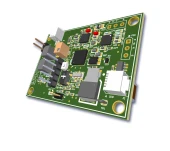
The DBC-SIL Modulator Bias Controller is a compact, OEM-ready module engineered to provide highly stable, ditherless bias control for lithium niobate Mach-Zehnder (LN MZ) and silicon photonic modulators, as well as Fabry–Perot tunable filters and similar periodic optical components. It actively locks the operating point of the modulator to a predefined reference, ensuring long‑term stability of amplitude, phase, or intensity in demanding optical systems. By stabilizing the modulator bias without applying a pilot tone, the DBC-SIL is particularly well suited for analog and high‑fidelity digital links where additional modulation artifacts or spurious tones cannot be tolerated.
Designed for seamless integration into OEM assemblies and research setups, the controller operates as the core of a closed-loop feedback system. It continuously monitors the optical signal via on‑board photodiodes and adjusts the bias port over a wide programmable voltage range from –10 V to +10 V. With a configurable bias current capability up to 250 mA, the DBC-SIL can drive a broad variety of electro‑optic devices, including high‑Vπ LN modulators and silicon-based phase shifters with integrated heaters or PN junctions. The high dynamic range and fine locking accuracy down to approximately 0.1% make it suitable for applications that require very low drift, such as coherent communication testbeds, optical sensing, and RF‑over‑fiber transmission.
Unlike traditional bias control solutions that rely on dithering the modulator input and demodulating the response, the DBC-SIL uses a ditherless control algorithm. This architecture eliminates the need for a pilot tone, preventing spectral contamination and simplifying system calibration. The locking slope can be selected using an on‑board sliding switch, enabling operation at different points on the modulator transfer function (for example quadrature, maxima, or minima) as long as the device exhibits a periodic response. When environmental drifts or thermal changes push the operating point outside the specified range, the controller automatically pulls the bias voltage back toward the desired working region, typically close to 0 V, restoring optimal performance without user intervention.
Internally, the DBC-SIL integrates two photodiodes that serve as feedback detectors for typical single‑modulator or filter configurations, reducing the need for external monitoring hardware and simplifying optical layouts. For more advanced control schemes or specialized monitoring requirements, an external reference voltage can be specified at the time of order, giving system designers flexibility in defining custom locking points or integrating the module into larger control architectures. This versatility allows the controller to support configurations such as modulator bias locking with a tapped coupler, Fabry–Perot filter wavelength stabilization, and other periodic transfer function controls commonly encountered in modern photonic systems.
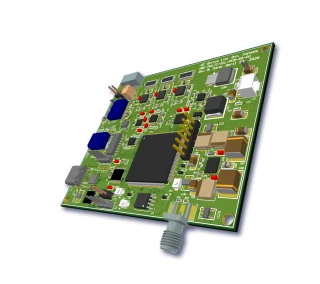
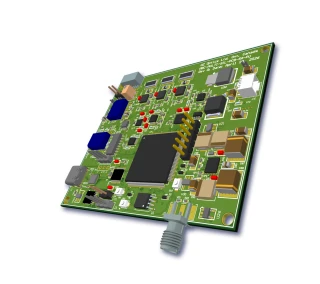
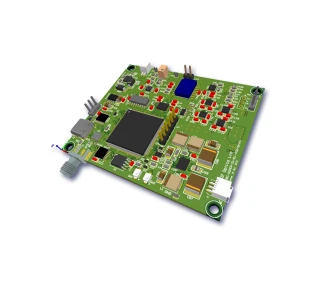
The module is optimized for dependable operation in laboratory and industrial environments, with an operating temperature range of 0–70 °C and storage capability from –40 to 80 °C. It runs from standard low‑voltage supplies (typically ±12 V, within a 10 to 15 V range) and draws modest current, facilitating easy integration into existing power architectures. The small PCB footprint of approximately 1.37 × 1.95 × 0.65 inches makes it ideal for dense instrument chassis, multi‑channel line cards, or compact benchtop assemblies, where space is at a premium. An onboard alarm LED provides immediate visual feedback in the event of overtuning or out‑of‑range conditions, assisting in rapid setup and troubleshooting.
Across comparable offerings in the market, modulator bias controllers are increasingly expected to deliver stable performance with minimal added complexity. The DBC-SIL addresses these needs with its combination of ditherless operation, broad bias voltage span, configurable high bias current, and built‑in photodetection. This allows designers of RF photonic links, high‑speed digital optical transmitters, lidar systems, and precision optical filters to maintain optimal bias points over long durations, even in the presence of temperature variations or component aging. As a result, system reliability is enhanced, link impairments such as distortion and extinction ratio degradation are minimized, and maintenance and recalibration intervals can be significantly reduced.
The DBC-SIL Modulator Bias Controller is thus an excellent building block for any application requiring precise, long‑term stable control of optical modulators or periodic optical components, combining the performance expected in high‑end research with the practicality and robustness demanded by OEM developers and system integrators.
<OZ Optics DBC SIL Ditherless Modulator Bias Controller High Accuracy
Specifications
| Product Type: | MBC |
|---|---|
| Modulation Type: | Other |
| Detector Input Power: | -50 dBm |
| Locking Slope: | Positive, Negative |
| Locking Mode: | Quad+, Quad-, Null, Peak Positions |
| Photodetector Type: | External |
| Tunability: | Tunable |
| Positive Power Supply (min): | +10 V |
| PCB Board Size: | 1.37 × 1.95 × 0.65 inch |
| Dimensions (L × W × H): | 1.37 × 1.95 × 0.65 inch |
| Storage Temperature Range: | -40 to 80 °C |
| Operating Temperature Range: | 0 to 70 °C |
| Negative Supply Current (typ): | 20 mA |
| Positive Supply Current (typ): | 35 mA |
| Negative Power Supply (max): | -15 V |
| Negative Power Supply (typ): | -12 V |
| Negative Power Supply (min): | -10 V |
| Positive Power Supply (max): | +15 V |
| Positive Power Supply (typ): | +12 V |
| Product: | Modulator Bias Controller – DBC-SIL |
| Bias Port Voltage Adjustment Range: | -10 V to +10 V |
| Bias Port Current Capability: | up to 250 mA |
| Bias Current (max, Configurable): | 250 mA |
| DC Bias Voltage (max): | +10 V |
| DC Bias Voltage (min): | -10 V |
| Locking Accuracy: | 0.1 % |
| Input Optical Power (max): | 0 dBm |
| Input Optical Power (min): | -50 dBm |
| Input Signal Current (typ): | 1 mA |
| Input Signal Current (min): | 0.1 × 10^-5 mA |
Got questions about specs? Use the inquiry form to ask.
 Download Data Sheet

Features
- Ditherless modulator bias control for LN MZ and silicon photonic modulators
Optimized to lock the operating point of single lithium niobate Mach–Zehnder modulators or silicon-based modulators without using a pilot tone, ensuring clean operation for both digital and analog optical links. - Ideal for Fabry–Perot tunable filter and fiber loop-back control
Supports precision control of Fabry–Perot filters and similar periodic devices, enabling stable wavelength selection and feedback-loop operation in advanced photonic systems. - No pilot tone – zero interference with signal path
True ditherless architecture eliminates modulation of the optical carrier, preventing additional spurs or noise in RF-over-fiber, analog photonics, and high‑dynamic‑range transmission systems. - High dynamic range and high locking accuracy
Wide input signal range from extremely low currents (down to ~10-6 A) to standard photodiode levels, combined with typical locking accuracy of 0.1%, provides robust bias control even with varying optical power. - Wide DC bias voltage range: –10 V to +10 V
Integrated high‑compliance bias port covers a broad range of operating points, compatible with most commercial LiNbO3 MZ modulators and silicon modulators that require positive or negative drive. - High-current bias output up to 250 mA
Bias port can deliver up to 250 mA (factory-configurable limit), allowing direct drive of devices with relatively high bias current requirements or control electrodes with significant load. - Configurable current limit for device protection
Manufacturer-adjustable current limit helps protect sensitive modulators and filters from over‑current conditions, improving system reliability and long‑term stability. - Fast response for dynamic operating conditions
Feedback electronics are designed for rapid tracking of drift due to temperature or aging, allowing the controller to quickly re‑center the operating point close to 0 V when deviations occur. - Automatic re-locking within specified drift range
When the modulator or filter drifts, the controller automatically pulls the bias back to the desired working point, maintaining stable performance without user intervention. - Selectable locking slope with on-board switch
A convenient sliding switch allows the user to invert or select the locking slope as long as the transfer function is periodic, making it easy to target quadrature, peak, or null points depending on the application. - Integrated dual photodiode inputs
Two on-board photodiodes provide built‑in monitoring and feedback options, simplifying system wiring and enabling differential or alternative sensing schemes without extra external components. - Support for external reference voltage
Optional external reference input (specified at time of order) allows the user to define custom operating points, enabling advanced control strategies and integration into larger control architectures. - Compact OEM PCB form factor
Small board size of 1.37" × 1.95" × 0.65" is ideal for OEM integration into transceivers, modulators, and photonic subsystems where space is limited. - Wide optical and electrical input ranges
Accepts input optical powers from approximately –50 dBm to 0 dBm (via photodiode) and input signal currents up to around 1 mA, ensuring compatibility with a broad set of detectors and link budgets. - Standard ±12 V supply operation with low consumption
Operates from typical ±10 to ±15 V supplies with modest current draw (~35 mA positive, ~20 mA negative), simplifying power design and minimizing thermal load. - Operating temperature range 0 °C to +70 °C
Designed for reliable performance in standard laboratory and controlled OEM environments, with storage capability from –40 °C to +80 °C. - Overtuning alarm LED
Front‑panel LED indicates overtuning or out‑of‑range conditions, providing immediate visual feedback for quick diagnostics and system bring‑up. - Suitable for precision analog and high-speed digital systems
Ditherless operation, high linearity, and tight bias stability make this controller ideal for coherent communications, CATV, RF photonics, microwave links, and other systems demanding high signal fidelity.
Applications
- Automatic Bias Control for LiNbO3 Mach–Zehnder (MZ) Modulators
Ideal for stabilizing the operating point of single lithium niobate MZ modulators in high‑speed fiber‑optic links. The ditherless control loop maintains the desired quadrature or null bias without pilot tones, minimizing distortion in analog and high‑baud‑rate digital transmission systems. - Silicon Photonics Modulator Bias Stabilization
Optimized for silicon-based electro‑optic modulators used in data center interconnects, coherent transceivers, and integrated photonic systems. The wide bias voltage range (‑10 V to +10 V) and up to 250 mA bias current capability support a broad class of silicon photonic phase and intensity modulators. - Bias Control in Analog RF‑over‑Fiber (RFoF) Links
Suitable for CATV, DOCSIS, microwave, and RF distribution systems where linearity and low intermodulation distortion are critical. The ditherless operation avoids introducing spurious tones, making it well‑suited to RFoF links in cable networks, satellite ground stations, and wireless fronthaul/backhaul. - Coherent Optical Communication Systems
Provides long‑term stable bias control of I/Q modulators and nested MZ structures used in coherent transceivers (QPSK, QAM). By locking the modulator at the optimal operating point, it enhances modulation accuracy, OSNR performance, and minimizes constellation drift in metro, long‑haul, and submarine links. - Fabry–Perot Tunable Filter and Etalon Control
Enables closed‑loop control of Fabry–Perot filters, tunable etalons, and cavity‑based devices. The controller maintains the cavity at a fixed transmission peak or notch, enhancing spectral stability for wavelength selection, dense WDM channel filtering, and narrowband optical sensing. - Laser Wavelength and Cavity Stabilization
Can be integrated into feedback loops for external‑cavity lasers (ECLs), distributed feedback (DFB) lasers with external filters, and resonator‑based sources. By controlling the bias element coupled to an internal or external cavity, it stabilizes the lasing wavelength against thermal or mechanical drift. - Photonic Test and Measurement Setups
Useful in optical labs and automated test equipment for stabilizing modulators and filters during characterization. Ensures repeatable bias conditions for measurements of insertion loss, extinction ratio, linearity, chirp, and S‑parameters in both R&D and production test environments. - Optical Sensor Interrogation and Signal Conditioning
Applicable to interferometric fiber‑optic sensors, including fiber Bragg grating (FBG) based interferometers, Sagnac loops, and Mach–Zehnder sensor configurations. The controller maintains a fixed operating point on the interference fringe, improving linearity and sensitivity for strain, temperature, pressure, and vibration sensing. - Microwave Photonics and Photonic Signal Processing
Supports bias control in photonic circuits used for RF filtering, arbitrary waveform generation, phase shifting, and true‑time delay lines. High dynamic range and fast response help preserve the fidelity of complex RF and microwave signals processed in photonic hardware. - Quantum Optics and Single‑Photon Experiments
Suitable for precise phase and amplitude control of interferometers and modulators in quantum key distribution (QKD), quantum state preparation, and entanglement experiments. The low‑noise, ditherless control avoids introducing additional modulation artifacts that can degrade quantum states. - LiNbO3 and Silicon Photonics OEM Integration
Designed as a compact PCB module for OEM integration into transceivers, photonic subsystems, and benchtop instruments. Can be embedded into LiNbO3 modulator drivers, silicon photonics evaluation boards, and programmable photonic signal processors to provide turnkey bias stabilization. - Closed‑Loop Control in Fiber Lasers and Optical Amplifiers
Can be used for controlling internal interferometric components or filters inside fiber lasers and EDFAs. Maintains optimal gain‑flattening filter positions or intracavity phase settings, improving power stability and spectral flatness across multiple channels. - High‑Resolution Optical Spectroscopy Systems
Beneficial in systems that rely on stabilized interferometers or narrowband filters for high‑resolution spectroscopy. The controller locks the device at a fixed point on a periodic transmission curve, reducing wavelength drift and improving repeatability in optical spectrum analysis and molecular absorption measurements.
Frequently Asked Questions
What is the DBC‑SIL Modulator Bias Controller and what does it do?
How does the ditherless bias control of the DBC‑SIL work compared with pilot‑tone controllers?
What types of modulators and optical components are compatible with the DBC‑SIL?
What are the key electrical and optical specifications of the DBC‑SIL bias controller?
How is the DBC‑SIL bias controller integrated into an optical link or modulators system?
Can the DBC‑SIL be customized (current limit, reference voltage, or locking behavior)?
What are the advantages of using the DBC‑SIL ditherless controller in analog and high‑speed optical systems?
Got more questions? Use the inquiry form to ask the supplier directly.
Similar Products


Your inquiry has been received.
Create an account by adding a password
Why create an account?
- Auto-complete inquiry forms
- View and manage all your past messages
- Save products to your favorites
- Close your account anytime — no hassle