

Description
Modulator Bias Controller – MULTI-SIL for Advanced IQ and SSB Optical Modulation
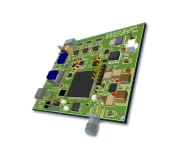
The Modulator Bias Controller – MULTI-SIL is an OEM-grade, multi‑channel bias control platform engineered specifically for advanced electro‑optic modulators. It is optimized for use with single LiNbO3 Mach–Zehnder (MZ) IQ modulators, silicon photonics IQ modulators, and thin‑film lithium niobate (TFLN) IQ modulators in demanding coherent and analog optical systems. By providing precise, stable bias control over up to three independent modulators from a single compact controller board, this unit helps maintain optimal operating points such as null, peak, and quadrature, which are critical for high‑fidelity single sideband (SSB) and advanced modulation formats.
In contrast to simple single‑channel bias controllers commonly found in basic intensity modulation setups, the MBC‑MULTI‑SIL is designed for complex configurations where multiple modulators must be coordinated simultaneously. Its architecture supports DPMZ IQ modulator based SSB generation and extended functions such as peak, null, and quad control for up to three modulators in a single system. This enables fine control of I/Q balance, suppression of unwanted sidebands, and long‑term stability of constellation points in coherent communication links, test and measurement benches, and integrated photonic circuits.
High‑Precision Multi‑Channel Bias Control
The controller incorporates three independent bias ports that can deliver user‑configurable current up to 250 mA with a programmable voltage range from −12 V to +12 V. This wide electrical compliance envelope allows compatibility with traditional bulk LiNbO3 modulators as well as modern silicon and TFLN devices, which may require different drive conditions. Locking slope selection (positive or negative) and mode selection (Peak/Null, Quad) can be set individually for each channel, giving system designers considerable flexibility in defining how each modulator is stabilized within a complex optical architecture.
Locking points around key operating states—such as null for deep extinction, peak for maximum transmission, and quadrature for linear phase‑to‑amplitude conversion—can be finely tuned through the control interface. This level of granularity is especially beneficial in SSB and complex IQ modulation schemes where phase and amplitude imbalances directly impact sideband suppression ratio, error vector magnitude, and overall link performance. The availability of a calibration‑off mode further simplifies initial alignment and rapid system start‑up before automatic locking is enabled.
Integrated Photodetection and Pilot Tone Stabilization
To achieve stable, long‑term bias control, the MBC‑MULTI‑SIL integrates a built‑in photodetector and simultaneously supports an external photodiode connection. This dual‑option architecture allows users to select the most suitable monitoring point in their optical setup, whether it is a tapped signal from the modulator output, a coupler port in a coherent receiver, or an on‑chip monitor in a silicon photonic circuit. Typical optical input levels to the APD/photodiode stage span from approximately −25 dBm to −10 dBm across a broad operating wavelength range of 1000–1650 nm, covering O‑, C‑, and L‑band deployments and many specialty wavelength windows.
The controller employs a pilot‑tone based locking algorithm. A small modulation tone is superimposed on the bias signal, and the system analyzes the detected optical response to determine the proper bias point. The pilot tone amplitude is user adjustable, allowing the optimization of lock stability versus impact on the optical signal. For quadrature locking, pilot tone frequencies in the range of around 500 to 1000 Hz are supported, balancing fast tracking with low interference to the data band. This approach enables extinction ratios on the order of 25–40 dB in null mode under typical conditions, comparable to or better than many standalone commercial bias controllers used in high‑performance optical links.
Digital Control, Monitoring, and System Integration
Designed for straightforward integration into OEM systems, the MBC‑MULTI‑SIL offers comprehensive digital control via a USB Type‑C port with an included graphical user interface (GUI). All critical parameters—including bias voltages, pilot tone settings, locking modes, slope selections, and photodetector readings—can be configured and monitored in real time through the GUI. Users can easily switch between automatic and manual bias control, disable the pilot tone when required, and store or replicate optimal configurations across multiple setups, which is particularly useful in volume production or multi‑channel test stations.
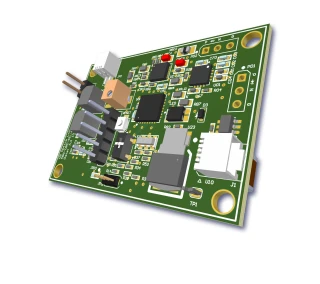
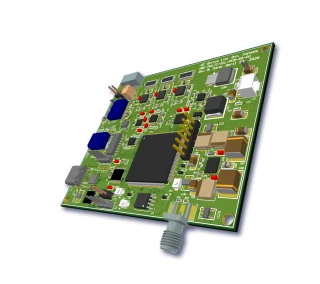
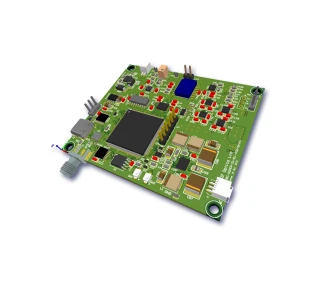
OZ Optics MBC MULTI SIL Modulator Bias Controller for LN Silicon IQ Modulators
Specifications
| Product Type: | MBC |
|---|---|
| Modulation Type: | Other |
| Detector Input Power: | -25 dBm |
| Locking Slope: | Positive, Negative |
| Locking Mode: | Quad+, Quad-, Null, Peak Positions |
| Photodetector Type: | External |
| Tunability: | Tunable |
| Detector Input Power: | -25 to -10 dBm |
| Optical Wavelength: | 1000–1650 nm |
| Bias Voltage: | -12 to +12 V |
| Bias Current: | up to 250 mA (configurable) |
| Null Mode Extinction Ratio: | 25 to 40 dB |
| Locking Slope: | Positive or Negative |
| Locking Mode: | Peak/Null, Quad |
| Pilot Tone Peak-to-Peak Voltage: | Adjustable Vpp |
| Pilot Tone Frequency (QUAD): | 500 or 1000 Hz |
| DC Positive Power Voltage: | 14.5 to 15.5 V |
| DC Negative Power Voltage: | -15.5 to -14.5 V |
| DC Positive Power Current: | 190 mA |
| DC Negative Power Current: | 105 mA |
| Operating Temperature: | 0 to 70 °C |
| Storage Temperature: | -40 to 85 °C |
| PCB Board Size: | 2.5 |
Got questions about specs? Use the inquiry form to ask.
 Download Data Sheet

Features
- Universal Compatibility with Advanced IQ Modulators – Optimized for single Lithium Niobate (LN) Mach-Zehnder (MZ) IQ modulators, silicon photonic IQ modulators, and Thin Film Lithium Niobate (TFLN) IQ modulators, ensuring seamless integration in modern coherent and high‑speed optical systems.
- Multi‑Channel Bias Control for Complex Modulation Schemes – Supports three independent modulators driven by a single controller, ideal for I/Q, dual‑polarization, and multi‑arm modulation architectures found in advanced fiber‑optic communication and test setups.
- Single Sideband (SSB) and Extended Application Support – Designed for SSB operation and extended schemes including Peak, Null, Quad, and Peak‑Quad modes across three modulators, matching or exceeding capabilities of leading commercial modulator bias controllers.
- Flexible Operation with Single, Dual, or Triple Modulators – Enables precise bias control in single sideband systems as well as configurations using two or three independent modulators, supporting a wide range of OEM and R&D optical setups.
- High‑Current Bias Ports for Demanding Modulators – Each bias port can deliver up to 250 mA of current, suitable for driving a variety of LN and silicon modulators; current limit can be factory‑configured on request for safe operation and system optimization.
- Wide Programmable Bias Voltage Range – Adjustable bias port voltage from -12 V to +12 V provides ample headroom to reach optimal operating points (Null, Quad, Peak) for most commercial Mach‑Zehnder and IQ modulators.
- User‑Adjustable Pilot Tone for Robust Auto‑Locking – Integrated pilot tone with adjustable amplitude and selectable frequencies (e.g., 500 Hz and 1000 Hz in QUAD mode) improves locking stability and compatibility with different detectors and modulators.
- Independent Locking Slope and Mode per Channel – Locking slope can be set positive or negative for each of the three bias channels individually, with fine tuning of locking points around Null and Quad to maximize extinction ratio and minimize signal distortion.
- High Extinction Ratio in Null Mode – Designed to support a typical extinction ratio up to 40 dB in Null mode (25 dB minimum), providing superior optical carrier suppression compared to many standard bias controllers, ideal for high‑dynamic‑range applications.
- Calibration‑Off Mode for Fast System Setup – A dedicated calibration off function simplifies initial alignment and system bring‑up, allowing you to quickly switch into closed‑loop locking once optimal working points are identified.
- Integrated and External Photodetector Support – Includes one integrated photodiode (PD) and a dedicated port for an external photodetector, giving flexibility in monitoring points, optical power levels, and system configuration.
- Broad Optical Wavelength Coverage – Compatible with optical signals from 1000 nm to 1650 nm, covering O‑, E‑, S‑, C‑, and L‑bands and making the controller suitable for telecom, datacom, sensing, and laboratory environments.
- Remote Control via USB Type‑C Interface – Features a modern USB Type‑C port with an intuitive graphical user interface (GUI), enabling easy setup, monitoring, bias tuning, and the ability to stop the pilot tone in manual mode when required.
- Full Remote Monitoring and Configuration – All operating parameters, including bias voltages, currents, locking status, and pilot tone settings, are remotely controllable and readable through the GUI, streamlining integration into automated test and production systems.
- Optional RS‑232 Interfaces for OEM Integration – Available with RS232 DB9 or RS232 flywire (RS232FW) options, providing straightforward serial control for embedded and OEM platforms where USB is not preferred.
- Configurable for OEM and System‑Level Use – Full‑function OEM design in the MBC family, tailored for integration into larger photonic subsystems and instruments where stable and compact multi‑channel bias control is essential.
- Compact PCB Form Factor – Small PCB board size of approximately 2.5" x 3" x 0.65" (nominal) conserves space in dense optical modules and rack‑mount systems while providing all required bias control features.
Applications
- Automatic bias control for LiNbO3 Mach–Zehnder (MZ) modulators – Provides closed‑loop bias stabilization for single or dual‑polarization IQ modulators in coherent transmission systems, ensuring long‑term drift‑free operation.
- Silicon photonics modulator biasing – Optimized for silicon‑based IQ and phase modulators commonly used in data center interconnects and integrated photonics platforms, keeping operating points stable over temperature and time.
- Thin‑Film Lithium Niobate (TFLN) modulator control – Supports TFLN IQ and amplitude modulators in high‑bandwidth, low‑loss integrated photonics circuits where precise biasing is critical for linearity and extinction ratio.
- Single sideband (SSB) modulation systems – Designed for DPMZ IQ modulator SSB architectures and advanced SSB formats in microwave photonics, RF over fiber, and dispersion‑tolerant links.
- Advanced IQ modulation formats in coherent optics – Ideal for systems using QPSK, 16QAM, 64QAM and higher‑order modulation, where accurate I/Q biasing (null, peak, quad) is essential for constellation fidelity and low EVM.
- Multi‑modulator control in integrated transmitter assemblies – One controller can drive and stabilize up to three modulators simultaneously, supporting complex transmitter blades, dual‑polarization IQ modules, and nested MZ structures.
- Telecom and long‑haul fiber‑optic networks – Maintains optimum bias in long‑reach DWDM and coherent transport systems, improving OSNR, extinction ratio, and reducing BER over temperature and aging.
- Metro, access, and 5G xHaul optical links – Stabilizes bias points in compact, power‑constrained transceivers used in metro, fronthaul, midhaul, and backhaul deployments where unattended, long‑term reliability is required.
- RF over fiber and analog optical links – Supports highly linear MZ biasing for CATV, antenna remoting, radar, and microwave photonics links where low distortion and high spurious‑free dynamic range (SFDR) are needed.
- Optical arbitrary waveform generation and photonic signal processing – Enables stable bias around null, peak, and quadrature for optical signal shaping, filtering, mixing, and vector modulation in research and advanced testbeds.
- Optical sensing and interferometric measurement systems – Maintains interferometer operating points in fiber‑optic sensors, coherent LIDAR, and measurement interferometers using MZ or IQ modulators.
- Lab and production test of LiNbO3, silicon, and TFLN modulators – Provides a universal biasing platform for device characterization, burn‑in, and production QA of modulators across different technologies and wavelengths (1000–1650 nm).
- Single‑sideband and carrier‑suppressed applications in microwave photonics – Supports precise quad and null locking needed for optical SSB, carrier‑suppressed SSB (CS‑SSB), and advanced RF photonic filter architectures.
- High‑extinction‑ratio amplitude modulation – Null‑mode extinction ratios up to 40 dB (typical) make the controller suitable for systems requiring deep amplitude modulation for secure links and precision measurements.
- Bias control for nested MZ and dual‑drive structures – Controls complex multi‑section modulators (e.g., nested I/Q structures, dual‑drive MZs) using three independent bias channels with selectable locking slopes and modes.
- Coherent transceiver prototyping and R&D platforms – Fits seamlessly into research benches developing next‑generation coherent transceivers, allowing fast optimization of modulator bias and rapid format experimentation.
- Educational and training labs in photonics and communications – Serves as a robust teaching tool to demonstrate MZ transfer functions, bias points (null, peak, quad), and automatic bias control concepts in university labs.
- OEM integration into compact optical modules – Small PCB size (approximately 2.5" x 3" x 0.65") and DC supply operation allow direct integration into OEM transmitter subassemblies, photonic integrated circuits (PIC) packages, and custom optical engines.
- Systems requiring high bias current and wide voltage range – Bias ports deliver up to 250 mA (user‑configurable) with a wide -12 V to +12 V range, supporting modulators and phase shifters with demanding drive requirements.
- Applications needing flexible control interfaces – USB Type‑C with GUI plus optional RS232 (DB9 or fly‑wires) allow easy integration into automated test systems, remote‑controlled platforms, and embedded controllers.
Frequently Asked Questions
What is the MBC‑MULTI‑SIL Modulator Bias Controller and what modulators is it compatible with?
How does the MBC‑MULTI‑SIL control and stabilize modulator bias points (Null, Peak, Quad)?
Can the MBC‑MULTI‑SIL drive high‑Vπ or multi‑stage modulators? What are its bias voltage and current capabilities?
How many modulators can the MBC‑MULTI‑SIL control simultaneously and what are the typical configurations?
What are the optical input and photodiode requirements for the MBC‑MULTI‑SIL?
How do I interface and control the MBC‑MULTI‑SIL (GUI, USB, RS‑232, and remote control)?
What are the power supply, size, and environmental specifications of the MBC‑MULTI‑SIL for OEM integration?
Got more questions? Use the inquiry form to ask the supplier directly.
Similar Products


Your inquiry has been received.
Create an account by adding a password
Why create an account?
- Auto-complete inquiry forms
- View and manage all your past messages
- Save products to your favorites
- Close your account anytime — no hassle