


Description
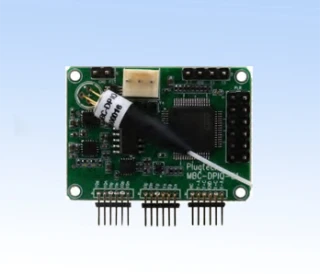
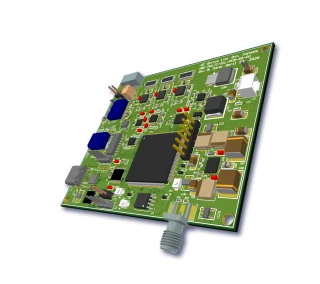
The MBC-SUPER Modulator Bias Controller is a compact, high‑performance OEM module designed to precisely stabilize the operating point of Mach–Zehnder (MZ) intensity modulators in demanding optical systems. Engineered for both CW and pulsed applications, it maintains the bias at user‑selectable points on the MZ transfer curve – positive and negative quadrature (Quad+/Quad−), null, or peak – ensuring optimal modulation depth, linearity, and extinction ratio over time and temperature. With its extended pulse‑mode capabilities and digital control architecture, this controller delivers higher stability and improved accuracy compared to traditional analog bias control circuits often found in legacy systems.
Similar to advanced bias control solutions used in coherent communication testbeds, LiDAR transmitters, and photonic research setups, the MBC-SUPER integrates an internal, pigtailed photodiode feedback path and also supports external photodetectors. This design allows closed‑loop monitoring of the modulator output, continuously correcting for drift due to temperature changes, device aging, or varying optical input power. The controller supports detector input powers from −25 to −10 dBm across a wide optical wavelength window of 1000–1650 nm (extendable with alternate photodiodes), making it suitable for C‑band, L‑band, and many specialty wavelength applications in fiber‑optic communications, sensing, and laboratory instrumentation.
At the heart of the MBC-SUPER is a digital pilot tone technique that superimposes a small modulation on the modulator drive, enabling precise tracking of the bias point with minimal added noise. Both pilot tone modulation depth and amplitude are adjustable via the graphical user interface, allowing the user to optimize between tracking sensitivity and system SNR. The pilot tone frequency is selectable among 1, 5, 10, and 40 kHz to minimize interference with system data or measurement bandwidths. Compared to older, fixed‑frequency analog controllers commonly used in simple telecom links, this flexibility allows the MBC-SUPER to be tuned for complex, densely packed optical setups where interference and crosstalk must be carefully managed.
The module offers two primary operating modes: calibration mode and locking mode. During calibration, the controller scans the modulator transfer function, identifies key points such as null, peak, and quadrature, and maps the corresponding voltages. Once calibrated, the unit transitions to locking mode, where it continuously holds the selected operating point with high stability. A calibration‑off capability is provided for rapid system setup, allowing integrators to streamline start‑up routines in multi‑channel systems. Users may also stop the pilot tone and operate in manual mode when a fixed, user‑set bias is preferred or when integrating the controller into specialized feedback architectures.
One of the defining advantages of the MBC-SUPER is its enhanced pulse mode for null locking, making it particularly well suited for dense pulse applications such as pulsed fiber lasers, time‑of‑flight LiDAR, and high‑repetition‑rate modulation experiments. In many of these systems, achieving a deep and stable extinction ratio is critical to suppressing residual light between pulses and improving measurement dynamic range. The MBC-SUPER is designed to exploit the characteristics of pulsed waveforms, improving null detection accuracy compared with conventional CW‑oriented controllers. Under suitable conditions, it can support null mode extinction ratios up to 40 dB, typically limited by the intrinsic performance of the modulator itself.
Electrical bias is provided as a single‑ended output spanning −12 V to +12 V, compatible with the drive requirements of a wide range of LiNbO3 and integrated photonic modulators. The controller operates from symmetrical ±15 V supplies with modest current draw, making it straightforward to integrate into existing equipment racks, benchtop instruments, or compact OEM platforms. The small footprint of approximately 2.53 × 2.57 × 0.65 inches and low weight (about 0.2 lb) help conserve valuable space in multi‑channel test systems and high‑density photonic integration environments, where many bias channels must coexist in a limited area.
For system control and integration, the MBC-SUPER provides a USB Type‑B interface with a full-featured GUI, as well as optional RS232 (DB9 or fly‑wire) connectivity. The GUI enables intuitive selection of locking mode (Null, Peak, +Quad, −Quad), locking slope, and pilot tone parameters, as well as access to calibration tools and multi‑unit management for scalable deployments.
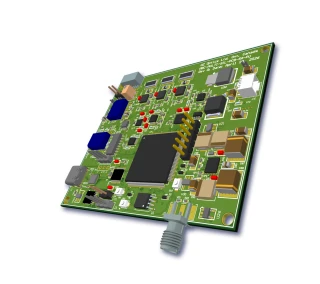
Super Modulator Bias Controller
Specifications
| Product Type: | MBC |
|---|---|
| Modulation Type: | QPSK |
| Detector Input Power: | -10 dBm |
| Locking Slope: | Positive, Negative |
| Locking Mode: | Quad+, Quad-, Null, Peak Positions |
| Photodetector Type: | External |
| Tunability: | Tunable |
| Detector Input Power Range: | -25 to -10 dBm |
| Optical Wavelength: | 1000–1650 nm |
| Bias Voltage (single Ended): | -12 to 12 V |
| Null Mode Extinction Ratio: | 36 to 40 dB |
| Locking Slope: | Positive or Negative |
| Locking Mode: | Null, Peak, +Quad, -Quad |
| Pilot Tone Modulation Depth (Null): | Adjustable |
| Pilot Tone Amplitude: | 0–250 mV Vpp |
| Pilot Tone Frequency: | 1, 5, 10, 40 kHz |
| DC Positive Power Voltage: | 14.5 to 15.5 V |
| DC Negative Power Voltage: | -15.5 to -14.5 V |
| DC Positive Power Current: | 145 mA |
| DC Negative Power Current: | 80 mA |
| Operating Temperature: | 0–40 °C |
| Storage Temperature: | -40–85 °C |
| Dimension: | 2.53 x 2.57 x 0.65 inch |
| Weight: | 0.2 lb |
| Pulse Mode: | Supported for null locking in dense pulse applications |
| USB Interface: | Type B |
| RS232 Interface: | DB9 or Flywire (optional) |
Got questions about specs? Use the inquiry form to ask.
 Download Data Sheet

Features
- Advanced Modulator Bias Control for MZ Modulators – Precisely locks the operating point of Mach–Zehnder (MZ) modulators at Quad+, Quad-, Null, or Peak points to ensure optimal linearity, extinction ratio, and signal quality in high‑performance optical links.
- User-Selectable Locking Modes and Slopes – Easily choose between Null, Peak, +Quadrature, and -Quadrature with positive or negative locking slope to match your specific modulator transfer function and system requirements.
- Two Intelligent Operating Modes – Calibration mode for initial characterization and automatic bias point search, and locking mode for stable long‑term operation with continuous bias tracking.
- Calibration-Off Mode for Fast Setup – Dedicated calibration-off mode supports quick switch-over into locking mode, reducing system bring‑up time and simplifying integration in production and lab environments.
- Pulse Mode for Dense Pulse Applications – Specialized pulse mode enables accurate bias control with pulsed optical signals, improving performance in dense pulse and high repetition-rate systems where standard CW-based controllers struggle.
- Enhanced Null Locking Accuracy – Optimized control algorithms and pulse-mode operation deliver high-accuracy Null locking, supporting extinction ratios up to 36–40 dB (limited by the modulator) for demanding analog and digital applications.
- Fine-Tunable Pilot Tone Parameters – Adjust pilot tone modulation depth and amplitude (0–250 mV Vpp), as well as pilot tone frequency (1, 5, 10, 40 kHz), through the GUI to balance lock robustness, noise performance, and system compatibility.
- Low Pilot Tone Interference with Digital Control – Digital signal processing techniques reduce pilot tone amplitude and control noise, minimizing impact on the data channel and enhancing overall link performance compared with traditional analog bias controllers.
- External or Integrated Photodetector Support – Comes with an optional pigtailed photodiode and supports external photodetectors, enabling flexible placement and compatibility with a wide range of modulators and optical layouts.
- Wide Optical Wavelength Range – Supports detector input wavelengths from 1000–1650 nm, with the potential to extend this range using a suitable photodetector, making it ideal for O-, C-, and L-band fiber‑optic systems.
- Generous Detector Input Power Range – Operates reliably with photodetector input levels from -25 dBm to -10 dBm, simplifying power budgeting and making it easier to tap a small fraction of the main signal for bias control.
- Wide, Symmetric Bias Voltage Range – Provides a single-ended bias output from -12 V to +12 V, covering the requirements of most LiNbO₃ and integrated silicon photonic MZ modulators without additional external drive electronics.
- Compact OEM-Friendly Footprint – Very small module size of only 2.53″ × 2.57″ × 0.65″ and light weight (~0.2 lb) supports dense integration in OEM systems, rack‑mount platforms, and portable test setups.
- PC GUI via Standard USB Interface – Includes an intuitive graphical user interface (GUI) accessible over USB Type‑B, enabling easy configuration of modes, pilot tone settings, slopes, and monitoring for rapid lab evaluation and production tuning.
- Multi-Unit GUI Control – The supplied GUI software offers multi-unit control capability, allowing simultaneous configuration and monitoring of multiple MBC-SUPER modules in multi‑channel or coherent transmission systems.
- Optional RS232 Interfaces for System Integration – Available with RS232 DB9 or RS232 fly‑wire (RS232FW) interfaces as options, enabling straightforward integration into embedded controllers, legacy equipment, and automated test systems.
- Manual Mode with Pilot Tone Disable – Users can stop the pilot tone and enter manual mode when needed for diagnostics, custom control strategies, or when pilot tones are not allowed in the application.
Applications
- Automatic Bias Control for LiNbO3 and Other MZ Modulators
Stabilizes the operating point of Mach-Zehnder (MZ) intensity and phase modulators at Quad+, Quad−, Null, or Peak to counteract drift from temperature changes, aging, and vibration. Ensures long-term stable modulation without continuous manual re-tuning. - High-Extinction Null Locking in Coherent Optical Communication
Provides precise Null locking with up to 36–40 dB extinction ratio, ideal for carrier-suppressed and high dynamic range links in coherent and analog fiber-optic communication systems at 1.0–1.65 µm wavelengths. - Bias Control in High-Speed Digital Modulation Formats
Maintains optimal bias for advanced modulation formats such as OOK, PAM-4, DPSK, QPSK, and higher-order QAM by locking at appropriate quadrature or Peak points. Improves eye-diagram quality, BER performance, and link stability in 10G, 40G, 100G+ systems and data-center interconnects. - Pulse Mode Bias Control for Dense Pulse and Low Duty-Cycle Systems
Uses specialized Pulse Mode to improve Null locking accuracy in systems with dense optical pulse trains, low duty-cycle signals, or burst-mode operation. Especially suited for pulsed fiber lasers, RZ formats, time-division multiplexing (TDM), and optical pulse picking setups. - Stabilization of Intensity Modulators in RF-over-Fiber Links
Keeps LiNbO3 intensity modulators at optimal quadrature in RF-over-fiber and analog photonic links, reducing distortion and enhancing spur-free dynamic range (SFDR). Beneficial for microwave photonics, CATV distribution, radar remoting, and satellite ground station links. - Coherent Transmitter Bias Control (I/Q Modulator Quadrature Points)
Controls and stabilizes bias voltages on I/Q modulators in coherent transmitters. Maintains correct quadrature relationships (Quad+ and Quad−) for I and Q arms, improving phase coherence, constellation stability, and overall EVM performance. - Laser RIN and Intensity Noise Characterization
Locks the modulator at well-defined working points (Null, Peak, or Quad) to enable accurate measurements of relative intensity noise (RIN) and amplitude fluctuations of lasers. Reduces drift-related artifacts in long averaging measurements. - Optical Signal Gating and Pulse Shaping Experiments
Enables precise control of an MZ modulator used as an optical gate or shutter by maintaining a stable operating point. Useful for temporal pulse shaping, optical sampling, high extinction on/off gating, and noise-free chopping in research laboratories. - Stabilized Amplitude Modulation for Quantum Optics and Single-Photon Experiments
Provides low-drift, low-noise amplitude control for quantum communication and quantum optics experiments where single-photon or entangled-photon count rates are highly bias sensitive. Ensures repeatable modulator transmission for long-duration runs. - Bias Control in Test and Measurement Setups
Integrates into optical test benches for characterizing photonic components, modulators, and integrated photonic circuits. Maintains constant operating points during S-parameter, frequency response, and BER testing, improving repeatability. - Stabilization of Electro-Optic Modulators in Photonic Integrated Circuits (PICs)
Drives bias electrodes of integrated MZ modulators on silicon photonics, InP, or LiNbO3-on-insulator PICs. Compensates for thermal drift and fabrication variances, simplifying deployment of PIC-based transmitters and signal processors. - Amplitude Control in Frequency Comb and Mode-Locked Laser Systems
Locks an external intensity modulator used to gate or shape pulses from mode-locked lasers or optical frequency combs. Maintains stable extinction and pulse envelope modulation for comb-line selection, repetition-rate division, or noise reduction schemes. - Bias Control for Optical Arbitrary Waveform Generation (OAWG)
Ensures accurate amplitude transfer in modulators used for optical arbitrary waveform generation and complex temporal waveform synthesis. Stable quadrature operation minimizes distortion in precisely tailored optical pulses. - Digital and Analog Modulator Bias Control in Lab Prototypes
Acts as a general-purpose bias controller for development-stage optical transmitters, experimental modulation formats, and custom link prototypes. Simplifies lab work by providing selectable modes (Null, Peak, Quad+, Quad−) via an intuitive GUI.
Frequently Asked Questions
What is the OZ Optics MBC‑SUPER modulator bias controller and what does it do?
What locking modes and slopes are supported by the MBC‑SUPER?
How does the pulse mode improve null locking for dense pulse applications?
What are the electrical and optical input requirements for the MBC‑SUPER?
How do I connect the MBC‑SUPER in my optical modulation setup?
What user interfaces and control options does the MBC‑SUPER provide?
What extinction ratio and environmental specifications can the MBC‑SUPER achieve?
Got more questions? Use the inquiry form to ask the supplier directly.
Similar Products


Your inquiry has been received.
Create an account by adding a password
Why create an account?
- Auto-complete inquiry forms
- View and manage all your past messages
- Save products to your favorites
- Close your account anytime — no hassle