


Description
Modulator Bias Controller for DP/SP QPSK – High‑Precision Bias Control for Coherent 100G and Beyond
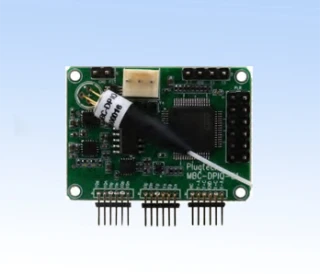
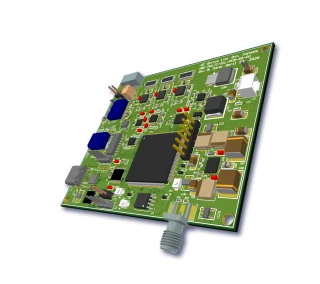
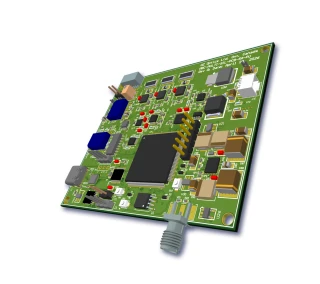
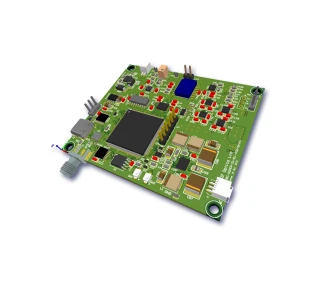
The DP/SP QPSK Modulator Bias Controller is a compact, high‑performance OEM module engineered to deliver precise and stable bias control for complex coherent optical modulators. Designed specifically for dual‑polarization (DP) and single‑polarization (SP) QPSK and DQPSK modulators used in 100G and higher‑rate transmission systems, this controller maintains optimal bias points across multiple Mach‑Zehnder and phase modulators. By ensuring that each critical bias point is accurately tracked and stabilized, it maximizes extinction ratio, signal fidelity, and overall link performance in demanding fiber‑optic communication environments.
Modern coherent modulation formats, such as QPSK, DQPSK, and higher‑order QAM, rely on precisely controlled optical phase and amplitude to achieve high data rates and superior spectral efficiency. Each QPSK modulator typically combines multiple nested Mach‑Zehnder interferometers and phase modulators, resulting in several independent bias points that must be continuously controlled against temperature drift, aging, and environmental variations. This bias controller has been purpose‑built to manage up to six modulators from a single low‑profile board, simultaneously driving the first and second modulators of each QPSK device at their null or peak positions while maintaining the third modulator at the optimal quadrature (quad) point. This architectural approach, similar to advanced controllers used in state‑of‑the‑art coherent transponders worldwide, enables long‑reach transmission, improved dispersion tolerance, and stable operation under real‑world network conditions.
Integrating an on‑board photodiode input stage, the controller continuously monitors optical power and uses an internal pilot‑tone technique to lock each modulator to its target operating point. Low‑depth pilot tones at kilohertz frequencies are superimposed on the bias voltages, and the resulting power modulation is analyzed to determine whether each modulator is correctly aligned to a null, peak, or quadrature condition. The user can select the locking slope (positive or negative) and bias mode for each channel, allowing the controller to support a wide range of modulator designs from leading vendors. Typical operating wavelengths span from 1000 to 1650 nm, making the module suitable for C‑band and L‑band coherent systems as well as specialized test and measurement setups at other telecom and near‑infrared wavelengths.
For system integration, the bias controller offers both single‑ended and differential bias outputs over a wide voltage range, accommodating common LiNbO3 and related electro‑optic modulators used in 100G, 200G, and emerging 400G coherent solutions. Differential outputs can typically swing up to ±25 V, while single‑ended outputs support approximately ±12.5 V, providing ample headroom for modulators with demanding half‑wave voltages. The high extinction ratios achievable in null mode contribute to low residual carrier and high optical signal‑to‑noise ratio, which is essential for high‑order modulation formats and forward‑error‑correction‑optimized link designs commonly seen in modern DWDM systems.
A key advantage of this controller is its flexible digital interface. All operating parameters, including bias modes, locking slopes, pilot‑tone settings, and operating states, are remotely configurable via USB or UART, making it straightforward to embed in larger test platforms, coherent transmitters, or automated production lines. Engineers can choose between automatic closed‑loop operation for stable, hands‑off control, or manual operation where pilot tones can be disabled on any subset of modulators and bias points can be adjusted directly through a graphical interface. The ability to read back photodiode input power, bias voltages, and firmware information in real time simplifies system diagnostics, calibration procedures, and long‑term regression testing.
The module’s compact, low‑profile form factor is well suited for high‑density OEM integration. With dimensions on the order of only a few inches and a low operating weight, it can be incorporated into coherent transceiver prototypes, research benches, or volume production equipment without significantly impacting enclosure space or thermal management strategies. Typical power requirements are compatible with standard ±15 V laboratory supplies or telecom subsystems, and the operating temperature range supports deployment in controlled laboratory, manufacturing, and equipment‑sheltered environments.
DP and SP QPSK Modulator Bias Controllers
Specifications
| Product Type: | QPSK-DP/SP |
|---|---|
| Modulation Type: | QPSK |
| Detector Input Power: | -10 dBm |
| Locking Slope: | Positive, Negative |
| Locking Mode: | Quad+, Quad-, Null, Peak Positions |
| Photodetector Type: | External |
| Tunability: | Tunable |
| Detector Input Power (min): | -25 dBm |
| Detector Input Power (max): | -10 dBm |
| Optical Wavelength Range: | 1000–1650 nm |
| Bias Voltage (Differential, Min): | -25 V |
| Bias Voltage (Differential, Max): | 25 V |
| Bias Voltage (Single End, Min): | -12.5 V |
| Bias Voltage (Single End, Max): | 12.5 V |
| Null Mode Extinction Ratio (typ): | 25 dB |
| Null Mode Extinction Ratio (max): | 40 dB |
| Locking Slope: | Positive or Negative |
| Locking Mode: | 4 Null (Peak) positions, Quad+ or Quad- position |
| Pilot Tone Modulation Depth (QUAD): | 0.1 % |
| Pilot Tone Modulation Depth (NULL): | 0.1 % |
| Pilot Tone Frequency: | 4000 Hz |
| DC Positive Power Voltage (min): | 14.5 V |
| DC Positive Power Voltage (max): | 15.5 V |
| DC Negative Power Voltage (min): | -15.5 V |
| DC Negative Power Voltage (typ): | -15 V |
| DC Negative Power Voltage (max): | -14.5 V |
| DC Positive Power Current (typ): | 130 mA |
| DC Negative Power Current (typ): | 60 mA |
| Operating Temperature Range: | 0–70 °C |
| Storage Temperature Range: | -40–85 °C |
| Dimensions: | 3.57 x 3.37 x 0.65 in |
| Weight: | 0.2 lb |
| Number Of Controlled Modulators: | 6 |
| Interface: | USB, UART |
| Operating Modes: | DQPSK, QAM, Arbitrary-waveform |
| DC Positive Power Voltage (typ): | 15 V |
Got questions about specs? Use the inquiry form to ask.
 Download Data Sheet

Features
- Six-Channel Modulator Bias Control – Precisely controls up to six bias points per dual- or single-polarization QPSK modulator (2 phase + 4 Mach–Zehnder modulators), enabling stable operation of advanced 100G and higher coherent optical links.
- Optimized for DP/SP QPSK and DQPSK Modulators – Purpose-built for dual- and single-polarization QPSK modulators used in 100Gbit QPSK, DQPSK and QAM transmission systems, improving spectral efficiency, reach and dispersion tolerance in coherent optical networks.
- Automatic Null and Quad Bias Locking – Simultaneously locks the first and second modulators of each QPSK modulator at Null/Peak and the third modulator at the Quad operating point, maintaining optimal bias conditions for high extinction ratio and low signal distortion.
- User-Selectable Locking Slope and Mode – Positive or negative locking slope can be selected via software, with 4 Null/Peak positions and Quad+/Quad- positions available to match different modulator designs and system requirements.
- Integrated Photodiode Monitoring – Built-in photodiode with typical detector input range from -25 dBm to -10 dBm provides direct optical power feedback for closed-loop bias control, increasing long-term stability and reducing drift.
- High Extinction Ratio Performance – Supports null mode extinction ratios of typically 25–40 dB, delivering clean eye diagrams and improved OSNR for high-order modulation formats.
- Single-Ended and Differential Bias Outputs – Flexible biasing capability with differential output voltage range of -25 V to +25 V and single-ended output range of -12.5 V to +12.5 V, compatible with a wide range of LiNbO₃ and other external modulators.
- Three Advanced Operating Modes – Selectable DQPSK, QAM or Arbitrary-waveform modes allow the same controller to be used in diverse coherent modulation schemes, test setups and R&D environments.
- USB and UART Remote Control – All parameters, including locking slope, mode, pilot tone, and bias levels, are fully controllable through a standard USB computer interface or UART, simplifying integration into automated test systems and OEM platforms.
- Manual and Automatic Bias Control – Switch easily between automation mode for closed-loop stabilization and manual mode for laboratory fine-tuning; pilot tones can be enabled/disabled per modulator for flexible characterization and troubleshooting.
- Pilot Tone-Based Stabilization – Built-in pilot tone generation at 4 kHz with low modulation depth (~0.1% for both Quad and Null modes) ensures reliable bias tracking with minimal impact on the transmitted signal.
- Real-Time Monitoring via GUI – Intuitive software interface allows users to read back input power to the photodiodes, monitor bias voltages, and check firmware versions, improving diagnostics, repeatability and system-level control.
- Wide Optical Wavelength Range – Operates from 1000 nm to 1650 nm, covering O-, C-, L-bands and more, making the controller suitable for telecom, datacom, sensing and advanced research applications.
- Compact, Low-Profile OEM Form Factor – Small footprint of approximately 3.57" × 3.37" × 0.65" and lightweight design (~0.2 lb) allow easy integration into dense line cards, transponder modules and benchtop test equipment.
- Standard ±15 V Supply Compatibility – Runs from industry-standard dual power rails (+15 V and -15 V), with low typical current consumption (~130 mA positive, 60 mA negative), simplifying power-system design.
- Broad Operating Temperature Range – Designed for reliable performance from 0°C to +70°C operating and -40°C to +85°C storage, suitable for both controlled lab environments and demanding field or OEM deployments.
- Improved Long-Term Stability and Reduced Maintenance – Continuous automatic bias tracking compensates for temperature changes, aging and environmental variations, minimizing manual recalibration and downtime.
Applications
Applications of the DP/SP QPSK Modulator Bias Controller
- 100G, 200G, 400G Coherent Optical Transceivers
Used to precisely control the bias points of dual‑polarization QPSK and higher‑order QAM modulators in coherent CFP/CFP2/CFP4, QSFP‑DD and custom coherent line cards, ensuring optimal constellation quality and minimized error vector magnitude (EVM). - Coherent DWDM Line Systems
Integrated in dense wavelength division multiplexing (DWDM) transmitters to stabilize IQ modulators over temperature and time, supporting long‑haul and metro coherent links with higher spectral efficiency. - High‑Capacity Metro and Long‑Haul Transport
Maintains stable null and quad operating points for DQPSK/QPSK modulators in 100G+ line cards, enabling extended reach, improved dispersion tolerance, and reduced OSNR requirements in terrestrial and submarine networks. - 400G/600G/1T Coherent Super‑Channels
Supports parallel DP‑QPSK and higher‑order QAM channels on super‑channel transmitters, where multiple modulators must be locked simultaneously with low drift for multi‑carrier systems. - Advanced Modulation Format Research (QPSK, 8QAM, 16QAM, 64QAM)
Ideal for R&D labs exploring coherent and multi‑level modulation schemes, providing flexible bias control in DQPSK, QAM and arbitrary‑waveform modes for rapid configuration and testing. - Optical Communications Testbeds and Prototyping
Deployed in experimental coherent links and FPGA/ASIC evaluation benches where stable, reconfigurable bias control of IQ/QPSK modulators is required to validate DSP algorithms and link performance. - Optical Transmitter Characterization and Production Test
Used in modulator and transceiver manufacturing lines for automated bias calibration and long‑term stability tests, reducing manual tuning and improving yield for DP‑QPSK and DP‑QAM transmitters. - Linearity and Performance Optimization of IQ Modulators
Ensures Mach–Zehnder and phase modulators operate at their optimum bias points (null, peak, quad) to maximize linearity, modulation depth, and extinction ratio in analog and digital optical links. - Analog and Microwave Photonics Links
Supports high‑dynamic‑range analog optical transmission (CATV, RF‑over‑fiber, antenna remoting) by providing precise bias control for complex modulators used in linearized or predistorted transmitter architectures. - Optical Arbitrary Waveform Generation (OAWG)
Employed with cascaded phase and intensity modulators in optical arbitrary waveform generators, where accurate biasing is critical to shaping complex temporal and spectral optical waveforms. - Optical Signal Generation for Coherent Receiver Testing
Generates stable QPSK/DQPSK/QAM optical signals used to test coherent receivers, DSP algorithms, and FEC performance under realistic operating conditions and long‑term drift. - Quantum Key Distribution and Advanced Secure Links
Supports phase‑encoded quantum and secure classical communication experiments that rely on stable multi‑level phase modulation and precise control of Mach–Zehnder bias points. - Educational and Training Platforms in Photonics
Integrated into university and training lab benches to demonstrate coherent modulation concepts, IQ modulation, bias locking techniques, and pilot‑tone based control strategies. - Temperature‑Sensitive and Harsh Environment Systems
Provides automatic compensation for thermal drift in field‑deployed coherent transmitters, maintaining bias stability from 0 to 70 °C and reducing maintenance and recalibration intervals. - OEM Integration into Compact Coherent Modules
Its low‑profile 3.57" x 3.37" x 0.65" form factor and UART/USB interfaces make it suitable for embedding inside small‑footprint coherent engines, OEM transceivers, and custom photonic subsystems. - Multi‑Channel Coherent Systems with Shared Control Electronics
Controls up to six modulators from one controller, enabling cost‑effective, high‑density integration in multi‑channel transmitters, MIMO systems, and parallel coherent lanes. - Long‑Term Stability Studies of Modulators
Used in reliability and aging tests of DP‑QPSK and DP‑QAM modulators to monitor bias drift, extinction ratio, and operating points over extended periods via the read‑back GUI. - Remote and Automated Network Operation
Supports remote monitoring and control of modulator bias through USB or UART, enabling integration with network management systems, automated calibration scripts, and remote diagnostics.
Frequently Asked Questions
What is the OZ Optics DP/SP QPSK Modulator Bias Controller and what does it do?
Which modulation formats and modulators are supported by this QPSK modulator bias controller?
How is the QPSK modulator bias controller powered and connected to the system?
How does the bias locking work and what is the role of the pilot tone?
What software control and monitoring features are available (USB/UART, GUI, readback)?
What are the key performance specifications such as extinction ratio, wavelength range, and temperature?
In which applications is this QPSK modulator bias controller typically used?
Got more questions? Use the inquiry form to ask the supplier directly.
Similar Products


Your inquiry has been received.
Create an account by adding a password
Why create an account?
- Auto-complete inquiry forms
- View and manage all your past messages
- Save products to your favorites
- Close your account anytime — no hassle