


Description
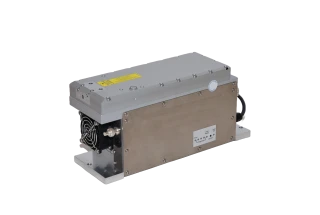
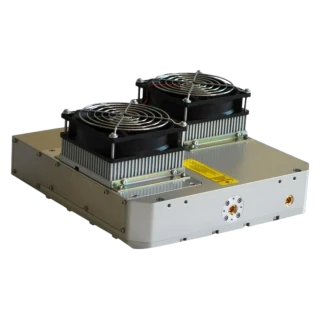
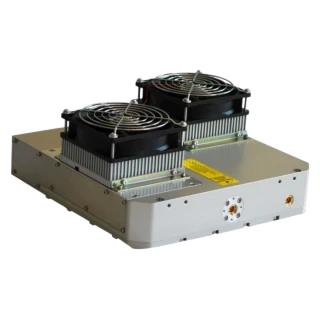
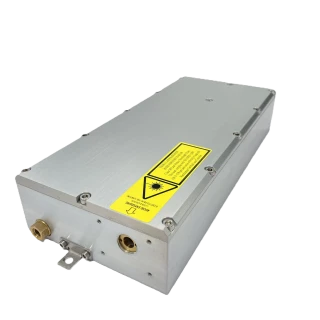
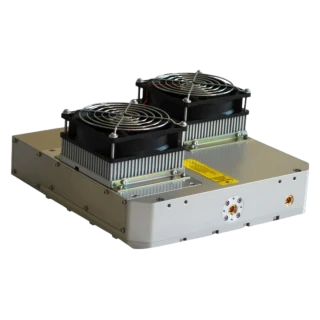
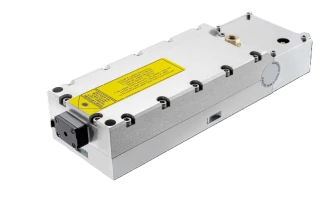
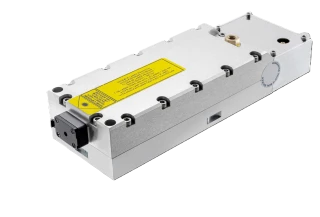
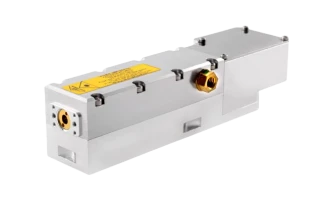
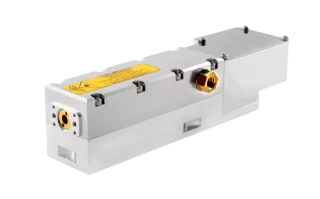
The Quantas-Q2HE-355 series is a compact DPSS (Diode-Pumped Solid State) laser system designed to deliver high-energy pulses at the ultraviolet wavelength of 355 nm. With pulse energies up to 10 mJ and durations less than 8 ns, this series operates at repetition rates of up to 10 Hz. The laser system is air-cooled, facilitating ease of integration into various setups without the need for elaborate cooling arrangements.
Capabilities and Applications: This series is engineered for precision applications requiring intense UV light, such as photolithography, material processing, and spectroscopic analysis. The high peak power and short pulse duration make the Quantas-Q2HE-355 suitable for applications demanding minimal thermal impact on the target material.
Design and Functionality: Featuring a diode-pumped, air-cooled, Q-switched design, the Quantas-Q2HE-355 ensures efficient operation with minimal maintenance requirements. It includes high-speed triggering and a low jitter rate, enhancing its compatibility with a wide range of scientific and industrial instruments.
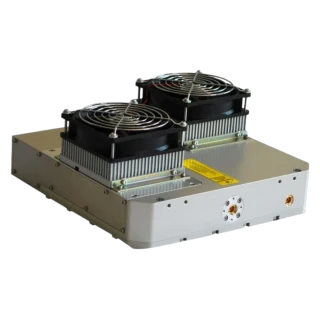
Quantas-Q2HE-355: High Energy Compact Nanosecond DPSS Laser
Specifications
| Avg. Power: | 4 W |
|---|---|
| Wavelength: | 355 nm |
| Repetition Rate: | 0.01 – 0.1 kHz |
| Pulse Duration: | 7 ns |
| Pulse-to-Pulse Stability (RMS): | 0.5 % |
| Cooling: | Air |
| Pulse Energy: | 12-30 mJ |
| Beam Divergence: | <1 mrad |
| Polarization: | Linear, horizontal |
| Jitter (RMS): | < 0.5 ns |
| Transmission Range: | 1-95 % |
| Laser Head (W×L×H): | 190 × 408 × 155 mm³ |
| Controller Unit (W×L×H): | 108 × 191 × 59 mm³ |
| AC/DC Power Adapter, Typical (W×L×H): | 89 × 422 × 330 mm³ |
| Ambient Temperature: | 15-30 ℃ |
| Relative Humidity (non-condensing): | 10-80 % |
| Mains Voltage: | 90 – 230 VAC, single phase, 47 – 63 Hz |
| Lifetime Of Pump Diodes:: | > 2 G shots |
Got questions about specs? Use the inquiry form to ask.
 Download Data Sheet

Features
Key Features of the Q2HE High-Energy Air-Cooled Q-Switched Laser
- High-energy pulsed laser output: Delivers up to 120 mJ pulse energy and up to 5 W average output power, making it suitable for demanding scientific, industrial, and remote sensing applications.
- Air-cooled, water-free operation: Innovative laser crystal cooling technology eliminates the need for external chillers, cooling water, and bulky infrastructure, enabling a compact and low-maintenance setup.
- Q-switched nanosecond performance: Produces short pulses of less than 7 ns, ideal for applications requiring high peak power such as LIBS, laser ablation, PLD, and laser shock generation.
- Fundamental wavelength options: Available with 1053 nm or 1064 nm output wavelength for compatibility with a wide range of optics, detectors, and harmonic conversion modules.
- Efficient harmonic generation capability: Low beam divergence and high beam quality support wavelength conversion to 2nd, 3rd, 4th, and 5th harmonics, with UV output available down to approximately 211 nm.
- Up to 100 Hz repetition rate: Supports high-throughput operation with repetition rates up to 100 Hz, with smoothly variable pulse repetition rate available on selected 1053 nm models.
- Compact turnkey laser system: Most laser electronics are integrated directly into the laser head, requiring only a compact controller box and mains adapter for simplified installation.
- No bulky power supply required: Operates from a compact external adapter providing 28 VDC with model-dependent power consumption, reducing system footprint and integration complexity.
- Long pump diode lifetime: Designed for reliable long-term operation with pump diode lifetime exceeding 2 billion shots, lowering maintenance requirements and operating cost.
- Built-in synchronization output: Integrated sync pulse generator provides low-jitter trigger signals for timing user equipment, detectors, cameras, delay generators, and measurement systems.
- Flexible triggering modes: Can operate in internal triggering mode or be externally triggered from a delay generator for precise synchronization in laboratory and OEM systems.
- Remote Ethernet control: Built-in Ethernet interface and web-server allow monitoring and control from any modern web browser without installing dedicated software.
- API for system integration: Provides an application programming interface for integration into automated instruments, OEM platforms, research setups, and industrial laser systems.
- Optimized for LIBS applications: High pulse energy, short pulse duration, and excellent beam quality make the Q2HE well suited for Laser Induced Breakdown Spectroscopy and elemental analysis.
- Suitable for LIDAR and remote sensing: High-energy nanosecond pulses and stable timing make it a strong choice for Light Detection and Ranging, remote sensing, and laser designation.
- Ideal for laser ablation and marking: High peak power output supports precision laser ablation, marking, LCD repair, surface processing, and material modification.
- Compatible with pulsed laser deposition: Provides the short-pulse, high-energy output required for Pulsed Laser Deposition of thin films and advanced materials.
- Optional attachable 2nd harmonic generator: Enables convenient frequency doubling for applications requiring green output from the fundamental wavelength.
- Optional stand-alone harmonic modules: Supports 2nd, 3rd, 4th, and 5th harmonic generators for visible and UV wavelength generation.
- Optional UV optics protection: Stand-alone air purging unit is available to extend the lifetime of UV optics during harmonic operation.
- Optional pulse energy control: Attachable attenuator is available for the fundamental wavelength, enabling convenient adjustment of output pulse energy.
- Optional pulse energy monitoring: Attachable pulse energy monitor supports real-time energy diagnostics and process stability monitoring.
- Optional seeder for SLM operation: Seed laser option enables single-longitudinal-mode operation for applications requiring narrow linewidth and improved spectral control.
Applications
- Laser-Induced Breakdown Spectroscopy (LIBS): High-energy nanosecond pulses for elemental analysis, material identification, mining analysis, metallurgy, recycling, environmental monitoring, and in-situ chemical detection.
- Light Detection and Ranging (LiDAR): Short-pulse, low-divergence laser output for range finding, atmospheric LiDAR, aerosol profiling, topographic mapping, wind sensing, and remote distance measurement.
- Remote Sensing and Target Designation: High pulse energy and stable Q-switched operation for long-range optical sensing, laser designation, field instrumentation, and defense-oriented measurement systems.
- Laser Ablation: Efficient material removal for precision ablation, surface modification, thin-film removal, LCD repair, semiconductor processing, microelectronics rework, and laser cleaning.
- Laser Marking and Engraving: Nanosecond pulse performance for permanent marking, engraving, serialization, traceability codes, and high-contrast processing of metals, ceramics, glass, polymers, and coated materials.
- Pulsed Laser Deposition (PLD): High-energy pulsed output and optional harmonic generation for thin-film deposition of oxides, nitrides, superconductors, semiconductors, transparent conductive films, and advanced research materials.
- Laser Shock Wave Generation: Generation of high-pressure shock waves for laser shock peening, material strengthening, adhesion testing, dynamic material studies, and high-strain-rate physics experiments.
- Nonlinear Optics and Harmonic Generation: Fundamental 1053 nm or 1064 nm output with optional 2nd, 3rd, 4th, and 5th harmonic generation for UV and deep-UV applications down to 211 nm.
- UV Laser Processing: Frequency-converted output for micromachining, microstructuring, precision drilling, polymer processing, glass processing, and high-resolution material modification.
- Scientific Research and Laboratory Instrumentation: Compact, air-cooled Q-switched laser source for spectroscopy, photophysics, plasma generation, nonlinear optical experiments, and university or industrial R&D laboratories.
- Plasma Generation and Diagnostics: High peak power nanosecond pulses for laser-produced plasma studies, plasma spectroscopy, ignition experiments, and time-resolved diagnostic systems.
- Photoacoustic Spectroscopy and Imaging: Pulsed laser excitation for photoacoustic signal generation in biomedical imaging, gas sensing, material inspection, and analytical instrumentation.
- Laser Ultrasonics: Non-contact ultrasonic wave generation for nondestructive testing, composite inspection, weld evaluation, crack detection, and remote material characterization.
- Pump Source for Optical Parametric Oscillators and Amplifiers: High-energy, short-pulse operation suitable for pumping OPO, OPA, dye laser, and tunable laser systems across visible, UV, and infrared wavelength ranges.
- Time-Resolved Spectroscopy: Low-jitter triggering and nanosecond pulse duration for pump-probe experiments, fluorescence lifetime studies, transient absorption measurements, and fast optical diagnostics.
- Mass Spectrometry and MALDI Research: UV harmonic options for laser desorption, ionization studies, analytical chemistry, bioanalysis, and advanced mass spectrometry source development.
- Micromachining and Precision Materials Processing: Controlled pulse energy and optional attenuation for drilling, cutting, scribing, trimming, surface texturing, and selective removal of thin layers.
- Semiconductor and Electronics Manufacturing: Laser processing for wafer repair, thin-film patterning, conductive layer removal, failure analysis, microelectronic component modification, and display panel repair.
- High-Resolution Display and LCD Repair: Precise laser ablation for pixel repair, defect correction, metal line trimming, and display manufacturing process development.
- Environmental Monitoring: LIBS and LiDAR-based detection of aerosols, pollutants, particulates, soil composition, water contaminants, and hazardous materials in remote or field-deployable systems.
- Geology, Mining, and Mineral Analysis: Elemental identification and mapping of ores, rocks, soils, and mineral samples using LIBS and laser ablation techniques.
- Forensics and Security Screening: Rapid material identification, trace residue detection, explosive detection research, and standoff analysis using laser-induced plasma and optical spectroscopy.
Frequently Asked Questions
What is the operational wavelength of the Quantas-Q2HE-355?
What are the pulse energy and pulse width specifications of the Quantas-Q2HE-355?
Is the Quantas-Q2HE-355 suitable for high-precision applications?
How is the Quantas-Q2HE-355 cooled?
Does the Quantas-Q2HE-355 offer any triggering capabilities?
Can the Quantas-Q2HE-355 be integrated into automated systems?
What is the expected lifetime of the pump diodes in the Quantas-Q2HE-355?
Got more questions? Use the inquiry form to ask the supplier directly.
Similar Products
Your inquiry has been received.
Create an account by adding a password
Why create an account?
- Auto-complete inquiry forms
- View and manage all your past messages
- Save products to your favorites
- Close your account anytime — no hassle