


Description
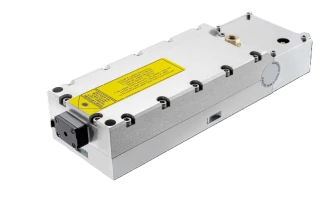
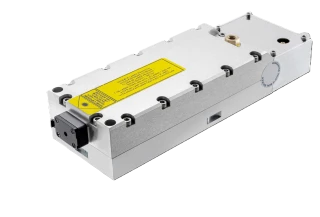
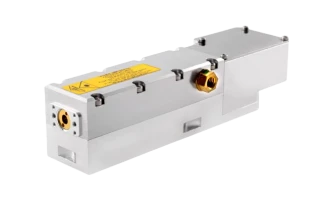
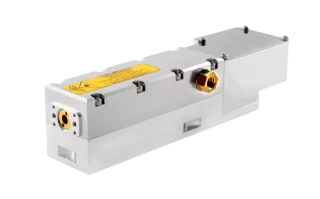
The Quantas-Q2-213 series is specifically designed to deliver high-energy pulses at the deep ultraviolet (DUV) wavelength of 213 nm. This series boasts the capability to produce pulse energies ranging from 0.5 mJ to 3.5 mJ, with pulse durations under 5 ns at repetition rates up to 10 Hz, extending up to 200 Hz in various configurations. Such features make it an indispensable tool for applications requiring precise, high-energy UV light.
Optimized Performance for Precision-Driven Applications: Tailored for the rigorous demands of applications such as UV spectroscopy, materials processing, and photolithography, the Quantas-Q2-213 DUV laser series ensures high peak power pulses for effective interaction with materials. The integration of high-speed triggering and minimal jitter (<0.5 ns RMS) enhances its utility in synchronized systems and time-sensitive measurements.
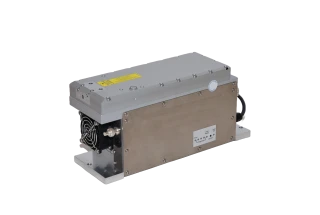
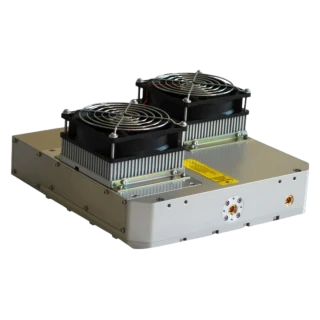
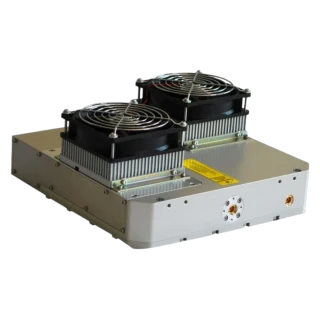
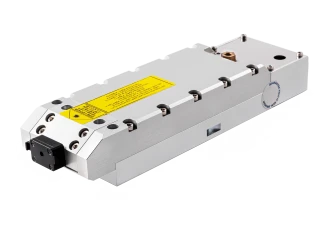
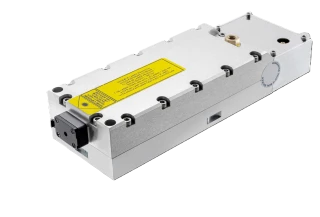
Innovative Design for Enhanced Usability: Characterized by its air-cooled, compact framework, the Quantas-Q2-213 DUV DPSS laser emphasizes efficiency and user-friendliness, allowing for straightforward integration into various setups without the need for complex cooling systems. Despite its high-energy output, the series maintains a turnkey operation, further facilitated by a user-friendly interface for ease of control and monitoring.
Quantas-Q2-213: High Energy Compact Nanosecond DPSS Laser
Specifications
| Avg. Power: | 0.005 W |
|---|---|
| Wavelength: | 213 nm |
| Repetition Rate: | 0.01 – 0.2 kHz |
| Pulse Duration: | 5 ns |
| Pulse-to-Pulse Stability (RMS): | 0.5 % |
| Cooling: | Air |
| Pulse Energy: | 0.02 to 1 mJ |
| Q-switch Type: | Active |
| Power Drift: | ± 3.0 % |
| Beam Divergence (Perpendicular To Junction): | 1.5 mrad |
| Polarization: | Linear, horizontal |
| Jitter (RMS): | < 0.5 ns |
| Transmission Range: | 0.5-95 % |
| Laser Head ( W×L×H): | 160 × 230 × 141 mm³ |
| Controller Unit (W×L×H): | 108 × 191 × 59 mm³ |
| Power Adapter (W×L×H): | 50 × 125 × 31 mm³ |
| Ambient Temperature: | 15-30 °C |
| Relative Humidity (non-condensing): | 10 – 80 % |
| Mains Voltage: | 90 – 230 VAC, single phase, 47 – 63 Hz |
Got questions about specs? Use the inquiry form to ask.
 Download Data Sheet

Features
- High Pulse Energy & Power – Up to 80 mJ pulse energy and up to 2 W average power, ideal for demanding industrial and scientific applications.
- Flexible Repetition Rate – Up to 100 Hz pulse repetition rate; smoothly variable repetition rate for 1053 nm Nd:YLF models (from single shot to max PRF) without beam quality degradation.
- Short, High Peak Power Pulses – Standard 5–10 ns pulse duration; optional short-cavity version delivers 2–3 ns pulses with peak power >30 MW at up to 60 mJ.
- Air-Cooled, Water-Free Design – Fully air-cooled, diode-pumped architecture with thermo-electric (TEC) temperature control eliminates water cooling, leaks, and organic contamination while reducing maintenance.
- Gaussian-Like, Low Divergence Beam – Innovative water-free, end-pumped laser crystal design provides a near-Gaussian beam profile and low divergence for high-precision focusing and long-distance propagation.
- Multiple Wavelength Options – Configurable for 1053 nm (Nd:YLF) or 1064 nm (Nd:YAG) to match LIBS, LIDAR, TOFS, PLD, and micromachining requirements.
- Excellent Beam Stability with Nd:YLF – Athermal properties of Nd:YLF at 1053 nm enable operation from single shot up to maximum repetition rate with essentially constant beam divergence and profile.
- Long Lifetime Diode Pumping – >2 G shot lifetime pump diodes ensure long-term reliability and low cost of ownership in 24/7 or high-duty-cycle environments.
- Turnkey, Compact Platform – Integrated, user-friendly design with compact footprint simplifies installation in OEM systems, laboratories, and industrial workstations.
- Integrated Synchronization – Built-in sync pulse generator for precise triggering and timing of user equipment such as detectors, cameras, and translation stages.
- Remote Monitoring & Control – Built-in Ethernet interface allows remote status monitoring, parameter adjustment, and integration into automated setups or production lines.
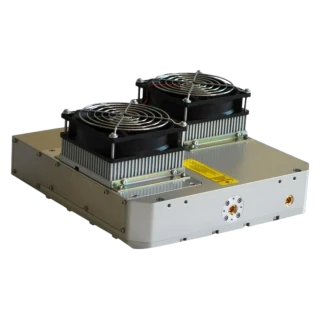
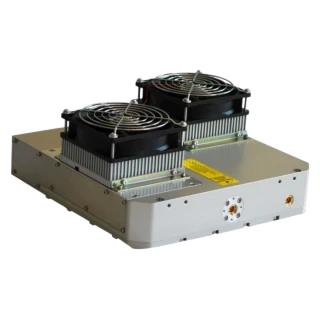
- Configurable Cooling Interface – Standard fan-cooled heatsink can be detached, enabling direct mounting to a user-supplied cold plate or custom cooling system for tighter thermal management.
- Wide Application Coverage – Optimized for LIBS, LIDAR, LCD repair, laser ablation and cleaning, PLD, LIF spectroscopy, TOFS, flash photolysis, ophthalmology, and TDTR.
- Modular Harmonic Generation – Optional attachable second harmonic generator (SHG) and stand-alone H-SMART series modules provide 2nd, 3rd, 4th, or 5th harmonic generation for visible and UV wavelengths.
- Optional Motorized Attenuator – Attachable attenuator for the fundamental wavelength enables precise, programmable control of output energy without compromising beam quality.
- Optional Pulse Energy Monitor – Attachable pulse energy monitor with analog and/or digital outputs for real-time energy tracking, calibration, and process feedback control.
- Advanced Timing Control – Optional two-channel pulse generator for sophisticated timing schemes, pump–probe experiments, and synchronization with external devices.
- Beam Delivery Solutions – Optional attachable beam guiding module for simplified beam routing and integration into complex optical setups.
- UV Optics Protection – Optional stand-alone air-purging unit extends the lifetime of UV optics by reducing contamination and absorption-related degradation.
- Low Maintenance & High Uptime – Solid-state, water-free design with long-life diodes and robust mechanical construction provides stable performance with minimal service requirements.
Applications
- Light-Induced Breakdown Spectroscopy (LIBS) – High-peak-power nanosecond pulses at 1053/1064 nm and harmonics (532 nm, 355 nm, 266 nm, 213 nm) enable efficient plasma generation for qualitative and quantitative elemental analysis in metals, alloys, minerals, soils, polymers, paints, coatings, and cultural heritage objects.
- Remote Sensing and LIDAR – Air‑cooled, diode‑pumped, Q‑switched operation with up to 80 mJ per pulse and up to 100 Hz repetition rate is ideal for atmospheric LIDAR, aerosol and pollutant monitoring, wind and temperature profiling, topographic mapping, bathymetric LIDAR, and ranging over long distances.
- Laser Ablation and Micromachining – Short 5–10 ns (optional 2–3 ns) pulses provide precise material removal for micro‑drilling, thin‑film structuring, surface patterning, and selective ablation of metals, ceramics, semiconductors, and polymers with minimal heat‑affected zone.
- Laser Cleaning and Conservation – Controllable pulse energy and repetition rate with Gaussian‑like, low‑divergence beams allow gentle removal of rust, oxides, paint, and surface contaminants from metals, stone, and heritage artifacts, supporting industrial cleaning and artwork restoration.
- LCD and Flat Panel Display Repair – Stable Q‑switched output and high beam quality support precise defect repair on LCD, OLED, and other flat‑panel displays, including pixel isolation, line cutting, and thin‑film repair on glass substrates.
- Pulsed Laser Deposition (PLD) – High peak power and good beam uniformity are well suited for PLD of functional thin films such as high‑Tc superconductors, ferroelectrics, oxides, nitrides, and complex multi‑layer coatings on research and pilot‑production deposition systems.
- Time-of-Flight Spectroscopy (TOF, TOFS) – Nanosecond pulses with user‑selectable repetition rate and built‑in sync output enable precise timing for TOF mass spectrometry, ion mobility spectrometry, and TOF-based molecular and plasma diagnostics.
- Light-Induced Fluorescence (LIF) Spectroscopy – Fundamental and harmonic wavelengths, along with stable pulse‑to‑pulse energy, support LIF measurements in combustion diagnostics, flow visualization, biological and chemical sensing, environmental monitoring, and plasma studies.
- Flash Photolysis and Transient Absorption – Short, high‑intensity pulses (including 2–3 ns short‑cavity options) are ideal for pump‑probe experiments, photochemical reaction studies, excited‑state dynamics, and transient absorption spectroscopy in chemistry and materials science.
- Time-Domain Thermoreflectance (TDTR) – Excellent timing stability and adjustable repetition rate make this laser suitable as a pump source for TDTR measurements of thermal conductivity, interfacial thermal resistance, and heat transport in thin films and nanostructures.
- Ophthalmology and Medical Research – Q‑switched operation with high peak power supports ophthalmic research (e.g., corneal and retinal studies), tissue ablation experiments, photo‑disruption, and laser‑tissue interaction studies when configured at suitable harmonics and integrated into certified medical systems.
- Nonlinear Optics and Harmonic Generation – High‑quality, low‑divergence beams drive efficient second, third, fourth, and fifth harmonic generation for UV and deep‑UV sources used in nonlinear optical experiments, frequency conversion research, and precision photolithography.
- Photoacoustic and Optoacoustic Imaging – Nanosecond pulses with high peak power are well suited for excitation in photoacoustic imaging, enabling high‑contrast visualization of vasculature, tissue structures, and contrast agents in preclinical research setups.
- Plasma Generation and Diagnostics – Reliable pulse energy at repetition rates up to 100 Hz enables controlled plasma formation for plasma spectroscopy, plasma–surface interaction studies, fusion research diagnostics, and high‑energy‑density physics experiments.
- Materials Characterization and Surface Analysis – Precise ablation and UV harmonics support depth profiling, thin‑film characterization, laser‑induced desorption, and surface modification studies in semiconductor, photovoltaic, and advanced materials research.
- Semiconductor and Photovoltaic Processing – Stable Q‑switched output is suitable for scribing, edge isolation, via formation, and defect repair in silicon, thin‑film solar cells, and micro‑electronic devices, as well as removal of passivation or coating layers.
Frequently Asked Questions
What is the range of pulse energy for the Quantas-Q2-213 DPSS laser series?
What are the pulse duration and repetition rate capabilities?
How user-friendly is the Quantas-Q2-213 high-energy DPSS?
Which applications can benefit from the Quantas-Q2-213 DUV laser?
How does the Quantas-Q2-213 DPSS laser ensure operational reliability?
Can the Quantas-Q2-213 series be synchronized with other equipment?
What are the power requirements for the Quantas-Q2-213 series?
Got more questions? Use the inquiry form to ask the supplier directly.
Similar Products
Your inquiry has been received.
Create an account by adding a password
Why create an account?
- Auto-complete inquiry forms
- View and manage all your past messages
- Save products to your favorites
- Close your account anytime — no hassle