


Description
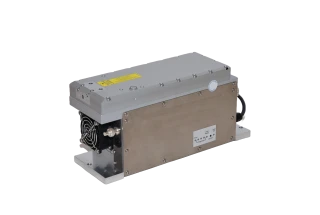
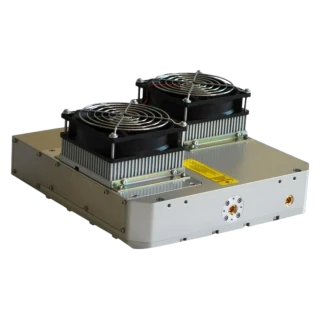
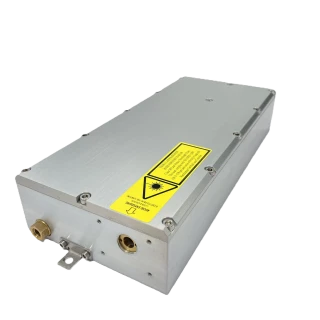
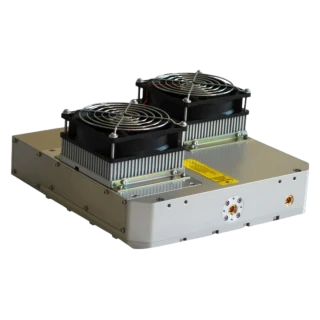
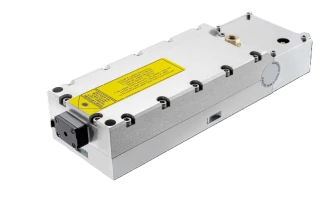
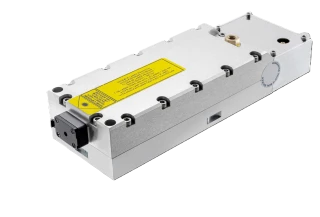
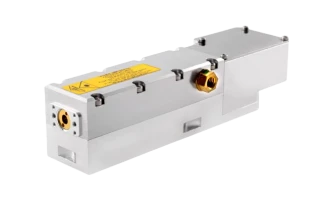
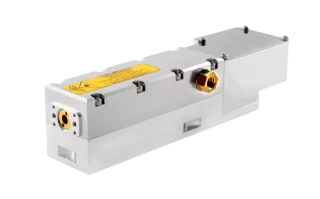
The Quantas-Q-SHIFT-WXXXX series is a sleek, modern, light grey colored DPSS laser housing designed for researchers and application specialists. It offers unconventional DPSS wavelengths ranging from 291 nm to 1571 nm, with options for up to the 4th harmonic. This air-cooled, water-free nanosecond DPSS laser provides high peak power pulses up to 30 mJ and high average power up to 800 mW. With high-speed triggering and low jitter, this laser series is suitable for various applications including micromachining, dermatology, LIDAR, time-resolved laser spectroscopy, and LIBS.
Quantas-Q-SHIFT-1571: High Energy ns Pulsed DPSS Laser
Specifications
| Avg. Power: | 1 W |
|---|---|
| Wavelength: | 1571 nm |
| Repetition Rate: | 0.01 – 0.1 kHz |
| Pulse Duration: | 2 ns |
| Pulse-to-Pulse Stability (RMS): | 3.5 % |
| Cooling: | Air |
| Pulse Energy: | 3 to 30 mJ |
| Beam Divergence: | 5.0 mrad |
| Polarization: | Linear, > 95 % |
| Jitter (RMS): | < 0.5 ns |
| Laser Head (W×L×H): | 190 × 408 × 155 mm³ |
| Controller Unit (W×L×H): | 108 × 191 × 59 mm³ |
| Power Adapter (W×L×H): | 89 × 422 × 330 mm³ |
| Ambient Temperature: | 15-30 °C |
| Relative Humidity (non-condensing): | 10-80 % |
| Mains Voltage: | 90 – 230 VAC, single phase, 47 – 63 Hz |
| Lifetime: | >2 G shots |
| Q-switch Type: | Active |
| Power Drif: | ± 3.0 % |
Got questions about specs? Use the inquiry form to ask.
 Download Data Sheet

Features
- Fundamental Wavelength Options: 1163, 1177, 1300, 1317, 1551, and 1571 nm
- Harmonic Options: Up to 4th harmonic
- Peak Power: Up to 30 mJ
- Average Power: Up to 800 mW
- Cooling: Air-cooled, water-free
- High-speed Triggering
- Jitter: <0.5ns RMS
- Shot Lifetime: >2 G
Applications
Applications for Diode-Pumped Air-Cooled Q-Switched Lasers
- Laser micromachining: Precision cutting, drilling, trimming, scribing, and patterning of metals, ceramics, glass, polymers, and thin films using high-peak-power nanosecond pulses.
- LCD and flat-panel display repair: Pixel repair, circuit trimming, defect removal, and localized material processing for LCD, OLED, microLED, and semiconductor display manufacturing.
- Laser ablation: Controlled removal of coatings, oxides, paints, residues, and surface layers with minimal thermal damage to the surrounding material.
- Laser cleaning: Non-contact cleaning of precision components, optical parts, archaeological artifacts, molds, electronic assemblies, and industrial surfaces.
- LIBS – Laser-Induced Breakdown Spectroscopy: Elemental analysis of solids, liquids, powders, metals, minerals, soils, semiconductors, and environmental samples using short, high-energy pulses.
- Time-resolved laser spectroscopy: Pump-probe experiments, fluorescence lifetime studies, transient absorption measurements, and photochemical reaction analysis.
- LiDAR and range finding: Eye-safe and near-infrared light detection and ranging, atmospheric sensing, remote distance measurement, target designation, and 3D mapping applications.
- Scientific research: Laboratory light source for nonlinear optics, photophysics, laser-material interaction studies, plasma generation, and advanced optical experiments.
- Nonlinear optics and harmonic generation: Generation of visible, ultraviolet, and near-infrared wavelengths through second, third, and fourth harmonic conversion for specialized research and industrial use.
- Optical parametric generation and wavelength conversion: Pump source for nonlinear wavelength conversion systems requiring nanosecond pulses and high peak intensity.
- Semiconductor processing: Wafer marking, micro-structuring, thin-film removal, defect repair, mask repair, and precision ablation in semiconductor and microelectronics manufacturing.
- Photovoltaic and solar cell processing: Scribing, edge isolation, thin-film patterning, and laser processing of solar cell materials and coatings.
- Medical and dermatology research: Research and development for laser dermatology techniques including skin resurfacing, tattoo pigment interaction studies, acne treatment research, and hair removal technology development.
- Biomedical instrumentation: Excitation source for fluorescence systems, photoacoustic imaging research, tissue interaction studies, and biosensing platforms.
- Photoacoustic spectroscopy and imaging: Pulsed laser excitation for acoustic wave generation in biomedical, gas sensing, materials analysis, and nondestructive testing applications.
- Laser-induced fluorescence: Excitation of fluorescent markers, dyes, biological samples, minerals, and chemical compounds for analytical and imaging applications.
- Raman spectroscopy: Pulsed laser excitation for material identification, molecular analysis, chemical sensing, and research-grade spectroscopy systems.
- Mass spectrometry sample ionization: Laser desorption, laser ablation, and ionization source for analytical chemistry, materials science, and bioanalytical research.
- MALDI and LDI research: Pulsed UV or visible laser source for matrix-assisted laser desorption ionization and laser desorption ionization development.
- Laser marking and engraving: High-contrast marking of metals, plastics, ceramics, glass, coated materials, electronic parts, tools, and industrial components.
- Precision trimming of electronic components: Resistor trimming, capacitor tuning, sensor calibration, and microelectronic circuit adjustment.
- Glass and transparent material processing: Surface modification, micro-crack initiation, internal marking, and precision ablation of glass and optical materials.
- Ceramic and hard-material machining: Micro-drilling, engraving, and surface structuring of alumina, sapphire, silicon carbide, and other hard technical materials.
- Thin-film processing: Selective removal, patterning, and structuring of optical coatings, conductive films, dielectric layers, and multilayer materials.
- Optics manufacturing: Optical coating repair, alignment, damage threshold testing, component inspection, and precision laser processing of optical assemblies.
Frequently Asked Questions
What wavelength does the Quantas-Q-SHIFT-1571 ns DPSS laser operate at?
Can the pulse repetition rate be adjusted in the Quantas-Q-SHIFT-1571 nanosecond high-energy DPSS laser?
What is the maximum pulse energy available with the Quantas-Q-SHIFT-1571 DPSS laser?
What cooling method does the Quantas-Q-SHIFT-1571 high-energyDPSS laser use?
What are the primary applications for the Quantas-Q-SHIFT-1571 DPSS laser?
How does the Quantas-Q-SHIFT-1571 ensure stable operation?
Is the Quantas-Q-SHIFT-1571 capable of harmonic generation?
How is the laser controlled and monitored?
What safety class does the Quantas-Q-SHIFT-1571 laser belong to?
What power source is needed for the Quantas-Q-SHIFT-1571 nanosecond DPSS laser?
Got more questions? Use the inquiry form to ask the supplier directly.
Similar Products
Your inquiry has been received.
Create an account by adding a password
Why create an account?
- Auto-complete inquiry forms
- View and manage all your past messages
- Save products to your favorites
- Close your account anytime — no hassle