

Description
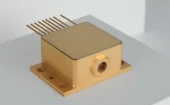
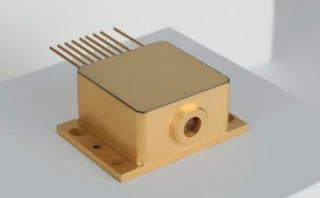
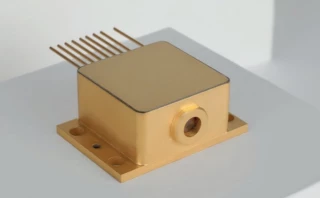
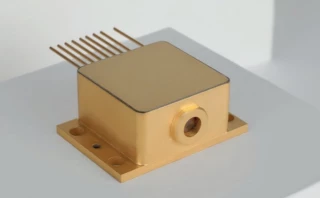
The PowerMir 4.6um High-Power Quantum Cascade Laser offers cutting-edge technology housed in a robust High Heat Load (HHL) package, ensuring superior performance and reliability. Engineered with built-in thermoelectric cooling and precise temperature control, this quantum cascade laser delivers consistent output even in challenging environments. Its hermetically sealed packaging with nitrogen gas fill enhances durability while maintaining optimal laser performance.
With a compact and lightweight design, it's versatile for various applications including spectroscopy, gas sensing, environmental monitoring, industrial process control, and defense applications. Whether used in research laboratories or industrial settings, the PowerMir 4.6μm quantum cascade laser provides exceptional power efficiency and accuracy, making it an ideal choice for demanding applications. Experience the reliability and precision of this advanced quantum cascade laser, designed to meet the needs of professionals across diverse industries.
PW4600090HSNA: PowerMir 4.6um High Power Pulsed Quantum Cascade Laser 100mW HHL Package
Specifications
| Output Power (avg): | 0.1 W |
|---|---|
| Wavelength: | 4.6 um |
| Pulse Duration: | 10 – 300 ns |
| Tuning Range Around Center Wavelength: | Not Applicable |
| Laser Type: | Quantum Cascade |
| Packaging: | High Heat Load (HHL) |
| Operational Current (typ.): | 2 A |
| Operational Temperature: | -20 to +30 °C |
| Laser Voltage: | 10 to 20 V |
| Weight: | 120 g |
| Wall-plug Efficiency: | 5-10 % |
| Laser Current (typ): | 2 A |
| Optional Power: | 450, 1000 mW |
Got questions about specs? Use the inquiry form to ask.
 Download Data Sheet

Features
- High-Power 4.6 µm Mid-Infrared Quantum Cascade Laser: QCW Fabry-Perot QCL system emitting around 4.6 µm ± 0.1 µm, ideal for MIR spectroscopy, gas sensing, industrial monitoring, and defense-grade mid-IR applications.
- ITAR-Free MIR Laser Technology: Manufactured in France using proprietary quantum cascade laser technology, offering a high-performance ITAR-free alternative for international research, OEM integration, and commercial deployment.
- Quasi-CW High Duty Cycle Pulsed Operation: Designed for QCW operation to improve wall-plug efficiency while reducing thermal dissipation compared with traditional high-peak-power pulsed MIR laser sources.
- High Average Optical Power Options: Available in configurations delivering >1 W average optical power or 450–500 mW average optical power, depending on application and export-control requirements.
- Export-Friendly <500 mW Version: The <500 mW model is designed to remain below dual-use export-control thresholds, simplifying procurement and international shipment for many applications.
- Fast Pulse Repetition Frequency: Supports pulse frequencies above 500 kHz, enabling high-speed measurement, modulation, and time-resolved mid-infrared spectroscopy.
- Excellent Beam Quality: Delivers a near-Gaussian TM00 beam with M² < 1.5, providing stable optical performance and easier coupling into MIR optical systems.
- Low Beam Divergence: Standard beam option provides typical divergence of 3–6 mrad horizontal and 2–4 mrad vertical, supporting efficient free-space beam delivery and optical alignment.
- Standard Output Beam Size: Typical beam dimensions at the window output are approximately 3 mm vertical × 2 mm horizontal, with a slightly elliptical far-field profile.
- Highly Linear Polarization: Emits a vertically polarized beam with polarization purity greater than 98%, suitable for polarization-sensitive MIR experiments and optical setups.
- Long Operational Reliability: Designed for robust performance with typical reliability exceeding 3,500 hours, supporting demanding laboratory and OEM environments.
- Stable Central Wavelength Around 4.6 µm: The optical power-weighted central wavelength is optimized for mid-infrared absorption features near 4.6 microns, a key spectral region for molecular sensing and spectroscopy.
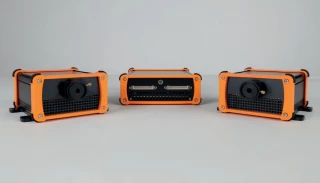
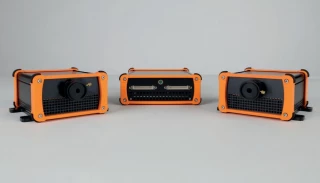
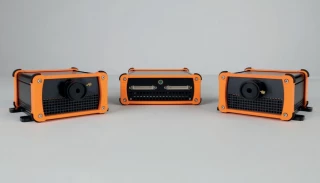
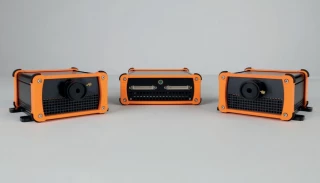
- Multiple System Configurations: Available as a complete plug-and-play benchtop turnkey laser system, an OEM driver + laser module, or an HHL-packaged QCL for flexible integration.
- Turnkey Benchtop System for Laboratory Use: Complete lab-ready system includes current control, temperature control, air cooling, laser safety functions, and user-friendly Windows software for fast setup and operation.
- Dual Laser Head Control Capability: Turnkey configuration can control up to two laser heads simultaneously, allowing multi-wavelength or dual-channel MIR system development.
- External TTL Modulation Support: Compatible with external TTL modulation for synchronized operation, pulsed experiments, and integration into automated spectroscopy or sensing platforms.
- OEM Integration Ready: OEM configuration includes a PCB driver connected to the HHL-packaged QCL and can be controlled via Modbus or Windows software, making it suitable for embedded MIR instrumentation.
- Optional Red Alignment Laser: Benchtop systems can be equipped with red beam alignment lasers to simplify optical alignment in laboratory and prototype setups.
- Efficient Thermal Management: QCW operation and regulated base-plate temperature operation help minimize heat load while maintaining high average output power.
- Reproducible Manufacturing for Series Production: Built with reproducible specifications to support repeatable performance across multiple units, making it suitable for scaled OEM production.
- Optimized for MIR Gas Sensing and Spectroscopy: The 4.6 µm emission band is well suited for mid-infrared molecular detection, environmental monitoring, combustion diagnostics, process analytics, and trace gas analysis.
- Compact HHL-Packaged Laser Option: HHL packaging enables integration into custom optical asse
Applications
Applications for 4.6 µm QCW Quantum Cascade Laser Systems
- Carbon monoxide (CO) detection and monitoring: Ideal for high-sensitivity CO gas sensing near the strong 4.6 µm absorption band in industrial, environmental, laboratory, and safety monitoring systems.
- Mid-infrared trace gas spectroscopy: High-power 4.6 µm QCL source for MIR absorption spectroscopy, QCLAS, TDLAS, photoacoustic spectroscopy, cavity-enhanced spectroscopy, and multipass gas cell measurements.
- Industrial emissions monitoring: Suitable for continuous emissions monitoring systems used in power plants, refineries, chemical facilities, cement plants, waste incinerators, and combustion-based processes.
- Combustion diagnostics: Enables real-time measurement of CO and related combustion byproducts in engines, burners, turbines, furnaces, boilers, and flame research platforms.
- Exhaust gas analysis: Used for automotive, aerospace, marine, and industrial engine exhaust testing where fast, selective, and sensitive mid-IR gas analysis is required.
- Environmental gas monitoring: Applicable to atmospheric CO monitoring, greenhouse gas studies, air quality analysis, pollution tracking, and open-path environmental sensing.
- Process analytical technology: Supports in-line and real-time process control in petrochemical, semiconductor, pharmaceutical, chemical manufacturing, and gas processing environments.
- Leak detection and gas safety systems: Enables selective detection of toxic or combustible gases in industrial plants, enclosed facilities, pipelines, storage areas, and production environments.
- Photoacoustic gas sensing: High average optical power and QCW operation make the laser well suited for compact photoacoustic detection modules requiring strong mid-IR excitation.
- Open-path and stand-off gas detection: Useful for remote sensing of gases across industrial perimeters, test ranges, hazardous areas, and difficult-to-access locations.
- Scientific mid-IR spectroscopy: Suitable for university, government, and industrial research laboratories requiring a high-power 4.6 µm laser source for molecular spectroscopy experiments.
- Molecular fingerprinting: Provides access to the mid-infrared fingerprint region for identifying and quantifying molecules with absorption features near 4.6 µm.
- Isotope and isotopologue analysis: Can be used in specialized spectroscopy systems for selective analysis of CO isotopologues and related molecular species.
- Breath analysis research: Applicable to non-invasive medical and biomedical research involving trace carbon monoxide and other mid-IR detectable biomarkers in exhaled breath.
- Defense, security, and hazardous substance detection: ITAR-free high-power MIR laser technology can support chemical detection, threat screening, and remote sensing platforms where export-friendly integration is important.
- Infrared countermeasure and target simulation research: Useful as a high-power mid-IR source for laboratory testing, calibration, and simulation in the 4.6 µm spectral region.
- Mid-IR imaging illumination: Can serve as an active illumination source for specialized infrared imaging, laser-based scene projection, thermal camera testing, and MIR optical system evaluation.
- Laser-based calibration systems: Suitable for calibrating mid-infrared detectors, sensors, spectrometers, gas analyzers, and optical measurement instruments operating near 4.6 µm.
- FTIR and broadband source replacement: Provides a brighter, wavelength-specific alternative to thermal IR sources for applications requiring strong emission near 4.6 µm.
- Nonlinear infrared optics research: High peak power pulsed operation supports experimental work in nonlinear MIR optics, frequency conversion, and laser-material interaction studies.
- Mid-IR microscopy and materials analysis: Useful for targeted illumination in infrared microscopy, chemical mapping, thin-film analysis, and material characterization near the 4.6 µm absorption region.
- Semiconductor and vacuum process monitoring: Applicable to gas-phase monitoring in deposition, etching, plasma processing, vacuum chambers, and specialty gas delivery systems.
- Petrochemical and refinery gas analysis: Supports selective measurement of CO and process gases in refining, syngas production, reforming, and hydrocarbon processing environments.
- Syngas and fuel-cell process monitoring: Effective for CO measure
Frequently Asked Questions
What is the mirSense PowerMir 4.6 µm QCW QCL laser used for?
What output power is available for the 4.6 µm QCW quantum cascade laser?
What does QCW operation mean for this 4.6 µm QCL?
Is the mirSense 4.6 µm QCW QCL ITAR free?
What beam quality and divergence does the 4.6 µm QCW QCL provide?
What system configurations are available for the PowerMir 4.6 µm QCL?
How reliable is the 4.6 µm QCW QCL laser?
Got more questions? Use the inquiry form to ask the supplier directly.
Similar Products


Your inquiry has been received.
Create an account by adding a password
Why create an account?
- Auto-complete inquiry forms
- View and manage all your past messages
- Save products to your favorites
- Close your account anytime — no hassle